
Egyptian Clothing: From Pharaonic Elegance to Modern Travel Attire
Egyptian Clothing: From Pharaonic Elegance to Modern Travel Attire
Egypt is a land where the past and the present seamlessly intertwine. From the towering pyramids of Giza to the bustling vibrant alleys of Khan El Khalili Market in Egypt, every corner of this historic nation tells a story.One of the most fascinating ways to understand Egypt’s long cultural evolution is through its clothing.
Whether you are a history enthusiast uncovering the secrets of the pharaohs or a traveler planning your dream vacation with EgyptianTrips, understanding egypt attire offers deep insight into the country’s climate, social structures, and cultural values.
In this comprehensive guide, we will journey across millennia to explore what the citizens of this incredible land wore in antiquity, how regional styles blossomed, and exactly what to wear in egypt today to stay comfortable, stylish, and respectful.
Part 1: Fashion in Antiquity – The Wardrobe of the Pharaohs
To truly appreciate the evolution of clothing along the Nile, we must first look backward thousands of years. The garments of ancient Egypt were elegant, highly functional, and perfectly adapted to the hot Mediterranean and desert climates.
What Clothes Did They Wear in Ancient Egypt?
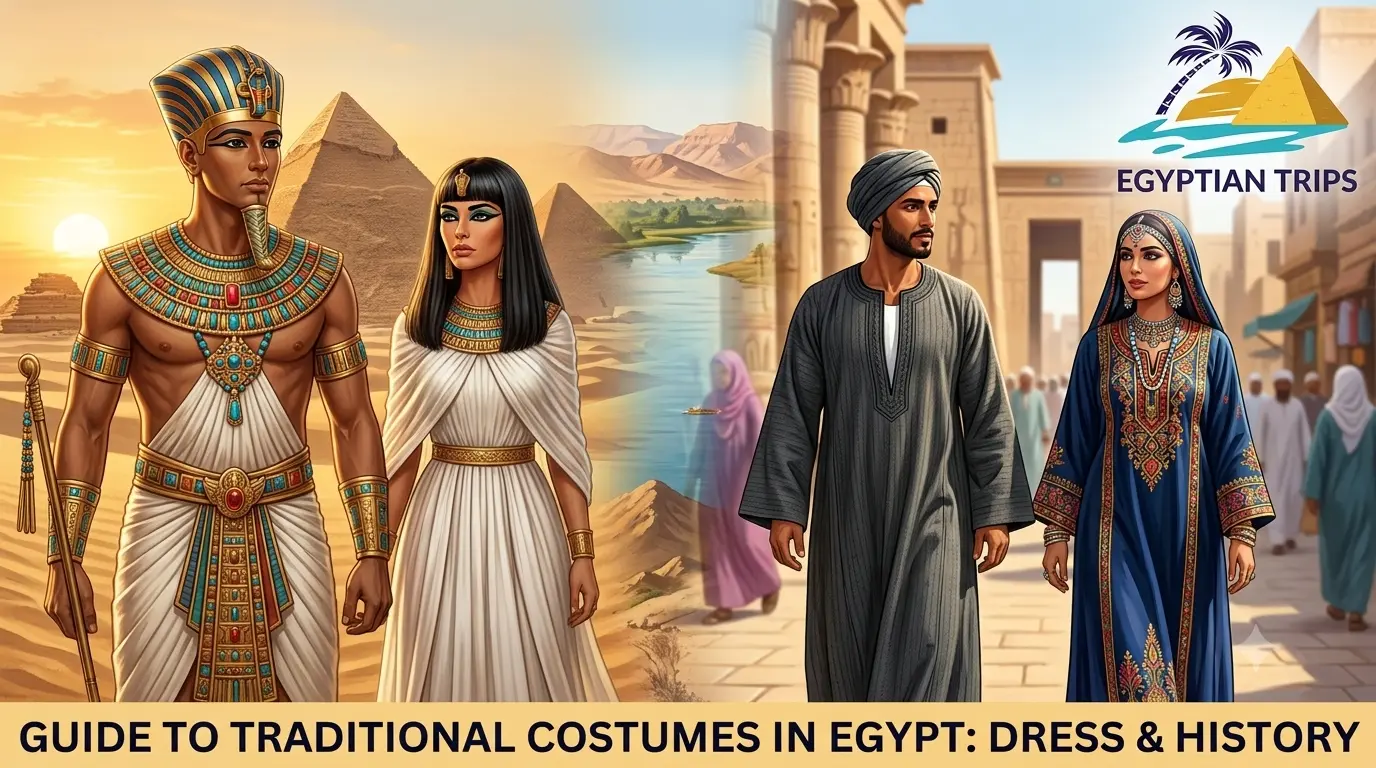
When asking what clothes did they wear in ancient egypt, the answer centers on simplicity and minimalism. Because of the intense heat, ancient Egyptians wore lightweight clothing made primarily from linen. Linen was local, breathable, and spun from the fibers of flax plants grown abundantly along the fertile banks of the Nile River.
- The Power of Linen: Linen was preferred because it allowed air to circulate freely. While commoners wore coarser, unbleached linen, royalty and the elite wore “byssus” or woven gossamer linen, which was so finely spun it appeared almost translucent.
- The Dominance of White: White was the standard color of ancient clothing. It deflected the harsh desert sun and symbolized purity and cleanliness, which were of utmost importance in daily life and religious rituals.
Should you pack all-white linen clothing for your sightseeing tours?
While white linen looks fantastic in photos against the backdrop of the Pyramids, it is often impractical for long days of exploring.
The fine desert dust and limestone sand at archaeological sites will quickly turn pristine white clothes a dusty shade of brown or grey. Instead, opt for breathable, loose-fitting cotton or linen pieces in earth tones, khakis, tans, or darker neutral shades that conceal dust easily.
What Did They Wear in Ancient Egypt? (Men vs. Women)
If we dive deeper into daily life to ask what did they wear in ancient egypt, garments varied less by gender and more by social class.
Men’s Clothing
For most of the Old and Middle Kingdoms, men wore a simple wrap-around skirt known as a shenti (or loincloth). It was fastened at the waist with a belt or a pleated sash.
As the New Kingdom brought more wealth and foreign trade, the simple shenti evolved into longer, elaborate pleated tunics and tiered skirts for wealthy officials and pharaohs.
Is the traditional Galabeya only worn in rural areas?
A: While the galabeya is the definitive daily wear for farmers (Fellahin) and residents of traditional villages, it is also widely seen in urban environments, especially among merchants in local souks, older generations, or during festive occasions and religious holidays.
In modern Egyptian cities, younger generations frequently blend traditional silhouettes with contemporary global fashion, like pairing modern outerwear with denim and sneakers.
Women’s Clothing
Women wore a form-fitting sheath dress called a kalasiris. This dress typically extended from just below the bust down to the ankles and was held up by one or two shoulder straps. Contrary to popular Hollywood depictions, these dresses were designed for ease of movement rather than restriction.
In later periods, royal women adopted sheer, intricately pleated robes draped over their shoulders, held together by beautiful jeweled brooches.
Know more about: Family Tree of Ancient Egyptian Gods
Do female travelers have to wear a headscarf (hijab) while visiting Egypt?
A: No, foreign tourists are not expected to cover their heads in daily public life, such as walking down the street, shopping, or visiting historical ancient temples.
The only exception is when entering an active mosque, where women are required to cover their hair, shoulders, and legs down to the ankles out of religious respect.
Keeping a light pashmina or scarf in your daypack makes adapting to these spaces incredibly easy.
What Do Ancient Egyptian Wear for Ceremonies?
When exploring what do ancient egyptian wear during grand religious festivals or state affairs, the simplicity of white linen was transformed by accessories. Because the basic garments were simple, both men and women relied heavily on ornamentation to show status:
Wesekh Collars: Large, circular collars made of gold, turquoise, lapis lazuli, and carnelian beads that rested gracefully across the chest and shoulders.
- Wigs and Headpieces: To combat lice and heat, many high-status Egyptians shaved their heads and wore elaborate wigs made of human hair or sheep’s wool. Pharaohs, of course, wore distinctive crowns like the Pschent or the iconic Nemes headdress.
- Kohl Makeup: Both a cosmetic and a medical defense, green and black kohl was lined heavily around the eyes to protect against the blinding sun and deter insects.
No matter the era, when analyzing what do ancient egypt wear, it is clear that their stylistic footprint was perfectly balanced between utility and divine elegance.
Part 2: The Evolution of Traditional Egypt Attire
As centuries rolled into millennia, Egypt was shaped by a succession of cultures: Greco-Roman rule, the Coptic era, and the transformative Islamic conquests. Each era added a new layer to the fabric of traditional egypt attire.
The greatest shift occurred as modesty guidelines and defensive desert layering evolved, leading to the creation of the most famous piece of traditional Egyptian clothing still worn today: the Galabeya.
The Galabeya: The Heart of Egyptian Identity
The Galabeya (also spelled jalabiya) is a loose-fitting, ankle-length robe without a collar, featuring long, wide sleeves. It is worn by both men and women across the countryside (Fellahin) and urban markets alike.
- For Men: Men’s galabeyas are typically characterized by neutral, muted colors such as white, grey, beige, brown, or navy blue. In the summer, they are made from light, breathable cotton, while winter versions are crafted from heavy, insulating wool.
- For Women: Traditional women’s galabeyas are incredibly vibrant and colorful. They often feature beautiful hand-made embroidery, sequins, and intricate stitching around the neck, cuffs, and hem.
Part 3: Regional Styles and Cultural Variations
Egypt is not homogenous; its geographic diversity from north to south has birthed unique regional variations of traditional dress.
Nubian Attire (Upper Egypt)
In the scenic southern region of Aswan, Nubian clothing reflects a colorful African heritage. Nubian men often wear bright white galabeyas paired with a crisp matching vest and a structured turban called a Taggit.
Nubian women wear the gorgeous Gergar, a transparent, flowing black lace over-dress worn over a brightly colored under-gown, completed with heavy gold earrings and nose rings.
Bedouin Attire (Sinai and Western Desert)
The nomadic tribes of the Egyptian deserts require heavy protection from sand, wind, and wild temperature swings. Bedouin men wear a heavy galabeyas with a Keffiyeh (headscarf) secured by an Agal (cord).
Bedouin women are world-renowned for their striking, hand-embroidered black dresses filled with cross-stitched geometric patterns. The colors of the embroidery traditionally signify social status: red for married women and blue or yellow for unmarried girls.
Siwa Oasis Attire
Deep within the Western Desert, the Berber population of Siwa has preserved a completely distinct sartorial culture. Siwan brides wear some of the most complex bridal attire in the world, featuring a dark silk dress completely covered in dense silver thread, rows of mother-of-pearl buttons, and heavy silver necklaces designed to ward off the evil eye.
Part 4: What to Wear in Egypt – A Practical Guide for Modern Travelers٫
Now that you are familiar with the profound history of Egyptian fashion, you might be asking yourself a practical question: what to wear in egypt on my upcoming vacation?
Dressing appropriately for your journey with EgyptianTrips requires balancing two major components: the desert climate and cultural respect. Egypt is a conservative, majority-Muslim country where dressing modestly is highly appreciated and will help you feel comfortable blending in with the local culture.
Essential Dressing Guidelines for Women
When packing your bags, think loose, breathable, and conservative. You do not need to cover your head unless you are entering a mosque, but covering your shoulders and knees is highly recommended for everyday sightseeing.
Maxi Dresses and Skirts: These are perfect because they keep you cool while ensuring you remain covered.
Linen Trousers and Culottes: Wide-leg cotton or linen pants are a lifesaver when walking around ancient temple complexes.
Light Scarves or Shawls: Always keep a lightweight pashmina or scarf in your day bag. It can be thrown over your shoulders if you visit a historic mosque or used to shade your neck from the intense midday sun.
Tops to Avoid: Leave low-cut tops, spaghetti straps, crop tops, and short shorts at home for urban areas and historic monuments.
Essential Dressing Guidelines for Men
While men have fewer cultural restrictions, there are still a few norms to keep in mind to look respectful while exploring.
Trousers and Chinos: Lightweight cotton trousers, jeans, or chinos are ideal for evening dinners and city walking.
Smart Shorts: Shorts are completely fine to wear at resort towns like Hurghada or Sharm El-Sheikh, and even around ancient sites like Luxor. However, long shorts (knee-length) are generally preferred over short gym shorts
when walking through downtown Cairo.
Shirts and Polos: Breathable t-shirts, polo shirts, and short-sleeve linen button-downs are comfortable, neat, and highly acceptable everywhere.
Recommended Travel Packing Matrix
To make your trip planning with EgyptianTrips smooth, use this quick reference table to pack perfectly for your itinerary:
| Destination Type | Recommended Outfit | Items to Avoid |
| Historical Sites & Temples (Pyramids, Luxor, Aswan) | Linen pants, maxi skirts, breathable t-shirts, sturdy walking shoes, sunglasses, and a wide-brimmed hat. | Flip-flops, short skirts, tight activewear. |
| Religious Sites (Mosques & Coptic Churches) | Long sleeves, long pants or full maxi dresses. Women should bring a head covering (scarf). | Sleeveless tops, shorts, open chests. |
| Beach Resorts (Hurghada, Sharm El-Sheikh, Dahab) | Standard beachwear, swimsuits, shorts, sundresses, and sandals. | Note: Pack a cover-up for when you walk from the beach into hotel lobbies or town. |
| City Exploration (Downtown Cairo, Alexandria) | Smart-casual attire, jeans, long chinos, blouses, and comfortable sneakers for walking on uneven sidewalks. | Overly revealing or flashy clothing. |
Footwear: The Unsung Hero of Your Egyptian Trip
Whether you are scaling the internal chambers of the Great Pyramid or walking down the avenue of Sphinxes, your feet will be working hard.
- Closed-Toe Sneakers: The dust and sand surrounding historical monuments can get incredibly hot. A supportive pair of sneakers will keep your feet clean, safe from loose gravel, and comfortable all day long.
- Sturdy Sandals: Perfect for cruise decks along the Nile or relaxing afternoons at a local café, but choose pairs with thick straps that won’t slip easily on smooth ancient stone surfaces.
Conclusion: Embodying the Spirit of Egypt
From the pristine white linen worn by the builders of antiquity to the sweeping, colorful galabeyas found in rural villages today, clothing in Egypt is a beautifully living art form. By selecting an appropriate, modest, and breathable wardrobe, you protect yourself from the intense Egyptian climate while paying respect to a culture that has
welcomed travelers for thousands of years.
Are you ready to witness the magnificent history and timeless garments of Egypt firsthand? Let EgyptianTrips guide you on an unforgettable voyage. Book your customized tour today and step right into the living tapestry of Egypt!
Explore Egypt With EgyptianTrips — Your Trusted Guide to Ancient Wonders
At EgyptianTrips, we don’t just show you Egypt — we bring its history to life. As a leading tourism company based in Egypt, we specialise in fully guided tours to every major archaeological site in the country, from the pyramids of Giza to the temples of Luxor and the timeless beauty of Aswan.
Whatever kind of trip you’re dreaming of, we’ve got you covered:
- Multi-day tours to Egypt — comprehensive itineraries covering Egypt’s most iconic historical sites
- Day trips in Egypt — perfect for exploring a single destination without the commitment of a longer journey
- Family trips to Egypt — safe, comfortable, and thoughtfully paced for travellers of all ages
- Honeymoon packages to Egypt — romantic, private experiences designed for couples celebrating a new chapter
Looking to combine history with relaxation? Our Nile cruise trips pair unforgettable sightseeing with five-star onboard service, letting you drift past centuries of history in complete comfort.
At EgyptianTrips, quality never comes with a hidden cost. We offer some of the most competitive prices in the industry, paired with expert local guides, seamless logistics, and a genuine passion for showing you the Egypt we love.
Ready to start your journey? [Explore our tours] and let EgyptianTrips turn your trip into the adventure of a lifetime.
Know More About: Best Nile River Cruises in Egypt
Frequently Asked Questions About Egyptian Attire
What do ancient Egyptians wear?
Ancient Egyptians primarily wore garments made of white linen: men in wrapped kilts called shendyt, and women in fitted sheath dresses called kalasiris. Wealth and status were shown through finer, pleated linen, gold jewelry, and elaborate headdresses rather than different fabrics altogether.
What clothes did they wear in ancient Egypt?
Clothing varied by class and role: laborers and children often wore simple loincloths or went unclothed, working-class men and women wore basic linen kilts and dresses, and pharaohs and priests wore fine pleated linen, leopard skins, and ceremonial headdresses like the nemes.
What did they wear in ancient Egypt during religious ceremonies?
Priests wore plain white linen robes symbolizing purity, avoided animal-based fabrics like wool, and shaved their bodies for ritual cleanliness, while pharaohs added leopard skins and gold-adorned headdresses for sacred rites.
What is traditional Egypt attire today?
The galabiya is the most widespread traditional garment in modern Egypt, especially in rural areas and Upper Egypt, alongside distinct regional dress such as Nubian gowns and tunics in the south and richly embroidered Bedouin thobes in the Sinai and desert regions.
What to wear in Egypt as a tourist?
Choose lightweight, breathable cotton or linen clothing that covers the shoulders and knees, bring a scarf for visiting mosques and churches, and pack comfortable closed-toe shoes for temples, tombs, and desert excursions.
Experience Egypt’s Living History
From the shimmering linen of a pharaoh’s kilt to the embroidered gowns of Nubian and Bedouin communities today, Egyptian clothing has always been a language of its own — spelling out status, faith, and identity thread by thread.
Seeing that history up close, in the museums of Cairo, the temples of Luxor, and the villages along the Nile, is one of the most rewarding parts of any trip to Egypt. Ready to see it for yourself?
Explore EgyptianTrips’ curated tours and discover Egypt’s traditional costumes, ancient monuments, and living culture firsthand.
All Categories
Recent Posts

How Are Hieroglyphics Different From Any Other Writing System?

Is It Safe to Travel to Egypt Right Now? 2026 Safety Guide (Cairo, Hurghada, Sharm El Sheikh)