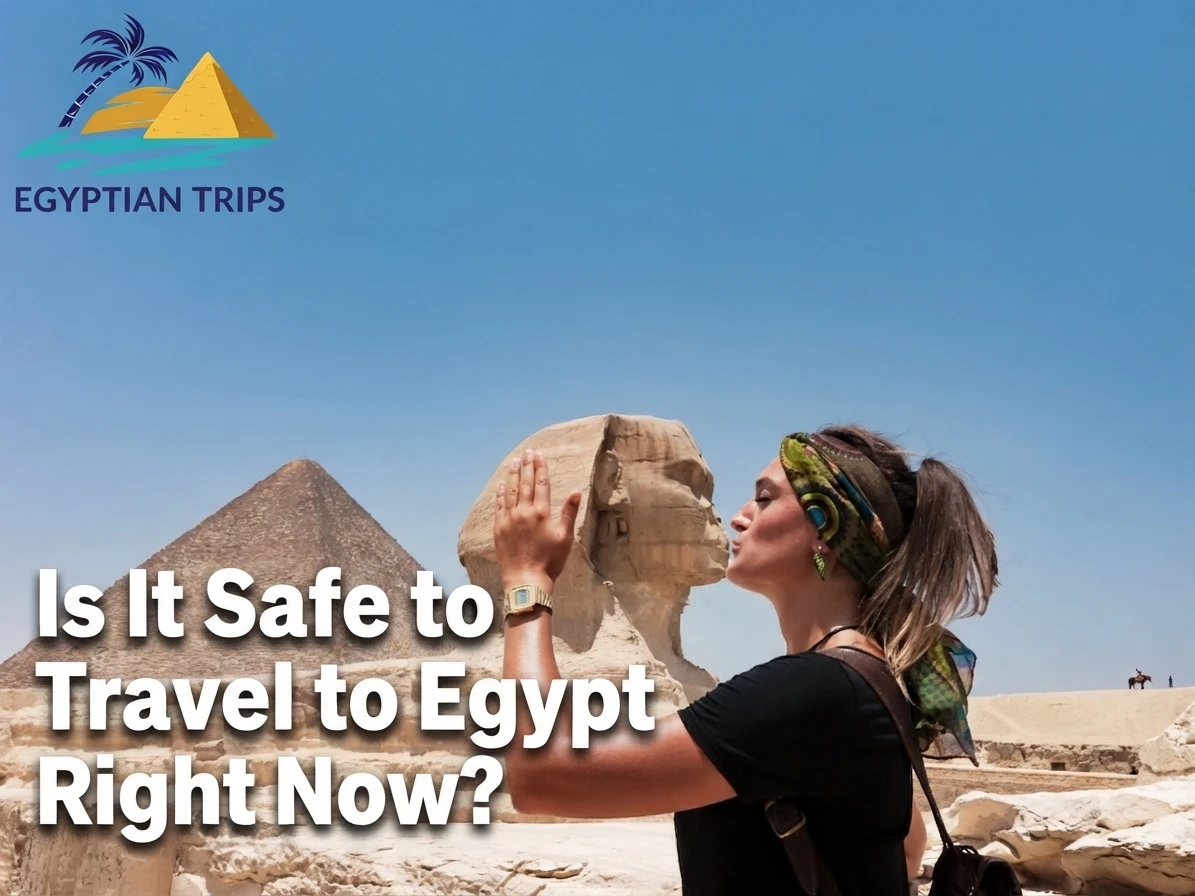
Is It Safe to Travel to Egypt Right Now?
Yes, Egypt is safe to visit right now for the vast majority of travelers, provided you stick to the country’s established tourist corridors: Cairo, Giza, Luxor, Aswan, the Nile Valley, Hurghada, and Sharm El Sheikh.
Millions of tourists pass through these destinations every year without incident, and major Western governments, including the United States, United Kingdom, Canada, and Australia, continue to permit and actively support travel to Egypt’s main attractions.
That said, “safe” isn’t a single yes-or-no answer for a country the size of Egypt. Safety varies significantly by region, and a small number of areas, mainly North Sinai and the border zones with Libya and Sudan, remain under formal “do not travel” advisories.
This guide from EgyptianTrips guides breaks down exactly what’s going on, region by region, so you can make an informed decision about your trip.
Quick Answer: Egypt Safety at a Glance
| Factor | Current Status |
| Overall advisory level (US) | Level 2 – Exercise Increased Caution |
| Cairo, Giza, Luxor, Aswan | Considered safe; normal precautions advised |
| Hurghada, Sharm El Sheikh, Red Sea resorts | Considered safe; no government advises against travel |
| North Sinai | Do Not Travel (all major governments) |
| Libyan border area | Do Not Travel |
| Airports (Cairo, Hurghada, Luxor, Sharm El Sheikh) | Operating normally |
| Impact from the wider Middle East conflict | Indirect — occasional flight disruption risk, no direct threat to tourist zones |
Is Egypt Affected by the War in the Middle East?
This is the question driving most of the search traffic right now, so it deserves a direct answer: the broader Middle East conflict has not brought fighting into Egypt, and it has not closed Egypt’s tourist destinations. (according to the times)
Egypt is not a party to the conflict, and its major cities and resorts have continued to operate throughout the period of regional tension that began in early 2026.
What the conflict does affect is the margins around travel, not the destination itself:
Airspace and flight schedules
Military activity elsewhere in the Middle East has occasionally prompted airlines, particularly Gulf carriers such as Emirates, Etihad, and Qatar Airways, to adjust routes or reschedule flights.
This can mean delays or itinerary changes for travelers connecting through Dubai, Doha, or Abu Dhabi on the way to Egypt, even though Egyptianairspace and airports themselves remain open.
Border activity near Gaza and Sinai
The Rafah crossing between Gaza and Egypt has periodically closed or restricted access, and North Sinai carries an active terrorism risk unrelated to any single tourist itinerary.
General regional unpredictability.
Governments continue to note that the security situation across the wider Middle East can shift quickly, so travelers are advised to stay informed rather than assume nothing will ever change.
None of this amounts to a war reaching Cairo, Luxor, the Nile cruise route, or the Red Sea coast. If your itinerary sticks to these areas, the regional conflict is background noise rather than a direct threat to your trip.
What Do the Official Travel Advisories Actually Say?
Government travel advisories are the most reliable starting point, because they’re updated regularly and are specific about geography rather than treating “Egypt” as one uniform risk zone.
United States
The State Department places Egypt at Level 2: Exercise Increased Caution, the same tier assigned to countries like France, Germany, or Turkey.
Within that overall rating, Northern and Middle Sinai and parts of the Western Desert carry a Level 4: Do Not Travel designation, which is a hard restriction rather than a general caution.
United Kingdom
The Foreign, Commonwealth and Development Office (FCDO) advises against travel to the Egypt-Libya border, North Sinai, the northern part of South Sinai, the eastern part of Ismailiyah
Governorate, the Hala’ib Triangle and Bir Tawil Trapezoid, and parts of the Western Desert. Crucially, the FCDO does not advise against travel to Cairo, Alexandria, Luxor, Aswan, or the Red Sea resorts of Sharm El Sheikh and Hurghada.
Australia
Smartraveller advises travelers to exercise a high degree of caution in Egypt overall, with a “reconsider your need to travel” rating for specific areas including parts of the South Sinai Governorate (outside the southern coastal strip around Sharm El Sheikh), the Ismailiyah Governorate east of the Suez Canal, parts of the Western Nile Valley and Nile Delta, and areas near the Sudanese border.
It maintains a “do not travel” rating for the Governorate of North Sinai, including the Taba-Suez Road, and areas within 40 kilometers of the Libyan border.
Canada
The Canadian government advises a high degree of caution for Egypt generally, non-essential travel avoidance for northern South Sinai, and full avoidance of the Western Desert, Libyan border area, and North Sinai.
The pattern across every advisory is the same: caution overall, hard restrictions only in specific, clearly defined areas that don’t overlap with standard tourist routes.
Where Is It Safe to Travel in Egypt Right Now?
Cairo and Giza
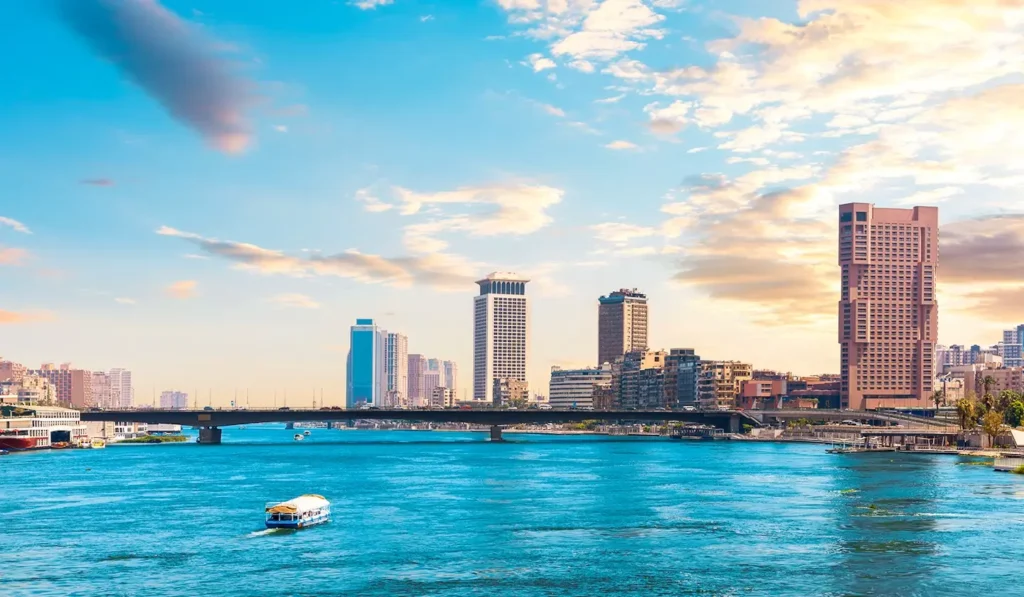
Cairo remains Egypt’s most-visited destination and is generally considered safe for tourists who take normal urban precautions.
The Pyramids of Giza, the Egyptian Museum, and the newly opened Grand Egyptian Museum all continue to operate with visible tourist police and security screening at entry points.
Petty theft and scams targeting tourists are more common than violent crime.
Luxor, Aswan, and the Nile Valley
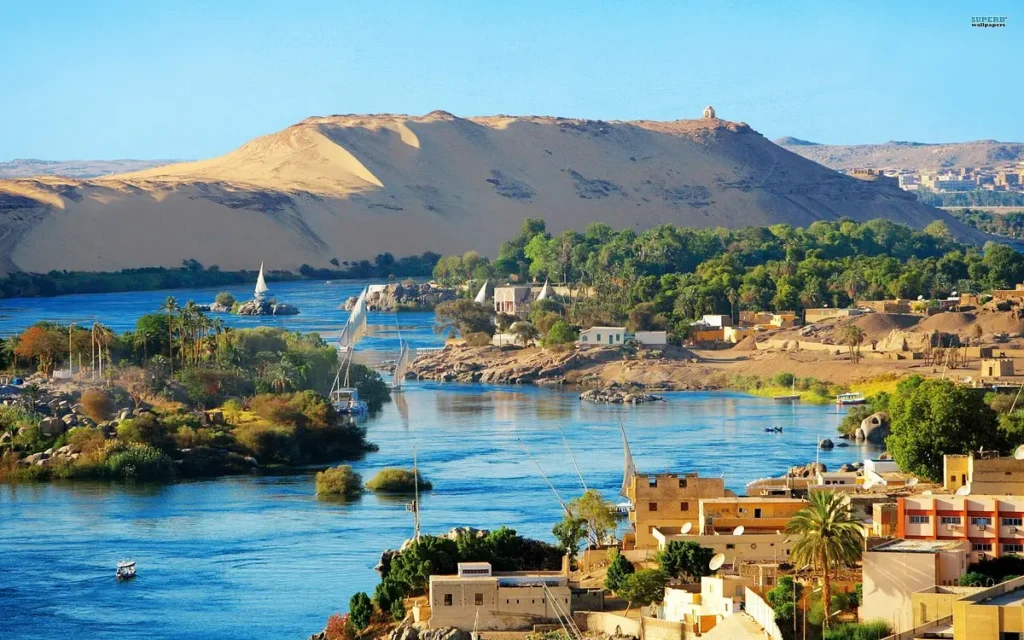
The temples, tombs, and Nile cruise route between Luxor and Aswan are explicitly named as accessible in UK and Australian advisories.
Cruise operators run boats in organized convoys with security checks at key points along the river, and tourist sites maintain dedicated security staff.
Read More: Things to See & Do in Aswan
Hurghada and the Red Sea Coast
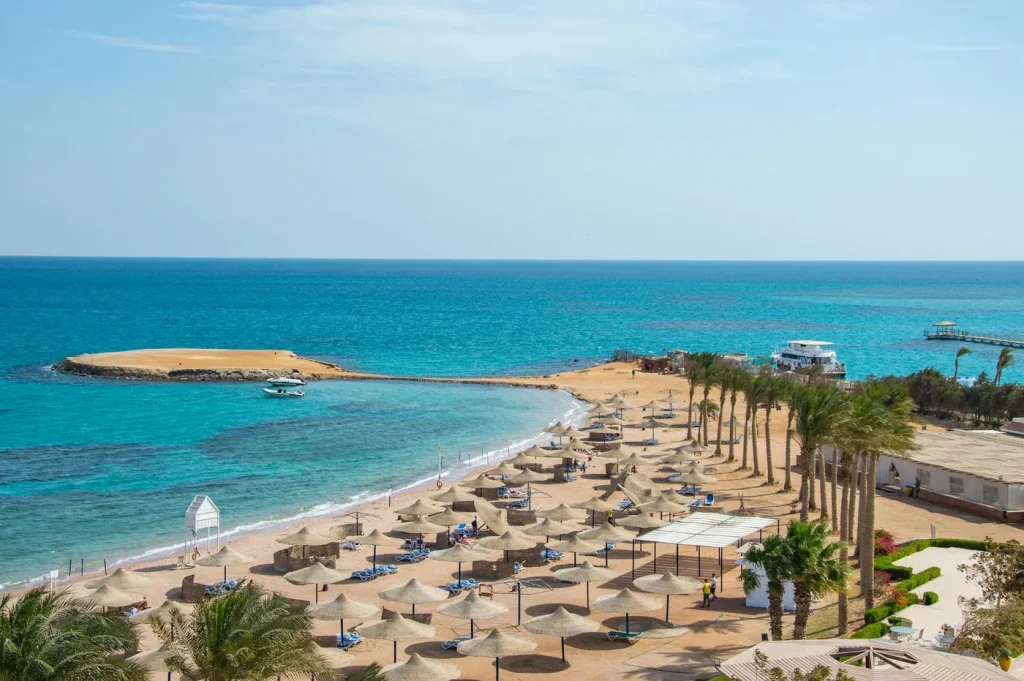
Hurghada, El Gouna, Sahl Hasheesh, and Marsa Alam continue to operate normally, with no government currently recommending against travel here.
These resort towns function largely independently of the political situation elsewhere in the country, and the diving and beach tourism industry has continued uninterrupted.
Explore: Hurghada Tours
Sharm El Sheikh
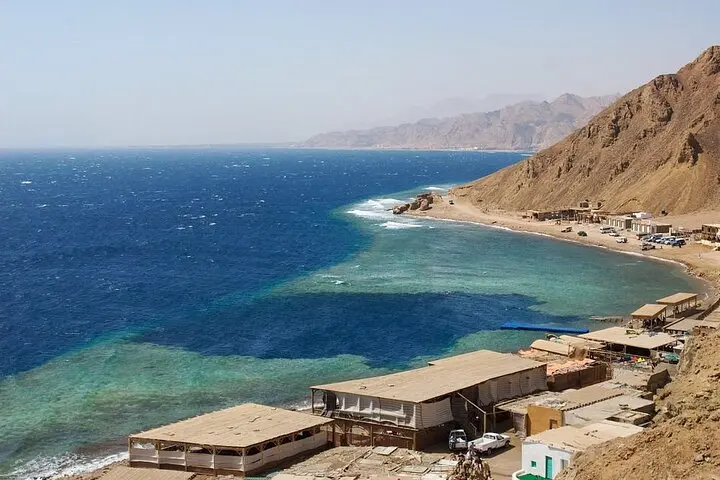
Sharm El Sheikh is one of the more heavily secured tourist zones in Egypt, with a significant security presence around resorts and the airport.
The FCDO’s guidance here is slightly more specific than for Hurghada: it advises against travel beyond the immediate resort perimeter in parts of South Sinai, but does not advise against visiting the resort area itself.
Explore: Sharm El Sheikh Tours
Where Should You Avoid?
- North Sinai: including the Taba-Suez Road, every major government advises against all travel here due to an active terrorism and violent crime risk.
- The Libyan border area, avoid travel within roughly 40 kilometers of the border due to instability and landmine risk.
- Areas near the Sudanese border, including the Hala’ib Triangle.
- Off-marked paths in coastal and desert regions, where landmines from past conflicts remain in some locations.
If your trip doesn’t involve any of these areas, and the vast majority of tourist itineraries don’t, you’re operating well within the boundaries every government considers acceptable.
Terrorism and Security Risk in Egypt
Terrorism remains a background risk in Egypt, as it does in most countries with a significant tourism sector.
Advisories consistently note that attacks could occur with little warning, and that potential targets can include security forces, religious sites, government buildings, and locations that draw crowds of tourists or foreign nationals.
In practice, no major attack has struck a mainstream tourist site since 2017, largely because of Egypt’s heavy investment in tourism-specific security: metal detectors and bag scanners at site entrances, visible tourist police patrols, and escorted transport for cruises and desert excursions.
Sensible precautions apply here just as they would in any city with a security presence:
- Stay aware of your surroundings in crowded areas and near major landmarks.
- Avoid demonstrations or protests, even ones that appear peaceful.
- Keep a mental exit plan for any venue you’re visiting.
- Follow instructions from local authorities and tourism police without delay.
- Monitor local and embassy communications for updates during your stay.
Are Flights to Egypt Operating Normally?
Yes. Cairo International Airport (CAI), Hurghada International Airport (HRG), Luxor International Airport (LXR), and Sharm El Sheikh International Airport (SSH) have continued operating at full capacity throughout the period of regional tension.
Egyptian aviation authorities have issued directives for maximum readiness at airports nationwide as a precaution, but this reflects heightened vigilance rather than any disruption to normal operations.
The bigger practical risk isn’t Egypt’s own airports, it’s connections. Several international carriers, particularly Gulf-based airlines like Emirates, Etihad, and Qatar Airways, have periodically adjusted schedules in response to wider regional airspace conditions.
If your route connects through Dubai, Doha, or another Gulf hub, build in some schedule flexibility and check your airline’s status before departure. according to cntravellerme
What About Travel Insurance?
Most standard travel insurance policies are tied to your home government’s official advisory level, not to news headlines.
As long as your government has not issued a “do not travel” warning for the specific area you’re visiting, your policy should function normally.
If you’re heading somewhere close to a restricted zone, or your government’s advisory changes after you’ve booked, check with your insurer directly, coverage in a “do not travel” area is often void or significantly limited, and consular assistance may also be restricted in those zones.
Read More about: How Much Is a Trip to Egypt?
Should You Cancel Your Egypt Trip?
For the overwhelming majority of travelers with plans centered on Cairo, the Nile cruise route, Luxor, Aswan, Hurghada, or Sharm El Sheikh, there is currently no advisory-based reason to cancel.
Travel professionals working directly with clients in Egypt, including those running active Nile cruises, describe a pattern of increased inquiries about contingency plans rather than actual disruption on the ground.
The practical advice from the industry is consistent: stay flexible, monitor your airline and embassy communications, and avoid the specific restricted zones rather than treating the whole country as off-limits.
If your itinerary does include North Sinai, the Libyan border region, or areas near Sudan, that’s a different conversation, those are the places where “reconsider your need to travel” or “do not travel” guidance genuinely applies, and it’s worth taking seriously.
Why You’ll Love Traveling to Egypt With EgyptianTrips
Planning a trip to Egypt on your own can be overwhelming — from navigating visa requirements to figuring out which sites are worth the crowds and which guides you can actually trust.
EgyptianTrips takes that stress off your plate. With local experts who know Cairo’s back streets as well as the Nile’s cruise schedules, every itinerary is built around real, current conditions rather than outdated guidebooks.
You’ll get vetted drivers, skip-the-line access to major sites like the Pyramids and the Grand Egyptian Museum, and itineraries that steer clear of restricted zones without sacrificing the experiences that make Egypt worth visiting in the first place.
Whether you’re dreaming of sailing the Nile from Luxor to Aswan, diving the Red Sea in Hurghada, or watching the sunset over Sharm El Sheikh, EgyptianTrips turns a bucket-list destination into a trip you can book with confidence.
If you’d like, tell me a bit more about EgyptianTrips, what it actually offers, its tone, target traveler — and I can tighten this to match your brand voice more precisely.
What travelers say about EgyptianTrips
Perfect and highly recommended ⭐️⭐️⭐️⭐️⭐️
A very great travel company 👍🏻👍🏻👍🏻 Very competent, polite, nice and courteous. All our wishes were fulfilled perfectly. Just great, we can only recommend!! The tours are great, we have seen and gotten to know a lot and always had our super guide with us 👏🏻😃
Thanks again to Hassan.
Jenny H
Used them 2x & both trips were excellent!
We had a fantastic time. Mohamed, his drivers and his tour guides were knowledgeable and friendly. We felt safe our entire time in Cairo.
They did all of the work planning our tours and getting tickets ready. There was always an air conditioned car and cold water ready for us. They did such a great job that we went back a second time and Mohamed prepared everything for us again.
His prices were reasonable too.
Check More TripAdvisor Reviews: EgyptianTrips Review
Ready to Explore Egypt?
Don’t just read about Egypt — come experience it for yourself.
Free ConsultationFree Cancellation · Expert guides · Best-prices
Frequently Asked Questions
Is it safe to travel to Cairo right now?
Yes. Cairo remains one of Egypt’s most-visited and most heavily secured cities, with tourist police present at major sites and no government advisory recommending against travel there.
Is it safe to travel to Egypt right now because of the war?
The broader Middle East conflict has not extended into Egypt’s territory or tourist areas. Its main practical effect is occasional flight schedule disruption on routes connecting through other Gulf hubs, not a direct security threat within Egypt itself.
Is it safe to travel to Hurghada right now?
Yes. Hurghada and the surrounding Red Sea resort towns continue to operate normally, and no major government currently advises against travel there.
Is it safe to travel to Sharm El Sheikh right now?
Yes, with one nuance: some advisories recommend staying within the resort area itself rather than venturing into the wider South Sinai interior.
What is the current situation in Egypt right now?
Egypt’s tourist economy is operating normally, with major sites, airports, and resorts functioning at full capacity. The main areas of active government concern remain North Sinai and the Libyan and Sudanese border regions, which fall outside standard tourist itineraries.
Do I need travel insurance to visit Egypt?
It isn’t legally required for most visitors, but it’s strongly recommended, particularly given the pace at which regional advisories can shift. Confirm your policy responds appropriately to your government’s current advisory level for Egypt.