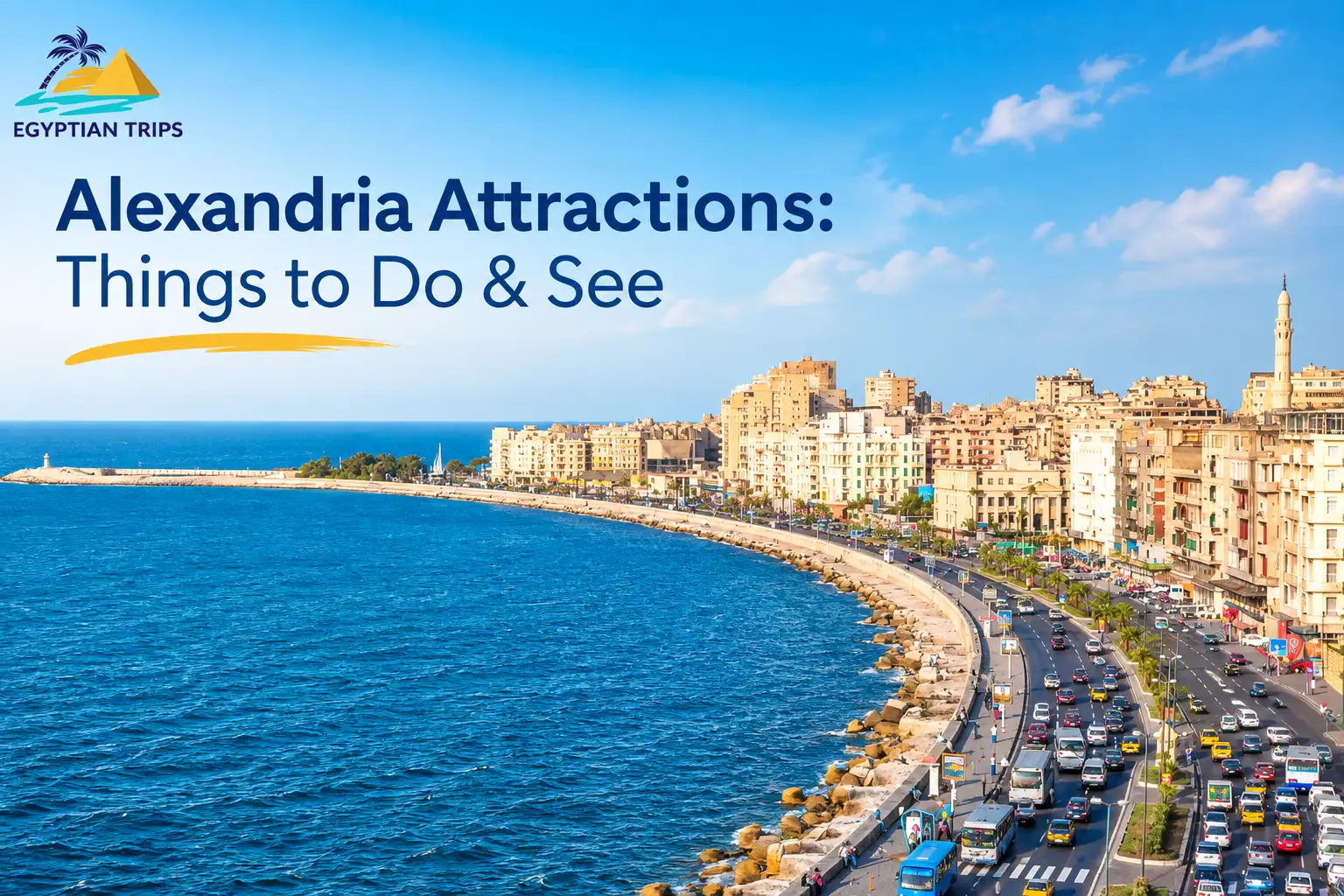
Most first-time visitors to Egypt build their itinerary around Cairo, Luxor, and the pyramids of Giza, and understandably so. But Alexandria, Egypt’s second-largest city and its historic gateway to the Mediterranean, deserves a place on that list too.
Founded by Alexander the Great in 331 BC, Alexandria attractions was once the intellectual and cultural capital of the ancient world, home to the legendary Library of Alexandria and the Pharos Lighthouse, one of the Seven Wonders of the Ancient World.
Neither structure survives today, but the city that grew up around their legacy is still packed with Alexandria tourist attractions worth a day or two of any Egypt trips.
This guide walks through the top things to see in Alexandria, Egypt, its ancient catacombs, Greco-Roman ruins, waterfront landmarks, old town neighborhoods, and the practical details you’ll need to plan a visit.
Why Visit Alexandria, Egypt
Alexandria connected pharaonic Egypt to the classical world of Greece and Rome, and that layered history is still visible in the city’s architecture, its museums, and even its street life.
It was here that Cleopatra ruled and built political alliances with Julius Caesar and later Mark Antony, and where scholars from across the ancient Mediterranean gathered at the Mouseion, the research institution attached to the Great Library.
Unlike Cairo or Luxor, Alexandria doesn’t have monumental pharaonic temples to show off, much of its ancient core, including Cleopatra’s former palace complex, now lies submerged offshore, and the rest has been built over many times through the centuries.
What Alexandria offers instead is a different kind of experience: a working Mediterranean port city with genuine old town character, a strong seafood scene, a long corniche made for sunset walks, and pockets of Greco-Roman, Ottoman, and 19th-century European history tucked between modern apartment blocks.
It’s a city for wandering as much as sightseeing, and one of the best places in Egypt to observe daily life away from the busiest tourist trails.
Where is alexandria egypt?
Alexandria is situated in northern Egypt on the southern coast of the Mediterranean Sea, positioned at the western edge of the Nile River delta within the Lower Egypt region. Check Location.
Top Historical Attractions in Alexandria
Catacombs of Kom el-Shoqafa
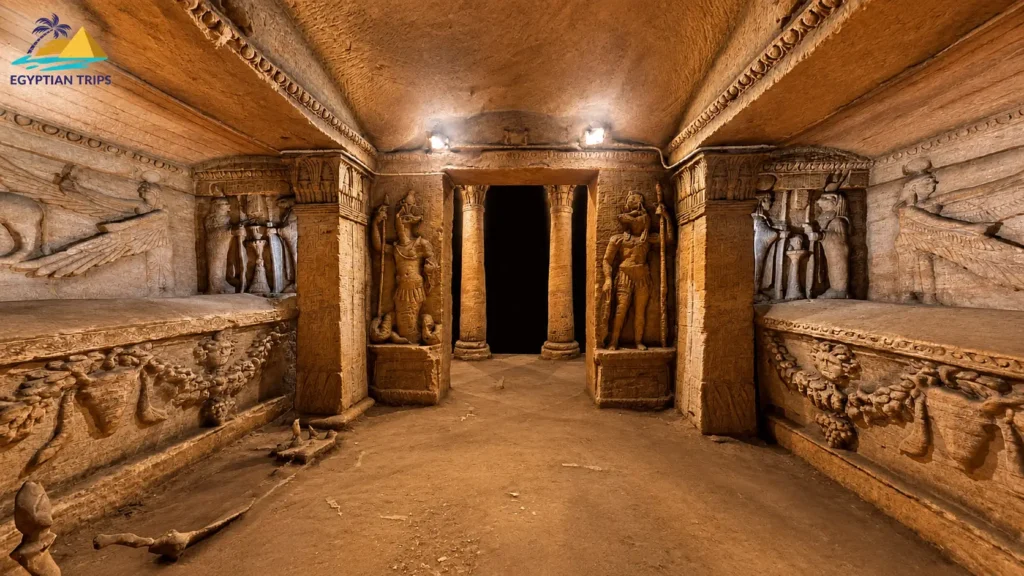
The Catacombs of Kom el-Shoqafa are widely considered Alexandria’s single most fascinating sight, and for good reason: nowhere else in Egypt do Egyptian, Greek, and Roman artistic traditions merge quite so vividly.
Carved into the rock roughly 2,000 years ago, the catacombs began as a burial vault for a single wealthy Roman family before expanding into a multi-level complex used until the 4th century AD.
A spiral staircase leads down through several levels (the lowest are flooded and inaccessible) to burial chambers decorated with a striking mix of Egyptian gods dressed in Roman military attire, alongside classical Greek architectural details.
The site also contains a mass grave linked to a brutal massacre ordered by the Roman emperor Caracalla in 215 AD.
It was rediscovered by accident in 1900, when a donkey reportedly fell through the ground into the complex below.
Bibliotheca Alexandrina
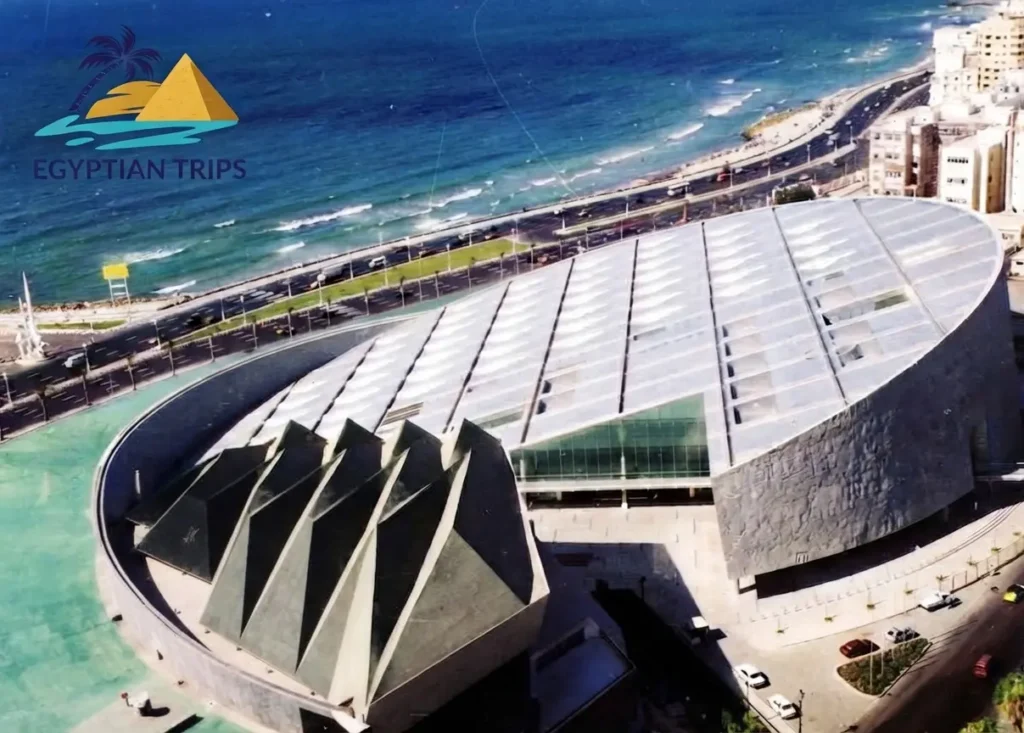
The modern Bibliotheca Alexandrina, inaugurated in 2002, was built as a tribute to the ancient Great Library of Alexandria, one of the most significant centers of learning in the classical world before it was lost to fire and neglect over successive centuries.
The striking circular building dominates the city’s Corniche and holds space for close to 8 million books, alongside a planetarium, a Manuscript Museum, an Antiquities Museum, and rotating art exhibitions.
The main reading room, shaped like a sundial and topped with a glass roof that floods the space with natural light, seats more than 2,000 readers and is worth seeing even if you’re not planning to browse the stacks.
Qaitbay Citadel
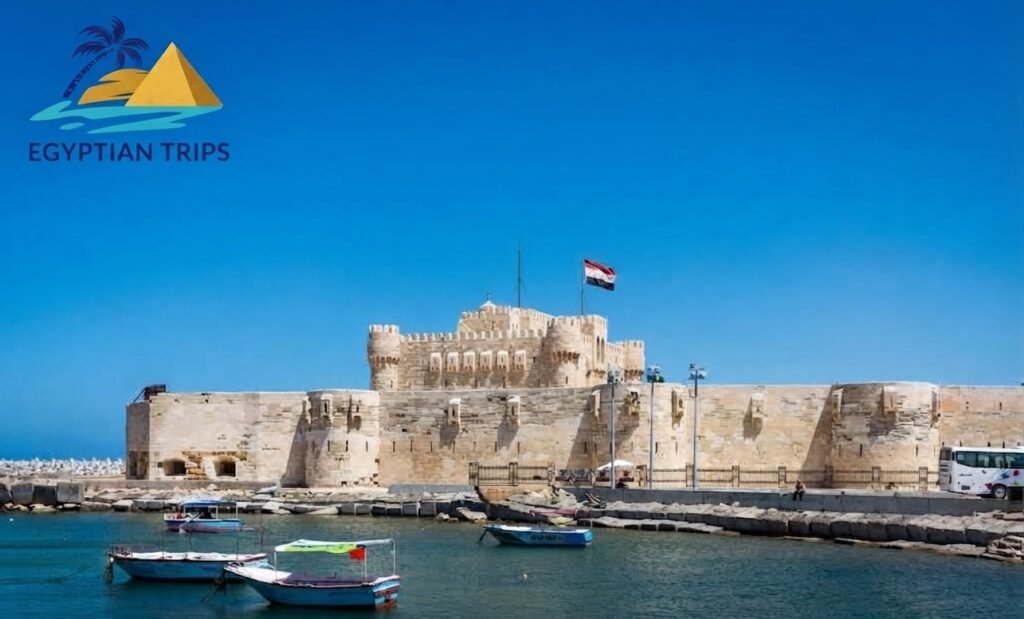
Built in 1477 by Mamluk Sultan Qaitbay to defend Alexandria’s harbor against Ottoman advances, this fortress sits on a strategic spit of land jutting into the Mediterranean, and, notably, on the exact foundations of the ancient Pharos Lighthouse, which had collapsed after repeated earthquake damage by the 14th century.
The citadel has been damaged and rebuilt several times since, most significantly after a British naval bombardment in 1882.
Today it houses a small naval museum and offers some of the best harbor and skyline views in the city, especially at sunset.
Pompey’s Pillar and the Serapeum
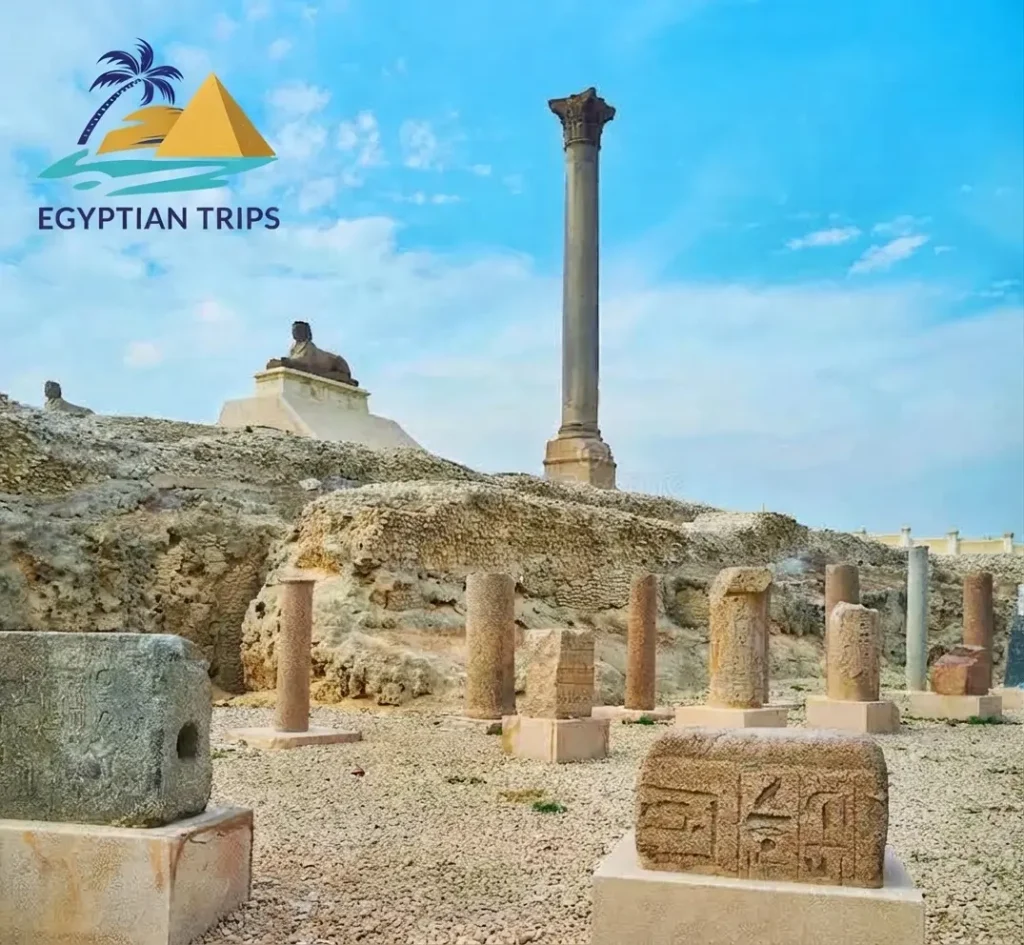
Despite its name, Pompey’s Pillar has nothing to do with the Roman general Pompey, it was actually erected around 297 AD to honor Emperor Diocletian.
The 20-meter red granite column is what remains most visible of the Serapeum of Alexandria, once the largest Greek temple in the city, dedicated to the god Serapis.
When the Great Library outgrew its original space, overflow scrolls were reportedly stored in the Serapeum’s underground galleries, some of which are still accessible today alongside a statue of the god Mithras.
Roman Christian soldiers destroyed the temple in 391 AD as part of a wider campaign against pagan worship sites, but the pillar itself survived.
Kom el-Dikka
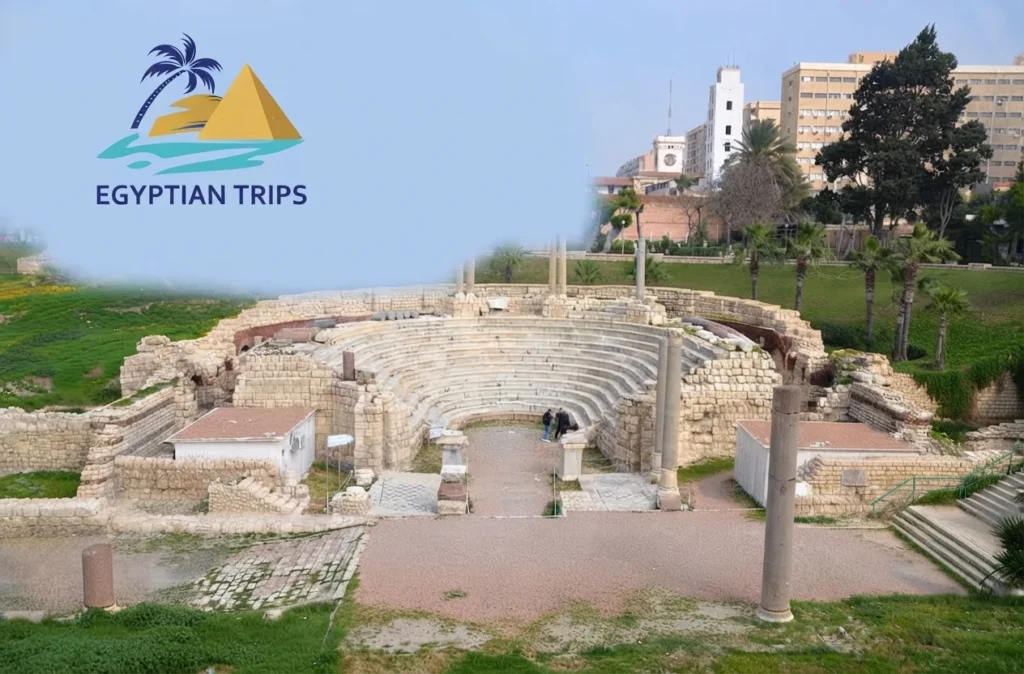
Kom el-Dikka, whose name translates roughly to “mound of rubble,” is easy to underestimate at first glance.
It’s home to Egypt’s only surviving Roman amphitheater, along with the remains of a wealthy 1st-century residential district and some well-preserved mosaic floors.
It won’t rival major Roman sites elsewhere in the Middle East for scale, but as a rare piece of intact Roman-era urban Egypt, it’s worth the short visit.
Montaza Palace and Gardens
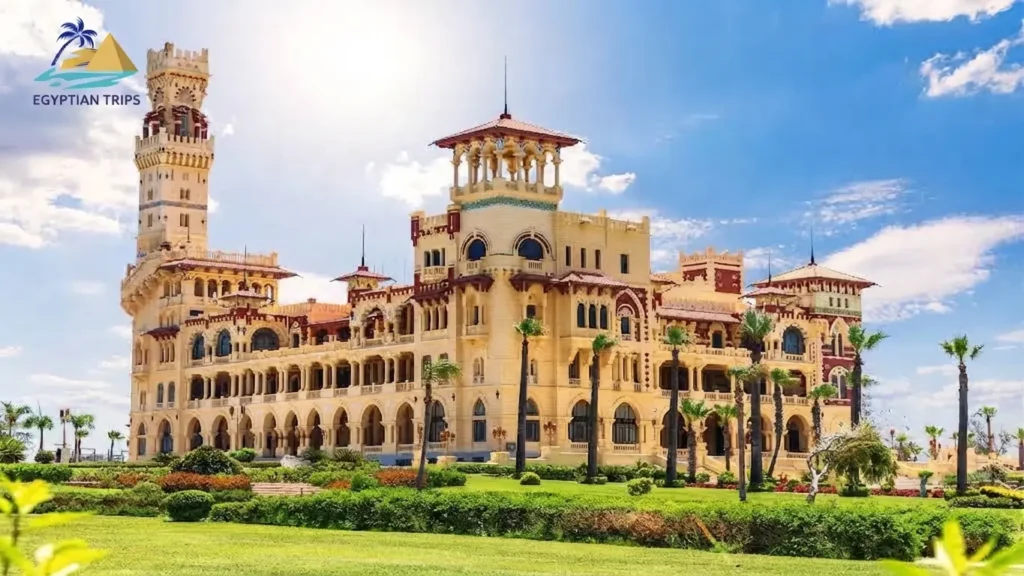
Built in 1892 by Khedive Abbas II as a royal hunting lodge and summer residence, Montaza sits at the eastern end of Alexandria’s Corniche.
The palace grounds are no longer restricted to royalty; they’re now a public seaside park, and one of the most relaxing spots in the city to unwind among palm trees, flowerbeds, and small private coves.
The Al-Haramlik Palace on the grounds is a highlight of the gardens even though the interior isn’t open to visitors.
Alexandria National Museum
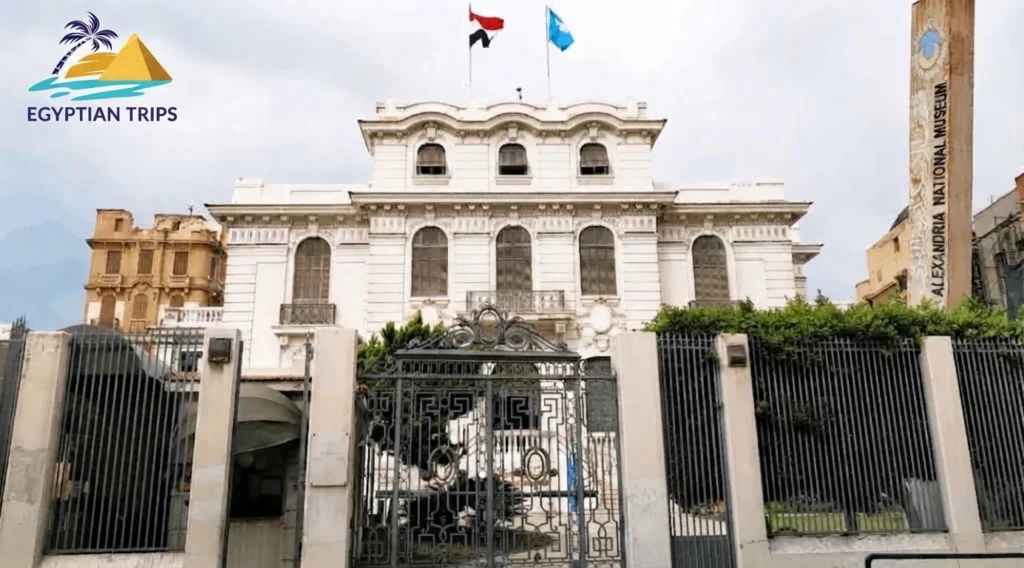
Housed in a restored early 20th-century villa, the Alexandria National Museum offers a compact but well-organized overview of the city’s history.
Exhibits are arranged chronologically, starting with the Pharaonic era in the basement and moving up through the Ptolemaic, Roman, Byzantine, and Islamic periods.
It’s smaller and far less overwhelming than Cairo’s Egyptian Museum, making it a good option if you want context on Alexandria’s layered past without an entire day’s commitment.
Sidi Abu al-Abbas al-Mursi Mosque
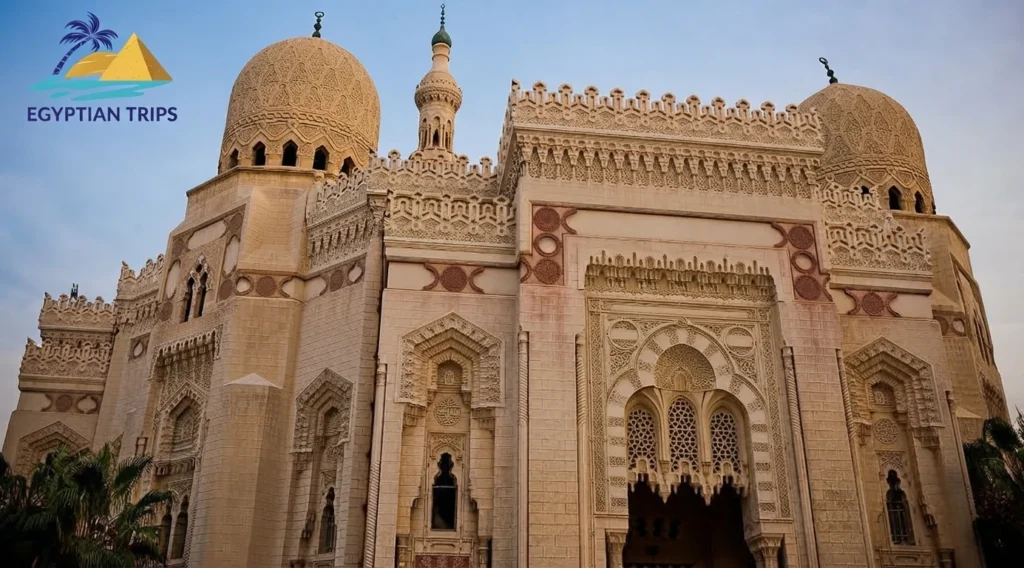
The largest mosque in Alexandria, and reportedly one of the design inspirations for the Sheikh Zayed Mosque in Abu Dhabi, this mosque stands in the historic Anfushi district.
Though the current structure dates only to the early 20th century, the site has been an important place of worship since 1287, when the Sufi saint Abu al-Abbas al-Mursi was buried there.
Royal Jewelry Museum
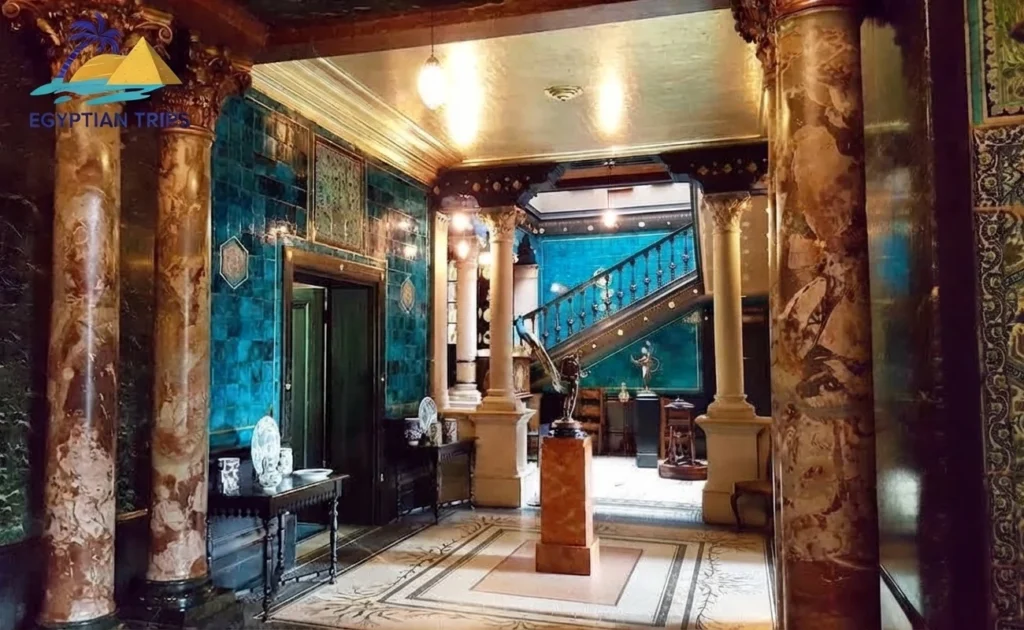
Housed in a former royal palace, the Royal Jewelry Museum displays an extravagant collection of jewelry, ornaments, and personal items belonging to Egypt’s royal family from the 19th and 20th centuries.
It’s a niche stop compared to the city’s ancient sites, but a worthwhile one for anyone interested in Egypt’s more recent royal history.
Comparing Alexandria’s Top Attractions
| Attraction | Best For | Time Needed | Era |
| Catacombs of Kom el-Shoqafa | History and unique architecture | 45–60 min | Roman (2nd–4th century AD) |
| Bibliotheca Alexandrina | Culture, architecture, families | 1–2 hours | Modern (2002) |
| Qaitbay Citadel | Views and photography | 45–60 min | Mamluk (1477) |
| Pompey’s Pillar & Serapeum | Ancient ruins enthusiasts | 30–45 min | Roman (3rd–4th century AD) |
| Kom el-Dikka | Roman archaeology | 30–45 min | Roman (1st century AD) |
| Montaza Gardens | Relaxing and walking | 1–2 hours | Khedival (1892) |
Check ou Guide: Family Trips to Egypt
Old Town Alexandria: Neighborhoods and Local Life
Beyond the marquee sights, some of the best things to do in Alexandria involve simply wandering its old town districts.
Anfushi
Just south of Qaitbay Citadel, is where the city’s earliest settlement began, dating back to around 1500 BC. It’s a lived-in, unpolished neighborhood of narrow streets, local cafés, and everyday commerce rather than a preserved historic district, which is exactly its appeal for travelers who want to see Alexandria as residents experience it.
Alexandria’s fish market
Right next to the citadel, is busiest in the early morning hours when fishermen bring in the day’s catch and negotiate prices with vendors. It’s noisy, unscripted, and one of the more authentic slices of daily life in the city.
The Souq district
West of Tahrir Square, is Alexandria’s main bazaar, geared toward locals rather than tourists, which is part of its charm.
Expect narrow lanes packed with stalls selling spices, household goods, and trinkets, plus some of the city’s best casual Egyptian restaurants tucked into the surrounding streets. Bargaining is expected.
The Corniche
Alexandria’s 10-mile waterfront promenade, ties the whole city together.
It runs from Qaitbay Citadel past Anfushi, the Bibliotheca Alexandrina, and on toward Montaza Palace, passing grand 19th- and 20th-century buildings from the city’s cosmopolitan, multicultural era, including the historic Cecil Hotel, once a favorite of Winston Churchill.
A sunset walk along the Corniche is, for many visitors, the single best way to experience the city.
St. Mark’s Coptic Cathedral and the Eliyahu Hanavi Synagogue
Both located near the bazaar, are reminders of Alexandria’s long multicultural and multi-faith history. Security around both sites is understandably tight following past attacks, and access can be limited, but they remain significant landmarks of the city’s religious diversity.
Food and Local Cuisine in Alexandria
Many visitors find Alexandria’s food scene even more compelling than Cairo’s, thanks largely to its coastal location and Mediterranean influences.
- Ful medames (a seasoned fava bean paste) and falafel are Alexandria’s signature breakfast, best tried at long-running local institutions.
- Fresh seafood is a genuine highlight, grilled fish, shrimp, and calamari are widely available near the fish market and along the Corniche.
- Molokhiya, a soup made from jute leaves with roots in pharaonic-era Egyptian cuisine, is a distinctly local specialty worth trying at least once, traditionally served without meat.
- Seafront cafés dotted along the Corniche are ideal for Egyptian tea or coffee with a Mediterranean view, especially after a visit to the Bibliotheca Alexandrina.
Know More About: Egyptian Traditional Dishes
Planning Your Trip: Practical Travel Tips
How to Get to Alexandria
Borg El Arab Airport, about 45 kilometers southwest of the city, handles both domestic and international flights, including some budget routes from Europe.
Most travelers, however, arrive from Cairo by train or bus, the train is generally the more comfortable option, while the journey by road takes roughly 2 to 3 hours either way.
Alexandria also has bus connections to Marsa Matruh and Siwa Oasis for travelers continuing along Egypt’s north coast.
What travelers say about EgyptianTrips
Perfect and highly recommended ⭐️⭐️⭐️⭐️⭐️
A very great travel company 👍🏻👍🏻👍🏻 Very competent, polite, nice and courteous. All our wishes were fulfilled perfectly. Just great, we can only recommend!! The tours are great, we have seen and gotten to know a lot and always had our super guide with us 👏🏻😃
Thanks again to Hassan.
Jenny H
Used them 2x & both trips were excellent!
We had a fantastic time. Mohamed, his drivers and his tour guides were knowledgeable and friendly. We felt safe our entire time in Cairo.
They did all of the work planning our tours and getting tickets ready. There was always an air conditioned car and cold water ready for us. They did such a great job that we went back a second time and Mohamed prepared everything for us again.
His prices were reasonable too.
Are you a fan of Alexandria?
Travel into the past and check out our specialized Alexandria trips to see these places in person.
Free ConsultationFree Cancellation · Expert guides · Best-prices
Read More: Is It Safe to Travel to Egypt Right Now?
When to Visit
Spring (March to May) and fall (September to November) offer the most comfortable weather, with daytime highs around 24–28°C (75–82°F). Summer (June to August) brings heat and humidity above 30°C (86°F), though with fewer crowds and lower prices.
Winter (December to February) is cooler and rainier, making it a better season for museums and indoor sights than beach time.
Read More: Best Time to Visit Egypt
Where to Stay
Alexandria’s accommodation options range widely by budget.
Budget travelers gravitate toward hostels and simple guesthouses along the sea-facing boulevard, while mid-range hotels near the city center offer more comfort without a major price jump.
For a splurge, the historic Cecil Hotel remains Alexandria’s most famous address, with a guest list that has reportedly included Winston Churchill and Agatha Christie.
Traveling Responsibly in Alexandria
Tourism is an important source of income for Alexandria’s local economy, and a few simple habits go a long way toward making that impact a positive one:
- Choose locally owned restaurants, guesthouses, and markets over international chains where possible.
- Carry a reusable water bottle; single-use plastic remains a significant pollution issue in Egypt.
- Dress modestly, particularly around mosques and religious sites, in keeping with local customs.
- Ask before photographing people, and learn a few basic Arabic phrases, small gestures that are consistently well received.
Might be Interesting: How Much Is a Trip to Egypt?
Frequently Asked Questions
How many days do you need in Alexandria?
One full day is enough to cover Alexandria’s core highlights, the Catacombs of Kom el-Shoqafa, Qaitbay Citadel, and the Bibliotheca Alexandrina, which is why many visitors treat it as a day trip from Cairo. Two days allows time to also explore Anfushi, the Souq, Pompey’s Pillar, and the Corniche at a more relaxed pace.
Is Alexandria worth visiting if I’ve already been to Cairo?
Yes. While Alexandria doesn’t have Cairo’s pyramids or the Egyptian Museum’s scale, it offers a genuinely different atmosphere, Mediterranean, cosmopolitan, and layered with Greco-Roman rather than purely pharaonic history, along with some of the best seafood in the country.
Can you visit Alexandria as a day trip from Cairo?
Yes, this is the most common way travelers experience the city. The train or bus journey from Cairo takes roughly 2 to 3 hours each way, making a well-planned day trip realistic, though an overnight stay allows more breathing room.
What is Alexandria most famous for?
Alexandria is best known as the site of the ancient Great Library of Alexandria and the Pharos Lighthouse, one of the Seven Wonders of the Ancient World, as well as its connection to Alexander the Great and Cleopatra.
Is Pompey’s Pillar worth visiting?
Yes, particularly if you’re interested in Roman-era Egypt. Beyond the pillar itself, the underground galleries of the former Serapeum add historical depth that’s easy to miss on a quick photo stop.