Most ancient Egyptian temples are dedicated to a single god. The Temple of Kom Ombo breaks that rule entirely, and that’s exactly what makes it one of the most distinctive stops on a trip along the Nile.
Split perfectly down the center, this Ptolemaic-era temple honors two gods side by side: Sobek, the crocodile-headed god of fertility and the Nile, and Horus the Elder, the falcon-headed god of kingship and protection.
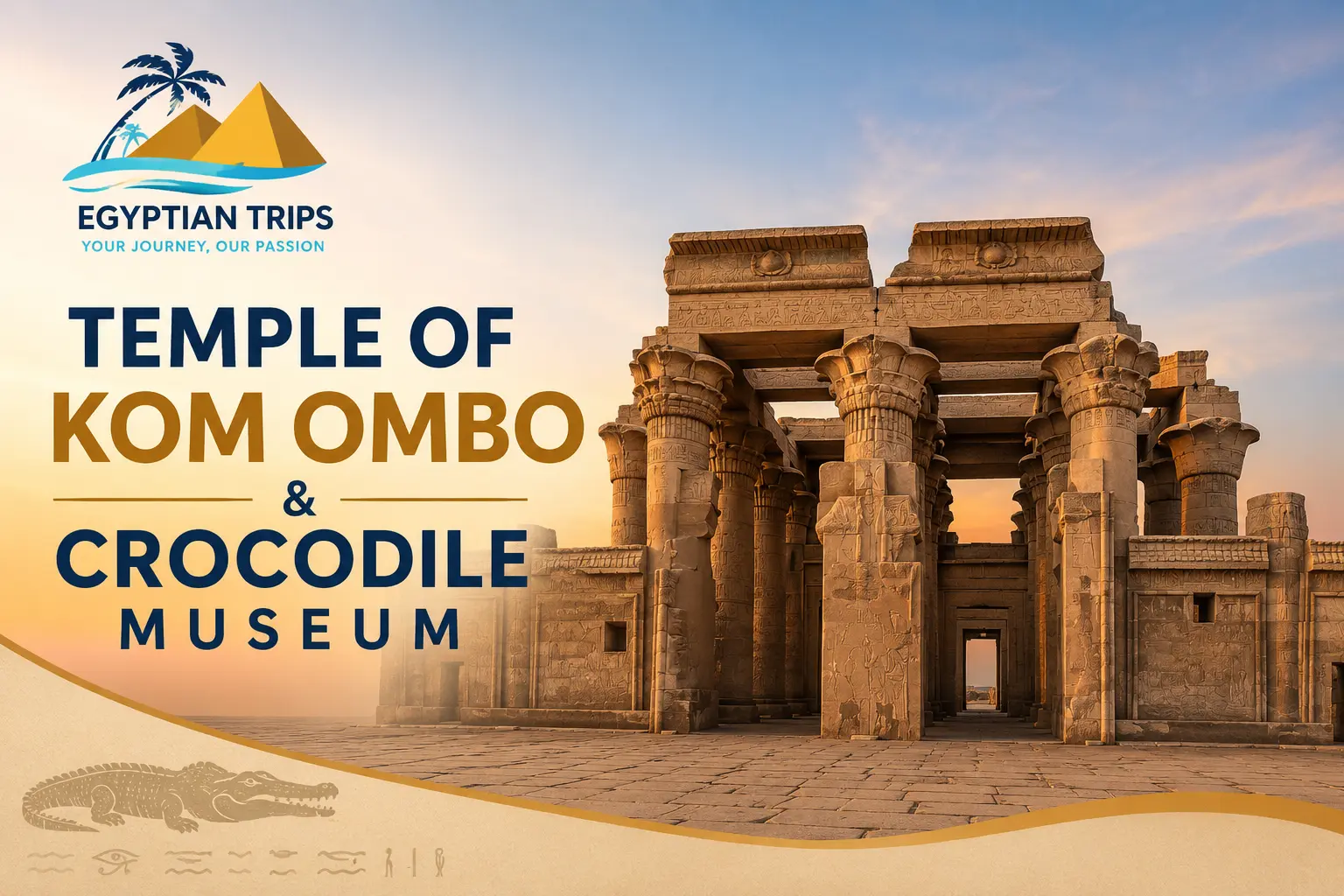
Walk through it and you’ll notice the symmetry almost immediately, two entrances, two hypostyle halls, two sanctuaries, mirrored down to the smallest architectural detail.
Perched on a bend in the Nile River about 30 miles (48 km) north of Aswan, the Temple of Kom Ombo is a regular stop on Nile cruise itineraries and a worthwhile detour for independent travelers exploring Upper Egypt.
This guide covers everything worth knowing before you go: the temple’s history and dual religious meaning, what to actually look for once you’re inside, practical details like ticket prices and opening hours, and tips that go beyond what most standard tour stops cover.
Temple of Kom Ombo
The Temple of Kom Ombo is an ancient Egyptian temple complex in the town of Kom Ombo, in Aswan Governorate, Upper Egypt. Construction began during the Ptolemaic dynasty, with the core structure dating to between 180 and 47 BC, and additional decoration and building work continued into the Roman period.
According to Ministry of Tourism and Antiquities in Egypt, the name Kom Ombo is generally interpreted as meaning “the golden city,” with “Ombo” derived from the ancient Egyptian word Nubt, or Nebt, meaning gold, fitting for a site that remains one of the more visually striking temples in Upper Egypt, especially at sunset.
What sets Kom Ombo apart from nearly every other ancient Egyptian temple is its dual dedication.
Rather than honoring a single deity, the temple was built as two mirrored halves: one side dedicated to Sobek, and the other to Horus the Elder.
This structural choice wasn’t decorative, it reflects a specific piece of Egyptian mythology worth understanding before you visit.
Know more about: Family Tree of Ancient Egyptian Gods
Temple of Kom Ombo photos
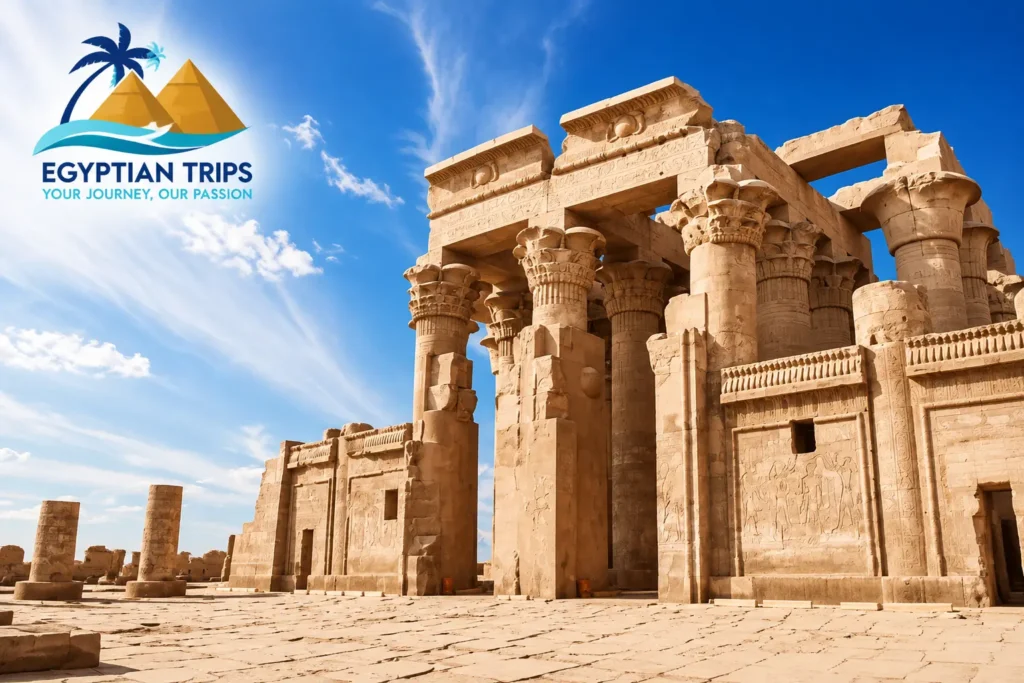
History of Kom Ombo Temple in Ancient Egypt
Who Built the Temple of Kom Ombo
Construction of the temple as it stands today began under Ptolemy VI, around 180 BC, marking the start of the Ptolemaic dynasty’s building work at the site.
Later Ptolemaic kings expanded and decorated the temple over the following century, and Roman rulers added further architectural and decorative elements up through roughly 47 BC and beyond.
This layered construction history, Ptolemaic Greek rulers building on Egyptian religious tradition, with Roman additions layered on top, is part of what makes Kom Ombo an interesting case study in how ancient Egyptian temple architecture evolved under foreign rule.
The Meaning Behind the Name Kom Ombo
In ancient times, the settlement now known as Kom Ombo was referred to as Nbu, meaning “Gold”, a name that later evolved into the site’s modern interpretation as “the golden city.”
The connection between Kom Ombo and gold likely reflects the town’s historical role as a trading post along routes linking Egypt to Nubia, a region long associated with gold sources to the south.
Know more: Things to See & Do in Aswan
The Spiritual Meaning of the Temple: Sobek and Horus
Unlike most ancient Egyptian temples dedicated to a single primary deity, Kom Ombo was uniquely built to honor two gods side by side:
- Sobek: The crocodile god of the Nile, fertility, and protection, representing the untamed, powerful forces of the river.
- Horus the Elder (Haroeris): The falcon-headed god of kingship and the sky, representing order and divine protection.
Architectural Duality
The temple’s physical layout mirrors this divine partnership. Nearly every architectural element, including gateways, courtyards, hypostyle halls, and inner sanctuaries—is built twice, perfectly mirrored along a central axis.
Deeper Mythological Significance
The pairing carries profound symbolic weight:
- In some Egyptian traditions, Sobek was linked to Seth, Horus’s historic rival and enemy (whose allies supposedly escaped justice by turning into crocodiles).
- By housing Sobek and Horus together rather than in opposition, the temple acts as a powerful symbol of balance—uniting the raw, chaotic forces of the natural world with divine order and protection.
Read More: ancient Egyptian queens
Kom Ombo Temple Highlights
Beyond its overall symmetry, several specific features make a visit to Kom Ombo worth slowing down for rather than rushing through in ten minutes.
The Dual Design: Two of Everything
The clearest way to appreciate Kom Ombo is to physically walk both halves rather than sticking to the central spine most tour groups follow.
Reliefs on the Sobek side of the temple feature crocodiles and crocodile-headed figures, while the Horus side mirrors them with falcon-headed imagery, the same scenes, essentially, told twice from two different divine perspectives.
Rare and Unusual Reliefs
Kom Ombo is also known for a few carved scenes you won’t easily find elsewhere in Egypt. One wall depicts a childbirth scene, while a Roman-era niche toward the back of the temple contains a relief of surgical and medical instruments, a striking, nearly 1,800-year-old carved record of ancient medical tools that many standard tours skip entirely but that rewards a closer look.
The Crocodile Museum
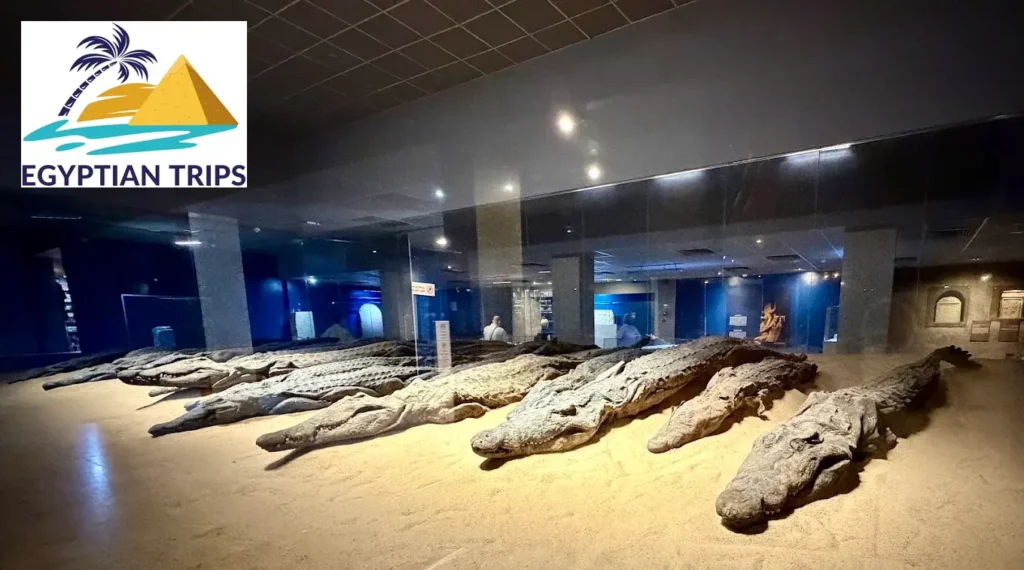
Just beside the temple, the Crocodile Museum houses a portion of the roughly 300 mummified crocodiles discovered in the surrounding area, once considered sacred animals tied to the cult of Sobek.
On display are dozens of mummified crocodiles, including one specimen measuring close to 15 feet long.
The collection connects directly to a nearby well more than 50 feet deep, where crocodiles associated with Sobek’s cult were historically raised.
Most guided visits allocate only about ten minutes here, worth extending if you can, since the museum adds real context to the Sobek half of the temple.
Visiting the Temple: What to Expect
Kom Ombo’s setting is part of its appeal. Positioned directly along a bend in the Nile River, the temple has a commanding presence over the water, and its sandstone columns take on a distinctly warm, golden tone in late-afternoon light, a detail that connects visually back to the site’s ancient name.
Compared to larger sites like Karnak or Edfu, Kom Ombo is relatively compact. That’s not a drawback, it’s simply a different kind of experience.
Where Edfu and Karnak impress through sheer scale, Kom Ombo works through composition, symmetry, and setting, and most visitors comfortably explore the full site in 45 minutes to 1.5 hours.
The layout is flat and open, making it accessible and easy to walk through for visitors of nearly any age or mobility level.
Best Time of Year to Visit
October through April is generally the best season to visit the Temple of Kom Ombo, when daytime temperatures in Upper Egypt are far more comfortable than the intense summer heat common to Aswan and the surrounding region.
Best Time of Day to Visit
Late afternoon and sunset are widely considered the ideal time to visit Kom Ombo, the low sun casts a warm glow across the temple’s columns and reliefs, which is also why many Nile cruise itineraries schedule their stop here around dusk.
Independent travelers aiming to catch this light should target roughly 4:30 PM in winter or 6:00 PM in summer.
Alternatively, arriving right at opening, around 7:00 AM, is the best way to beat both the heat and the larger cruise-ship tour groups.
Tips for a Better Visit
- Walk both the north and south aisles, not just the central spine, to fully appreciate the temple’s mirrored design.
- Give the Crocodile Museum at least 20–30 minutes rather than the rushed 10 minutes most group tours allow.
- Look for the Roman-era medical instruments relief near the back of the temple, a detail many guides skip entirely.
- Avoid comparing Kom Ombo to Edfu or Karnak in terms of scale; it’s a smaller site that rewards attention to detail rather than sheer size.
Kom Ombo Temple Tickets and Practical Information
| Ticket Type | Price (EGP) | Price (USD, approx.) |
| Foreign Adult | 450 EGP | $9–$10 |
| Foreign Student (valid ID required) | 225 EGP | ~$5 |
Most travelers spend between 45 minutes and 1.5 hours exploring the temple and adjoining Crocodile Museum.
Once you’re in the town of Kom Ombo itself, getting around is straightforward, the temple, museum, and small local restaurants are all within easy walking distance of one another.
The Nile River and Felucca Rides at Kom Ombo
The Nile isn’t just scenery at Kom Ombo, it’s central to the site’s identity, both historically and for modern visitors.
Many travelers choose to experience the river the way ancient Egyptians once did, with a felucca ride, a traditional wooden sailing boat, along the calm waters near the temple.
Seeing Kom Ombo’s columns rising above the riverbank from the water adds a different perspective than the standard land-based approach most tour groups take, and it’s a peaceful way to spend thirty minutes to an hour if your schedule allows for it.
Explore More: Best Nile River Cruises in Egypt
Where to Eat Near the Temple of Kom Ombo
Kom Ombo is a small town, so don’t expect an extensive restaurant scene, most eating establishments here serve the local population first, with simple, satisfying meals rather than elaborate tourist menus. That’s not a downside; it’s a chance to eat the way Egyptians actually eat in Upper Egypt. Dishes worth trying include:
- Koshari: a hearty mix of rice, lentils, pasta, and chickpeas topped with tomato sauce and fried onions; one of Egypt’s most iconic and affordable comfort foods.
- Falafel (Ta’amiya): Egypt’s version uses fava beans rather than chickpeas, giving it a distinct flavor, typically served in pita with tahini, vegetables, and pickles.
- Grilled meats, lamb, chicken, or beef skewers served with rice or bread and a simple salad.
- Fiteer, sometimes called Egyptian pizza, a flaky layered dough filled with either savory or sweet ingredients.
How to Get to the Temple of Kom Ombo
Kom Ombo is most commonly visited either as a scheduled stop on a Nile cruises between Aswan and Luxor, or as a day trip from Aswan combined with the nearby Temple of Edfu.
EgyptianTrips offers a private, fully guided day tour to both the Kom Ombo and Edfu temples from Aswan, with departures available any day and full flexibility to customize the itinerary around your interests.
- Transportation: private, air-conditioned vehicle
- Languages available: English, German, and French
- Guide: fully guided throughout
- Best season: October through April
- Price: starting from $185 per adult
know more about the trip: Private tour to Kom Ombo and Edfu Temples from Aswan
Whether you’re joining a Nile River cruise or traveling independently through Aswan, having a knowledgeable guide on hand makes it far easier to catch details like the medical instruments relief or the full mirrored layout that a self-guided visit can easily miss.
Ready to explore every tour across Egypt?
From the Pyramids of Giza to Nile cruises and golden desert escapes — browse our full collection and find the trip that fits you, expertly guided start to finish.
Free ConsultationFree cancellation · Expert guides · Best-price promise
FAQ
What is the Temple of Kom Ombo known for?
Kom Ombo is known for being one of the only temples in ancient Egypt dedicated to two gods at once, Sobek, the crocodile god, and Horus the Elder, with a perfectly mirrored double design and an adjoining museum of mummified crocodiles.
Is the Temple of Kom Ombo worth visiting?
Yes, while smaller than sites like Karnak or Edfu, Kom Ombo’s unique dual-god design, riverside setting, and Crocodile Museum make it a worthwhile and relatively quick stop, especially when combined with a Nile cruise or an Aswan day trip.
How long does a visit to Kom Ombo Temple take?
Most travelers spend 45 minutes to 1.5 hours exploring the temple and the Crocodile Museum together.
How much are tickets to the Temple of Kom Ombo?
Foreign adult tickets cost 450 EGP (roughly $9–$10), while foreign students with a valid student ID pay 225 EGP (around $5).
How far is Kom Ombo from Aswan?
The Temple of Kom Ombo is located about 30 miles (48 km) north of Aswan, making it an easy half-day or full-day trip when combined with the Temple of Edfu.
Is Kom Ombo Temple easy to walk through?
Yes, the layout is open, flat, and generally accessible for visitors of all ages and most mobility levels.
What is the best time to visit Kom Ombo Temple?
October through April offers the most comfortable weather, and late afternoon or sunset is the best time of day, when warm light highlights the temple’s columns and reliefs, though early morning around 7:00 AM is a good option for avoiding crowds and heat.