Ancient Egypt was a civilization dominated by powerful pharaohs, patriarchal traditions, and divine kingship. Yet, against the odds, a few extraordinary women shattered the thousand-year glass ceiling to claim ultimate power.
They didn’t just rule as ancient Egyptian queens behind the scenes, they took the full royal title, commanded armies, commissioned grand architectural wonders, and left an indelible mark on history.
Let’s dive into the fascinating lives and reigns of Egypt’s greatest female rulers: Sobekneferu, Hatshepsut, and Nefertiti.
If you’d like to visit these Queens, Egyptian Trips can help you plan the journey, from private guided days in Luxor to longer itineraries.
1. Sobekneferu: The First Female Pharaoh
- Era: 19th Century BC (12th Dynasty / Middle Kingdom)
- Name Meaning: “The Beauty of Sobek”
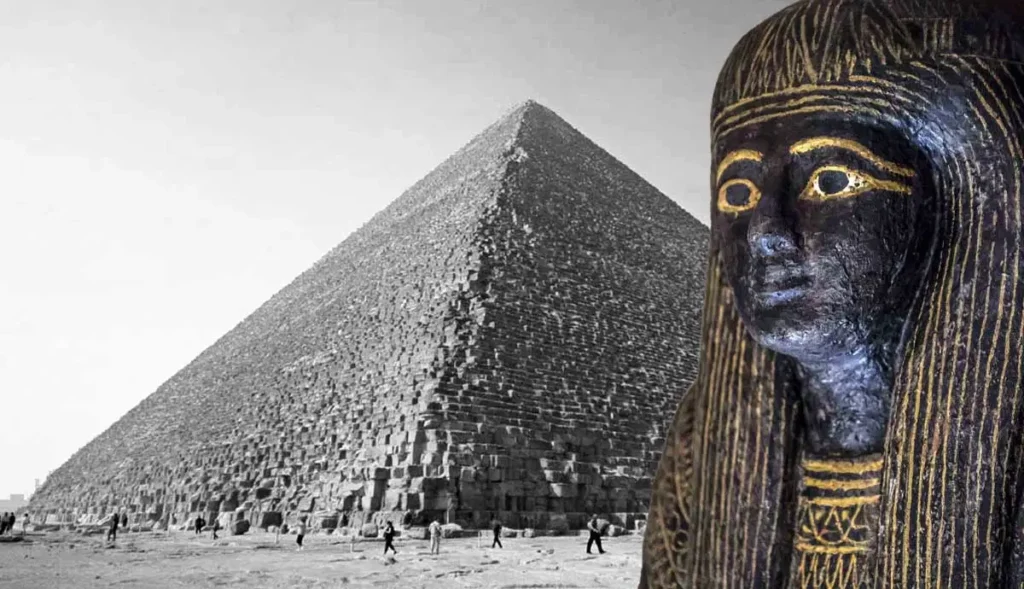
When Amenemhat IV died without a male heir, ancient Egypt faced a succession crisis. To preserve stability, Egyptian elites made the unprecedented decision to elevate a woman to the throne. Enter Sobekneferu, the first confirmed female pharaoh in Egyptian history.
Breaking Tradition
Traditionally, the crown belonged exclusively to men, viewed as the earthly embodiment of Horus. Sobekneferu broke this millennia-old mold by adopting the complete five-fold royal titulatory, making her a fully fledged pharaoh in her own right rather than just a queen regent.
She took the name of the ancient crocodile god, Sobek (the creator of the Nile and lord of fertility and military prowess). While she wore traditional male pharaonic attire like the Kilt and headdress out of respect for custom and to appease critics, she cleverly retained subtle feminine elements in her artistic representations.
Legacy and Mystery
Sobekneferu proved to be a strong ruler during a tumultuous time. She made significant contributions to her father’s mortuary pyramid complex at Hawara (hailed by the ancient Greek historian Herodotus as a labyrinth even more awe-inspiring than the pyramids).
Her reign ended abruptly after nearly four years, concluding Egypt’s 12th Dynasty and marking the twilight of the Middle Kingdom’s Golden Age. To this day, her tomb remains undiscovered.
2. Hatshepsut: The Master of Trade and Architecture
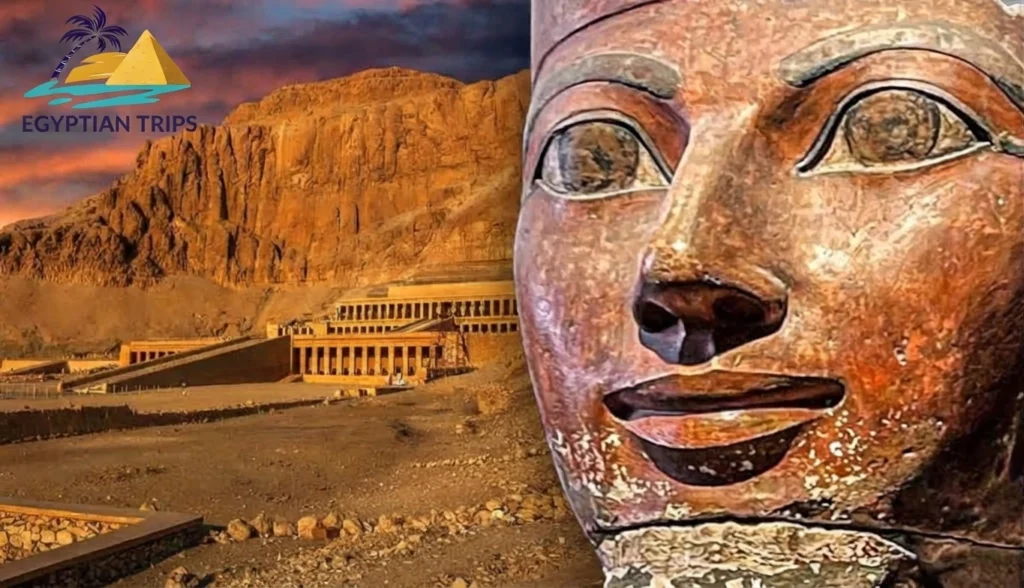
- Era: Early 15th Century BC (18th Dynasty / New Kingdom)
- Name Meaning: “Foremost of Noble Ladies”
Hatshepsut: The Queen Baddie Who Reigned as Egypt’s Master of Trade and Architecture
When we think of powerful women in history, ancient Egypt immediately comes to mind. But among its legendary rulers, one stands out not just for her incredible reign, but for how she completely redefined royal authority: Hatshepsut.
As one of the very few female rulers of Egypt, Hatshepsut didn’t just rule, she commanded the full power of a king. But if you look at her historical depictions, you might notice something striking: she was routinely depicted as and referred to as a pharaoh, complete with the traditional male royal regalia, including the iconic false beard.
Why did ancient Egypt’s most successful female leader dress and present herself like a man?
Unrivaled Lineage and Divine Right
Living in the early 15th Century BC during the 18th Dynasty of the New Kingdom, Hatshepsut, whose name means “Foremost of Noble Ladies”, possessed an unrivaled royal lineage as the daughter, sister, wife, and mother of pharaohs. After acting as queen regent for her young stepson, Thutmose III, she boldly stepped out of the shadows and declared herself Pharaoh of Egypt.
To legitimize a female pharaoh in a society where kingship was traditionally viewed as a divine male office (the living embodiment of Horus), Hatshepsut mastered the art of statecraft:
- She claimed that the god Amun had possessed her father’s body on the night of her conception, framing her rule as divine destiny.
- Backed by high-ranking officials like her overseer of works, Senenmut, she commissioned iconic statues depicting herself with a male body and a false beard.
By adopting this traditional iconography, she bypassed convention, proving that leadership and legacy transcend gender.
The Legendary Expedition to Punt
Because it was considered unthinkable for a female pharaoh to lead troops into battle personally, Hatshepsut focused her power outward through commerce. She launched a historic trade expedition to the Land of Punt (located somewhere around the Red Sea or Horn of Africa).
The voyage was a massive triumph, returning ships laden with:
- Treasures: Gold, ivory, frankincense, and myrrh.
- Exotic Wildlife: Animals like apes, panthers, and giraffes.
- Botanical History: Live trees with roots protected in baskets, making her the first ruler in history to successfully transplant foreign trees.
Architectural Marvels and Lasting Legacy
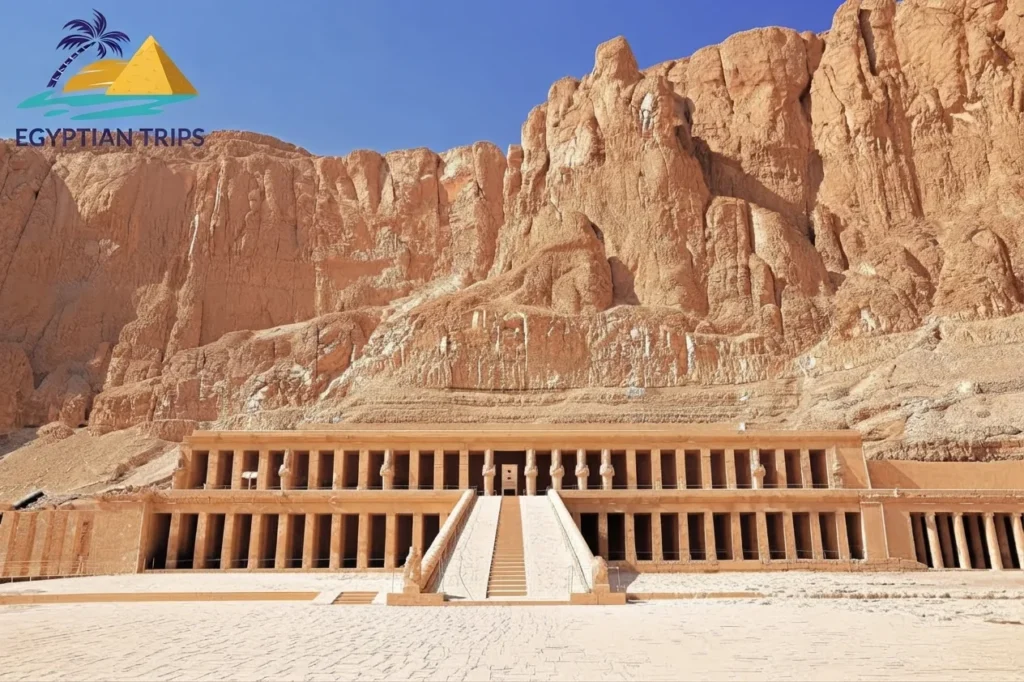
The immense wealth generated from trade funded a massive building boom. She erected towering pink granite obelisks at Karnak, one of which still stands as the tallest surviving ancient obelisk in Egypt, and built her masterpiece mortuary temple at Deir el-Bahari (Djeser-Djeseru), a breathtaking monument celebrating her divine birth and travels.
Though her successor, Thutmose III, later attempted to erase her image from history to safeguard the patriarchal line, Hatshepsut remains immortalized. She is remembered today as one of ancient Egypt’s most prosperous, visionary, and ultimate “queen baddies”, a leader who proved that power is defined by capability, vision, and strength.
Where to see her legacy: Her terraced mortuary temple, Djeser-Djeseru, sits beneath the cliffs on Luxor’s West Bank. Her obelisks stand at the Temple of Karnak, and the Unfinished Obelisk in Aswan trips hints at an even larger project.
3. Nefertiti: The Icon of Religious Revolution and Power
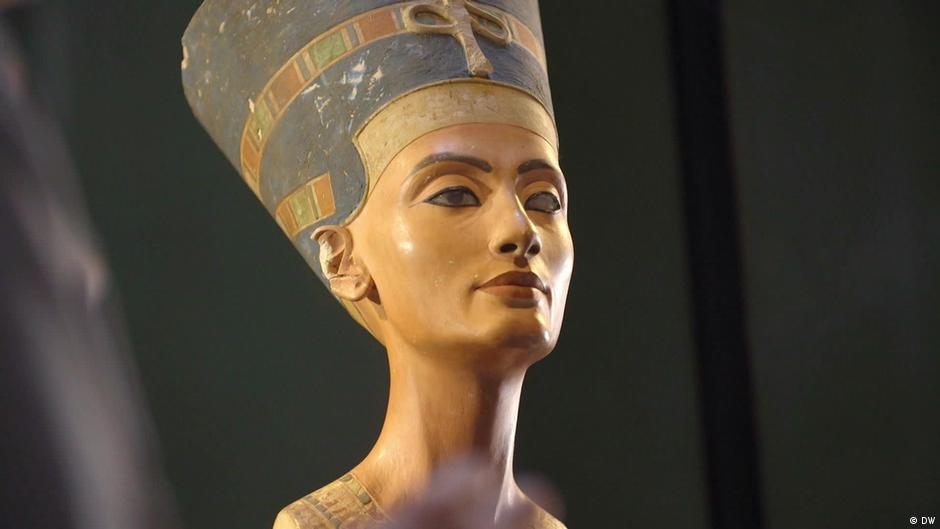
- Era: 14th Century BC (18th Dynasty / New Kingdom)
- Name Meaning: “The Beautiful Woman Has Come”
During the height of the New Kingdom, Nefertiti rose alongside her husband, Pharaoh Akhenaten, to spearholder a radical religious upheaval: shifting Egypt from polytheism to the worship of a single sun deity, Aten.
Partner in Power
Unlike most Egyptian queens who stayed in the background, Nefertiti wielded unprecedented influence. She was frequently depicted in art with equal stature to Akhenaten, driving chariots, smiting enemies, and conducting worship. She gave birth to six daughters and was revered almost as a living fertility goddess, donning a distinctive tall, flat-topped blue war crown.
When Akhenaten died, Nefertiti took power as sole pharaoh under the name Neferneferuaten, becoming the second New Kingdom female pharaoh after Hatshepsut.
In a desperate bid to protect Egypt’s stability without yielding the throne to young Tutankhamun, she famously wrote to the king of the Hittites asking for one of his sons to marry, a risky diplomatic move that ended in tragedy when the prince was assassinated en route.
The Iconic Bust
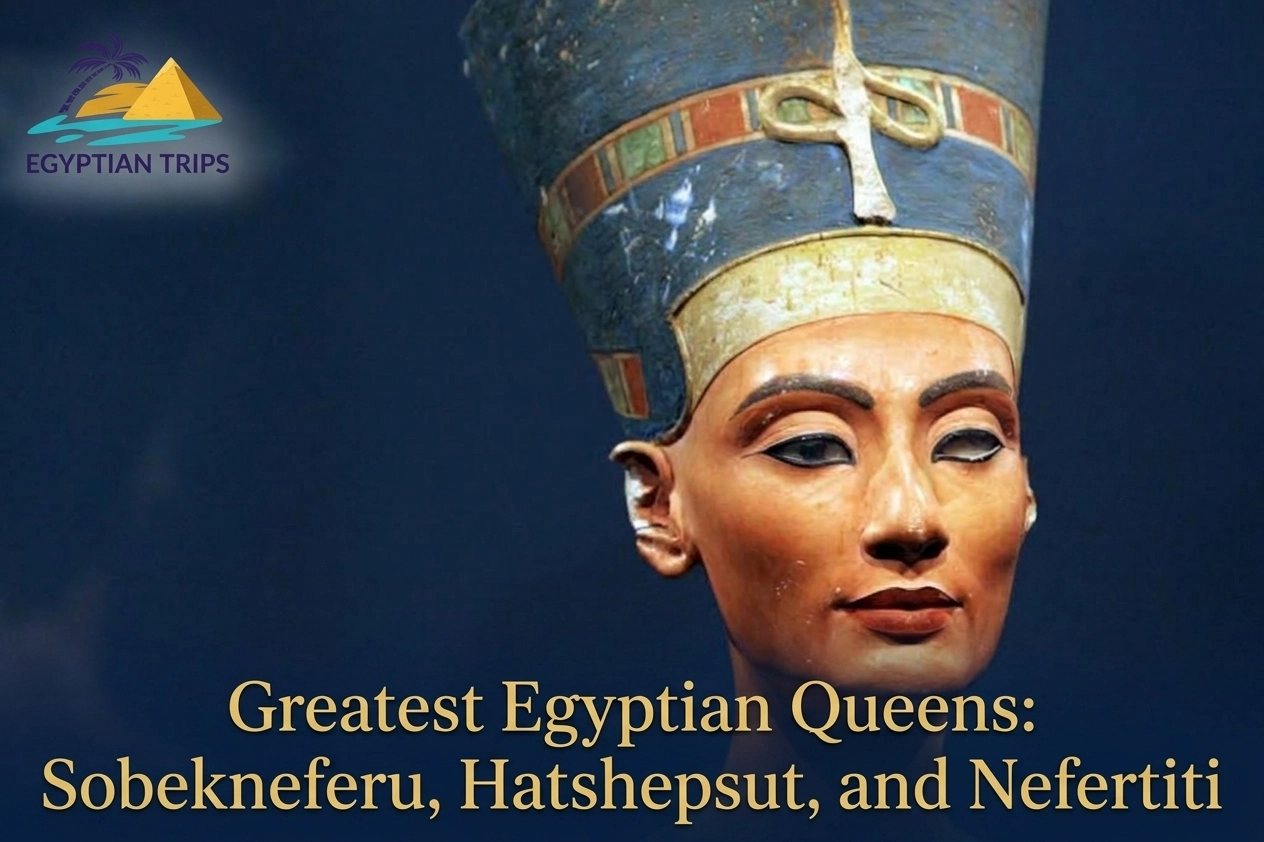
Nefertiti eventually vanished from history under mysterious circumstances, and her tomb remains one of archaeology’s greatest lost treasures. However, her legacy was cemented forever in 1912 when German archaeologists unearthed her stunning, lifelike limestone bust at Amarna.
Today, housed in the Neues Museum in Berlin, the Bust of Nefertiti stands as one of the most recognizable and breathtaking masterpieces of the ancient world.
Are you a fan of Ancient Egypt?
Travel into the past and check out our specialized hierology trips to see these incredible symbols and monuments in person.
Free ConsultationFree Cancellation · Expert guides · Best-prices
Browse our: Egypt Historical Tours
How Are Women Treated in Ancient Egypt?
Compared with their counterparts in ancient Greece, Rome and Mesopotamia, women in ancient Egypt were treated with a high degree of legal and economic equality. The Egypt Exploration Society and most Egyptologists describe a society where a woman’s legal standing did not depend on her husband or father.
This was not modern equality. Men filled almost all top government, military and temple offices, and literacy was limited to a small elite of both sexes.
Women’s rights were real but sat inside a hierarchical society. What set Egypt apart was how much practical independence a woman had in law, property and family life.
Three things shaped how women were treated:
- Law: Women were recognised as individuals before the courts.
- Property: Women’s wealth stayed theirs, including after marriage.
- Social ideals: Egyptian culture valued the “mistress of the house” and honoured mothers, wives and daughters in art and religion.
Ancient Egyptian Women Rights
Egyptian legal and property rights are the main reason the civilisation is so often cited in discussions of women’s history. Documents such as marriage contracts, wills and court records show these rights in practice.
Legal standing
- Women could sue, be sued, testify as witnesses and sign legal documents without a male guardian’s permission.
- They could represent themselves in court.
Property and inheritance
- Women could buy, sell, rent, mortgage and inherit land and goods.
- They could draw up legally binding wills and choose who inherited their property, including disinheriting relatives.
- Inheritance could pass from both parents to daughters as well as sons.
Marriage and divorce
- Marriage was a private, social arrangement rather than a state or religious ceremony. It began when a woman moved into her partner’s home.
- Many marriage contracts included financial support for the wife during the marriage and set out settlements in case of separation.
- Either spouse could initiate a divorce. A divorced woman was typically entitled to her dowry, maintenance and a share of the joint property, often a third in documented contracts.
| Area | Ancient Egypt | Many other ancient societies |
| Court appearances | Could testify and sue directly | Often needed a male representative |
| Property | Owned and controlled independently | Typically held by father or husband |
| Divorce | Available to women | Frequently restricted to men |
| Wills | Could write and enforce their own | Often limited or barred |
Daily Life of a Woman in Ancient Egypt
A woman’s daily life depended heavily on her class, but most women worked, and their work had economic value.
Household and family.
Many women held the title “mistress of the house,” running the home, raising children and managing domestic production. For wealthier families, this meant overseeing servants, storerooms and sometimes large estates.
Farming and textiles.
Peasant women worked alongside their husbands in the fields, tended animals and spun flax into linen, one of Egypt’s most important products.
Crafts and trade. Women worked as bakers, brewers, weavers, perfumers and market traders, and many earned their own income.
Professions and religious life.
Upper-class and specialised women worked as priestesses, musicians, dancers and professional mourners. Some held scribal or medical roles. Peseshet, associated with the Old Kingdom, is often cited as an early female physician.
Appearance, Clothing and Beauty
Ancient Egyptian women were typically shown in art as slender, youthful and graceful, with large almond-shaped eyes and dark hair. Tomb art was idealised and served the afterlife rather than recording how people looked, so you rarely see wrinkles or ageing.
- Makeup: Women across social classes wore black kohl around the eyes, made from minerals such as galena. It looked dramatic and helped protect against sun glare and eye infections. Red ochre tinted the lips and cheeks.
- Hair and wigs: Some women wore their natural hair long or braided. Others shaved their heads for hygiene and comfort in the heat. Wigs of human hair or plant fibre were worn on special occasions.
- Egyptian Clothing: The everyday garment was a fitted, ankle-length white linen sheath dress called a kalasiris. Wealthier women later wore finer, pleated and sheer linen.
- Jewellery: Collars, bracelets, rings and earrings were made from gold, silver, turquoise, lapis lazuli and carnelian. Those who could afford it wore the golden pieces now displayed in museums.
- Footwear: Most people went barefoot, using light leather sandals only when needed.
Browse our: Egypt Day Tours
Role of Women in Ancient Egypt
Beyond the household and the workshop, women held roles in religion, administration and royal politics.
Religion.
Women served as priestesses and held senior titles such as the God’s Wife of Amun, a position of real wealth and influence at Karnak. Egyptian religion also featured powerful female deities, including Isis, Hathor, Sekhmet, Mut and Maat.
Read More: Egyptian Gods Family Tree
Royal power.
A queen’s role went far beyond marrying a king. The Great Royal Wife was a political, religious and diplomatic partner who took part in temple rituals, appeared in royal art and sometimes corresponded with foreign courts.
A queen could also act as regent for a young heir, and in rare cases rule as pharaoh in her own right, such as Sobekneferu, Hatshepsut, Twosret and Cleopatra VII.
Symbols of status.
Queens were identified by their regalia. A crown featuring a vulture headdress or the royal uraeus cobra marked royal authority and divine protection. Their images appear on temple walls, statues and jewellery.
Seeing the Queens of Egypt in Person
The monuments of Egypt’s queens are spread between Luxor tours, Aswan and Abu Simbel. A well-planned itinerary can combine the temples of Hatshepsut, Karnak, the Valley of the Queens and Abu Simbel.
Museums such as the Egyptian Museum in Cairo, the Neues Museum in Berlin and international touring exhibitions, including The Queens of Egypt, first shown at the National Geographic Museum in Washington, D.C., help place the objects in context.
If you’d like to visit these sites, EgyptianTrips can help you plan the journey, from private guided days in Luxor to longer itineraries.
What travelers say about EgyptianTrips
Perfect and highly recommended ⭐️⭐️⭐️⭐️⭐️
A very great travel company 👍🏻👍🏻👍🏻 Very competent, polite, nice and courteous. All our wishes were fulfilled perfectly. Just great, we can only recommend!! The tours are great, we have seen and gotten to know a lot and always had our super guide with us 👏🏻😃
Thanks again to Hassan.
Jenny H
Used them 2x & both trips were excellent!
We had a fantastic time. Mohamed, his drivers and his tour guides were knowledgeable and friendly. We felt safe our entire time in Cairo.
They did all of the work planning our tours and getting tickets ready. There was always an air conditioned car and cold water ready for us. They did such a great job that we went back a second time and Mohamed prepared everything for us again.
His prices were reasonable too.
Read More: How Much Is a Trip to Egypt?
FAQs about Egyptian Queens
What did ancient Egyptian women look like?
Art shows them as slender and graceful with large almond-shaped eyes, but this was an idealised style. In real life, Egypt’s population was diverse over its roughly three-thousand-year history, with a wide range of skin tones and features shaped by contact across North Africa, the Mediterranean and the Near East. Women commonly wore kohl, wigs or braided hair, white linen dresses and gold or beaded jewellery.
Did ancient Egyptians treat women like goddesses?
Not exactly. Egyptian religion honoured powerful goddesses such as Isis, Hathor and Maat, and queens were often linked with them in royal imagery. Ordinary women were not treated as divine, but they held real legal and economic rights, and mothers and wives were highly respected.
Why were women important in Ancient Egypt?
Women were central to family life, the economy and religion. They ran households, produced food and textiles, owned property and served in temples. Royal women also carried political and religious weight, and some ruled Egypt directly.