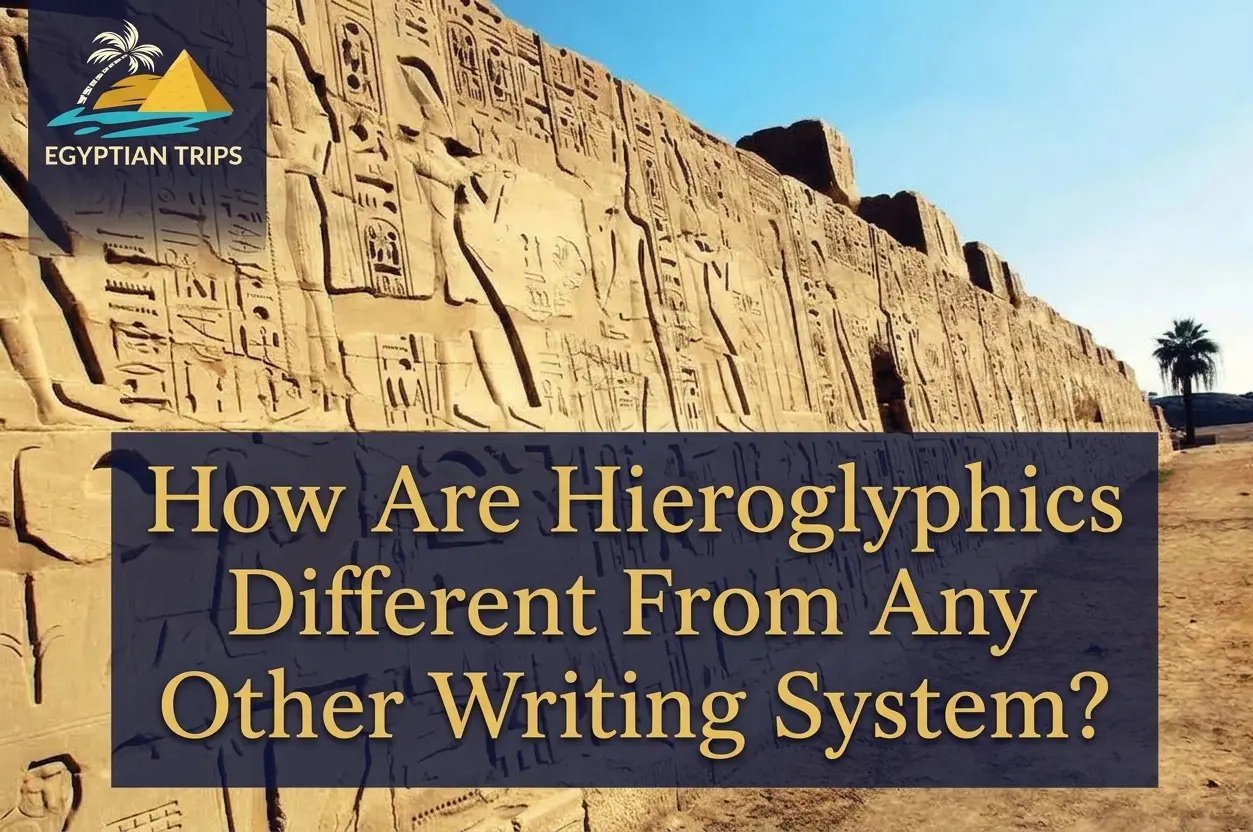
Ask most people what makes Egyptian hieroglyphics unique, and they’ll usually mention the pictures, birds, eyes, wavy lines, little seated figures carved into temple walls. That’s part of the answer, but it’s not the whole story.
What actually sets hieroglyphics apart from other writing systems, including its closest ancient relative, Mesopotamian cuneiform, is that it operated on three different levels of meaning at once: some symbols represented whole words or ideas, some represented sounds, and some simply clarified what category a word belonged to.
No modern alphabet works this way, and few ancient scripts combined all three functions as elegantly as hieroglyphics did.
This guide from EgyptianTrips breaks down exactly how hieroglyphics compare to other writing systems, phonetic alphabets, syllabaries, and other logographic scripts, and explains what these symbols were actually used for in ancient Egyptian life.
What Exactly Is a Hieroglyphic Writing System?
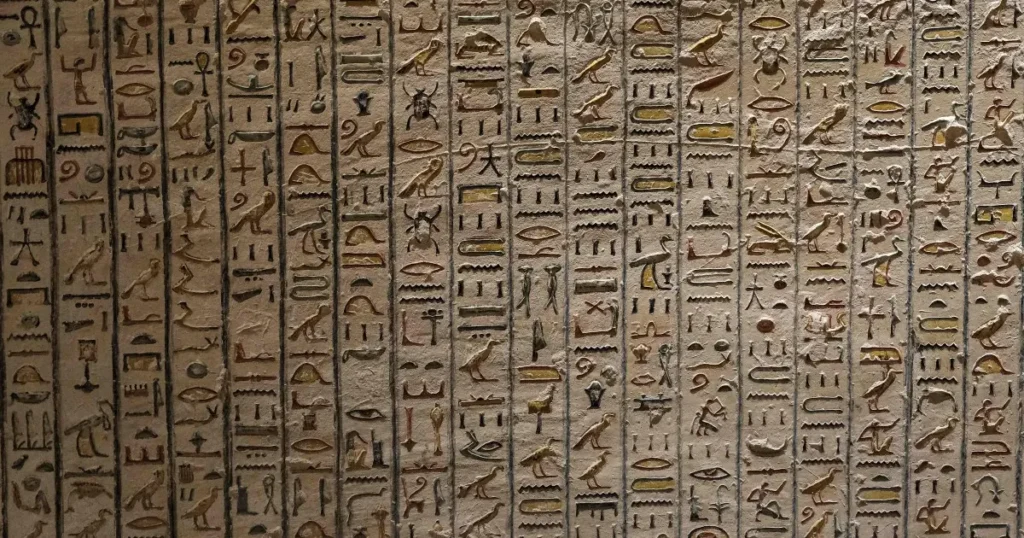
The word “hieroglyph” comes from the Greek hieroglyphika, meaning “sacred carvings”, a name Greek visitors gave the script because they mostly encountered it on temple walls and monuments.
The ancient Egyptians themselves called it medu netjer, or “words of the gods.”
Egyptian hieroglyphs first appeared around 3200 BCE, making the script one of the oldest known writing systems in the world, alongside Sumerian cuneiform.
It remained in active use for more than 3,000 years, only falling out of practice by the 4th century CE as Egypt shifted toward Coptic and, later, Arabic script.
Unlike an alphabet, where each symbol (or small combination of symbols) represents a single sound, Egyptian hieroglyphs functioned as a mixed writing system.
This is the core reason hieroglyphics differ so fundamentally from the writing systems most people use or recognize today.
Know more about: Family Tree of Ancient Egyptian Gods
Powerful Ancient Egyptian Symbols and Their Meanings
The Ankh (The Key of Life)
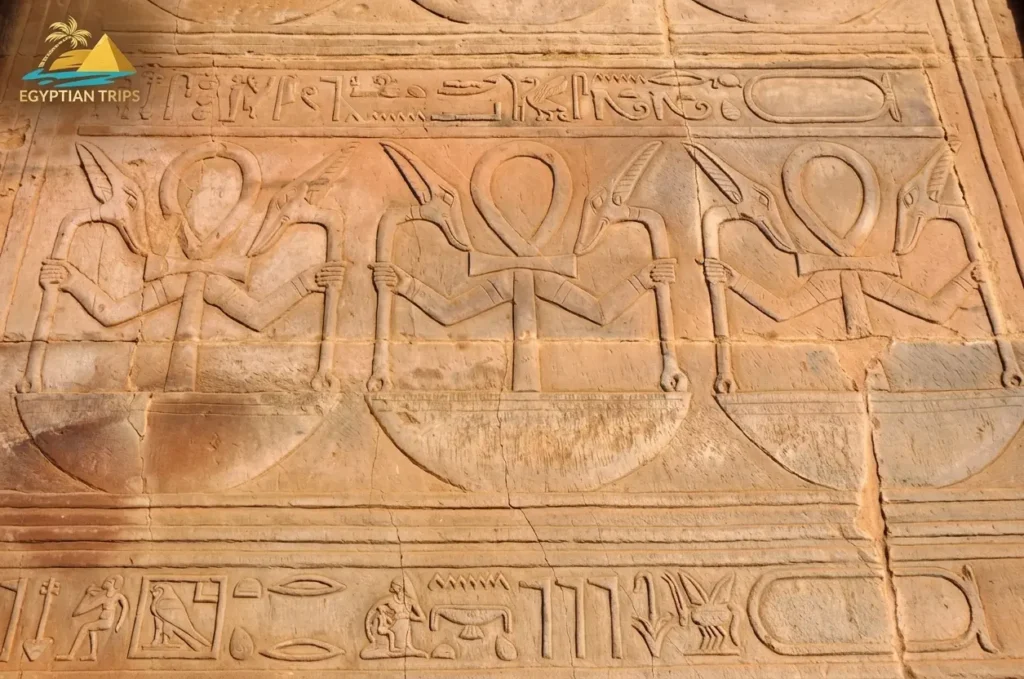
Visually represented as a cross topped with a loop, the Ankh is widely regarded as the most powerful symbol of ancient Egypt, symbolizing eternal existence, divine union, and the breath of the gods.
Symbolism of the Ankh: Egyptians believed mortal life was merely a chapter in a continuous journey, meaning the Ankh served as a talisman to guarantee survival in the afterlife, while its shape reflected the union of heaven (the loop) and earth (the vertical line).
The Eye of Horus (𓂀)
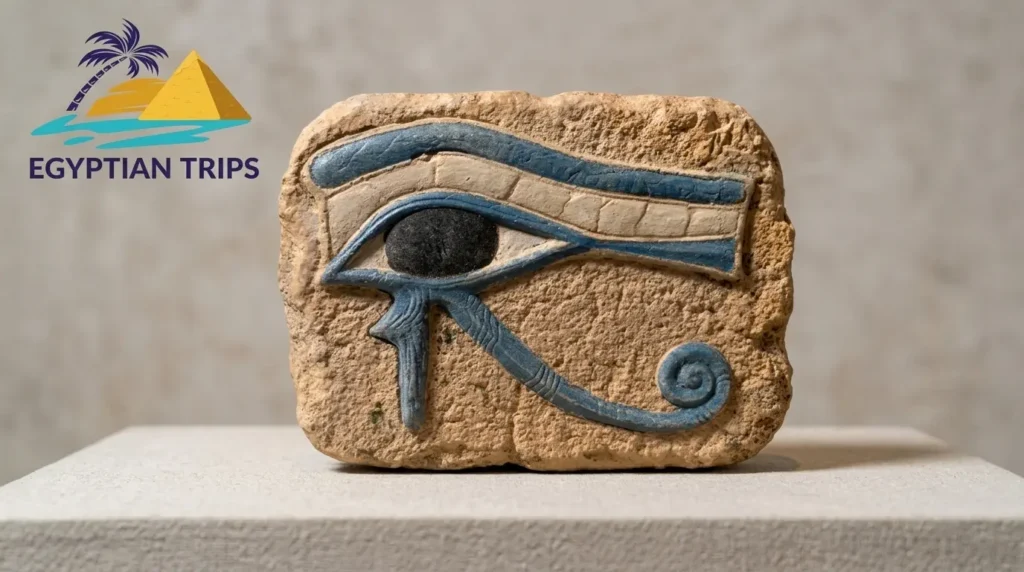
Also referred to as the Wedjat or Wadjet, this iconic ancient Egyptian motif was deeply tied to protection, royal power, and good health.
Understanding Hieroglyphic Signs: The Owl (𓅓)
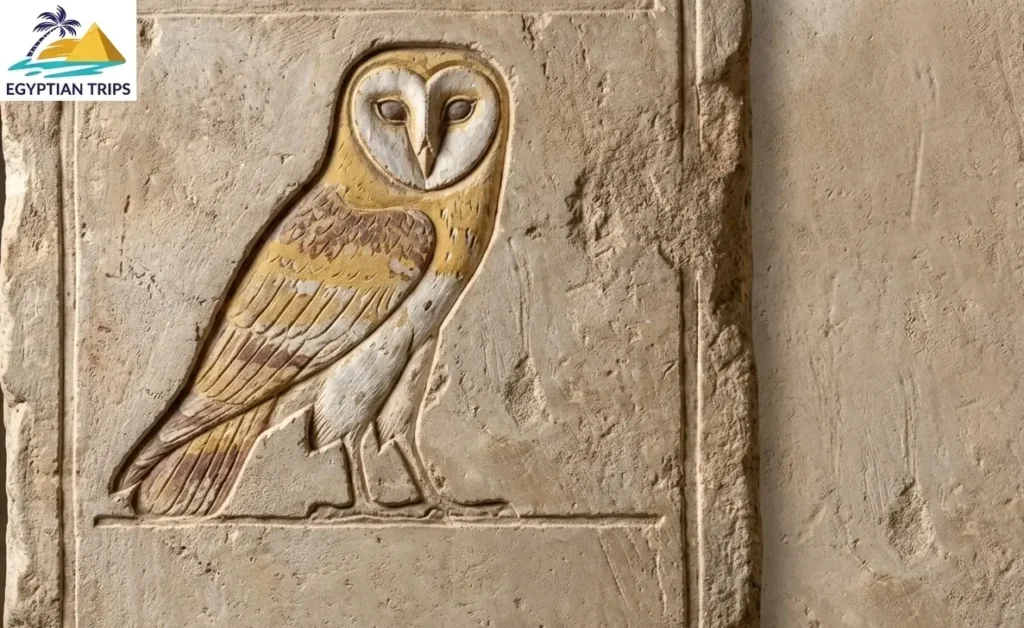
- Identification and Classification: Listed as sign G17 in standard Gardiner sign lists, the hieroglyph {𓅓} depicts an owl and is notable for being uniquely illustrated facing forward instead of in profile.
- Phonetic Value and Usage: This uniliteral sign corresponds directly to the consonant sound “m” and doubles as a common preposition translating to “in,” “at,” or “with.”
Experience Ancient Egypt Firsthand
Are you a fan of Ancient Egypt?
Travel into the past with EgyptianTrips for a free consultation and check out our specialized hierology trips to see these incredible symbols and monuments in person.
See More: Egyptian Clothing
The Three Types of Hieroglyphic Symbols
This is where hieroglyphics really diverge from most other scripts. A single hieroglyphic inscription could combine three distinct categories of signs within the same word:
Logograms (Word Signs)
A logogram is a symbol that represents an entire word or concept directly, rather than a sound. The hieroglyph of a sun disc, for instance, could represent the word for “sun” itself.
This function is similar to how Chinese characters work today, where a single character can carry a complete meaning rather than spelling out a sound sequence.
Phonograms (Sound Signs)
Phonograms represented sounds rather than whole ideas, much like letters in an alphabet. Egyptian phonograms came in three varieties: uniliteral signs representing a single consonant sound (essentially an “Egyptian alphabet” of around 24 core signs), biliteral signs representing two consonant sounds together, and triliteral signs representing three.
This is one of the most misunderstood aspects of the hieroglyphics alphabet, there was a functional alphabet embedded inside the broader system, but the Egyptians never used it exclusively the way later cultures used the Phoenician or Greek alphabet.
Determinatives (Meaning Clarifiers)
Determinatives are silent signs placed at the end of a word to indicate its category, a small figure of a person for professions, a pair of legs for verbs of motion, a house shape for buildings.
They weren’t pronounced at all; their only job was to remove ambiguity in a script that, because it generally omitted vowels, could otherwise produce several possible readings for the same string of consonant sounds.
This three-layer structure, logographic, phonetic, and clarifying signs used together in the same word, is largely what makes hieroglyphics unique among writing systems. Most scripts commit to one strategy; Egyptian scribes used all three simultaneously.
Hieroglyphics vs. Modern Alphabets
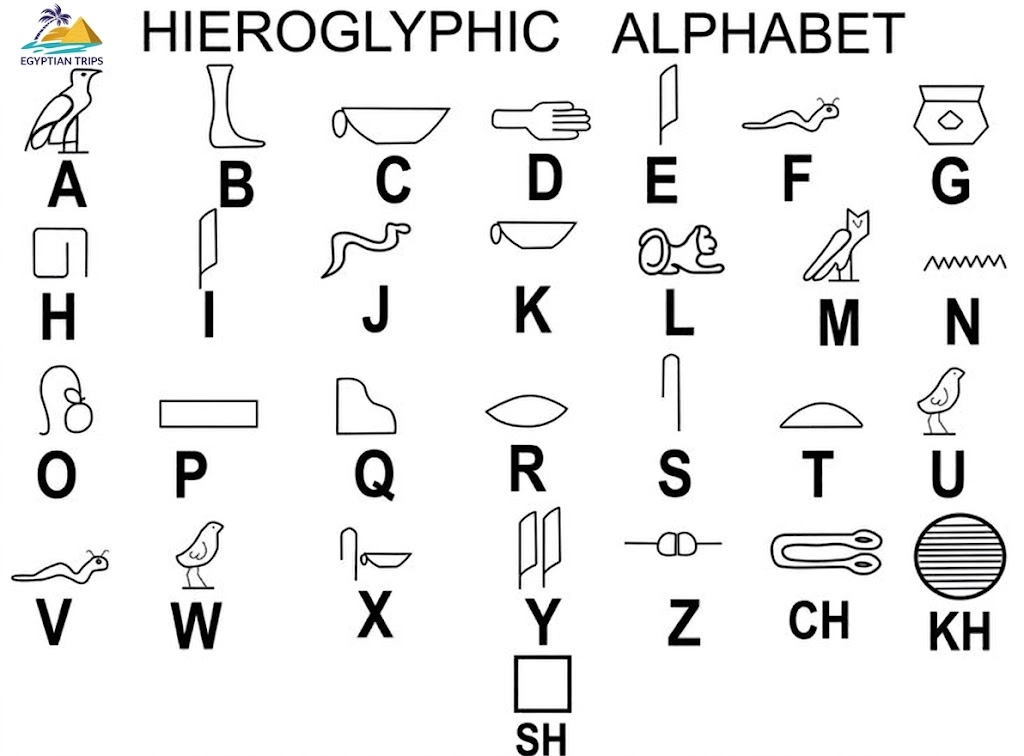
The comparison people usually care about most is hieroglyphics versus a modern alphabet, like English or the Greek and Phoenician-derived scripts that eventually influenced it. Here’s where the difference is most obvious:
- An alphabet uses a small, fixed set of symbols (roughly 20–30) where each one represents a single sound, and words are built by stringing those sounds together.
- Hieroglyphics used several hundred to over a thousand distinct signs at various points in its history, mixing whole-word symbols with sound symbols and silent clarifiers.
- Vowels are written explicitly in most modern alphabets. Hieroglyphics, like many ancient Afro-Asiatic scripts, generally recorded only consonant sounds, leaving vowel pronunciation to be inferred or reconstructed by modern scholars.
- Reading direction in alphabetic scripts is fixed. Hieroglyphic inscriptions could be written left-to-right, right-to-left, or top-to-bottom, with the direction indicated by which way the human and animal figures in the text were facing.
This flexibility and multi-layered structure is precisely why hieroglyphics took scholars so long to decode, and why an alphabet is fundamentally a simpler, more efficient tool for everyday writing, even though it’s less visually expressive.
Hieroglyphics vs. Cuneiform: Two Ancient Scripts Compared
Cuneiform, developed by the Sumerians in Mesopotamia around the same era as early hieroglyphics, is the writing system most often compared to Egyptian script, and the comparison is genuinely useful for understanding what makes hieroglyphics distinct.
| Feature | Egyptian Hieroglyphics | Mesopotamian Cuneiform |
| Origin | Nile Valley, Egypt, c. 3200 BCE | Sumer, Mesopotamia, c. 3400–3200 BCE |
| Writing method | Carved or painted symbols, later a cursive form | Wedge-shaped marks pressed into wet clay with a reed stylus |
| Symbol type | Logograms, phonograms, and determinatives combined | Primarily logo-syllabic, evolving from pictographs to abstract wedge signs |
| Direction | Flexible, read toward the direction the figures face | Left to right, in horizontal rows |
| Primary use | Religious, monumental, administrative, and literary texts | Administrative, legal, commercial, and literary texts |
| Later scripts derived | Hieratic and Demotic; indirect influence on early alphabets | Old Persian and other regional cuneiform variants |
Cuneiform relied more heavily on syllabic signs as it evolved, while hieroglyphics kept its logographic core throughout its history even as a phonetic component developed alongside it.
Both systems, however, share the trait of not being simple alphabets, a key point when comparing either one to the 26-letter systems most readers use today.
What Were Hieroglyphics Used For?
Hieroglyphics weren’t Egypt’s everyday handwriting. Because the symbols were intricate and time-consuming to carve or paint, formal hieroglyphic script was reserved primarily for:
- Religious and funerary texts, inscriptions on tomb walls, sarcophagi, and the Book of the Dead, meant to guide the deceased through the afterlife.
- Temple decoration, recording rituals, offerings, and the deeds of pharaohs on stone walls and monuments.
- Royal and monumental inscriptions, obelisks, statues, and commemorative stelae celebrating military victories or building projects.
- Official administrative records, in some periods, though this function was increasingly handled by faster scripts.
For day-to-day writing, letters, contracts, tax records, and literature, Egyptian scribes used a cursive, simplified version of hieroglyphics called hieratic, written quickly with a reed brush on papyrus.
Hieratic bears roughly the same relationship to formal hieroglyphics that cursive handwriting bears to printed block letters.
A later, even more simplified script called Demotic developed around 700 BCE for everyday legal and commercial use, eventually giving way to the Coptic alphabet, which finally incorporated Greek letters to represent Egyptian vowels explicitly.
This layered system, monumental hieroglyphics, administrative hieratic, and everyday Demotic, is itself another point of contrast with most alphabetic cultures, which typically use one script across all contexts rather than switching formality levels between different writing styles.
How Many Hieroglyphic Symbols Are There?
An Egyptian hieroglyphs list compiled by Egyptologists, most famously the Gardiner’s Sign List, developed by British Egyptologist Sir Alan Gardiner, catalogs around 750 to 1,000 commonly used signs from the classical periods of the language, though the full corpus across all of Egyptian history includes several thousand variants and rare forms.
This is dramatically more than any phonetic alphabet requires, precisely because hieroglyphics needed separate signs for logograms, phonograms of one, two, and three consonants, and determinatives, rather than relying on a small set of interchangeable letters.
How Hieroglyphics Were Finally Deciphered
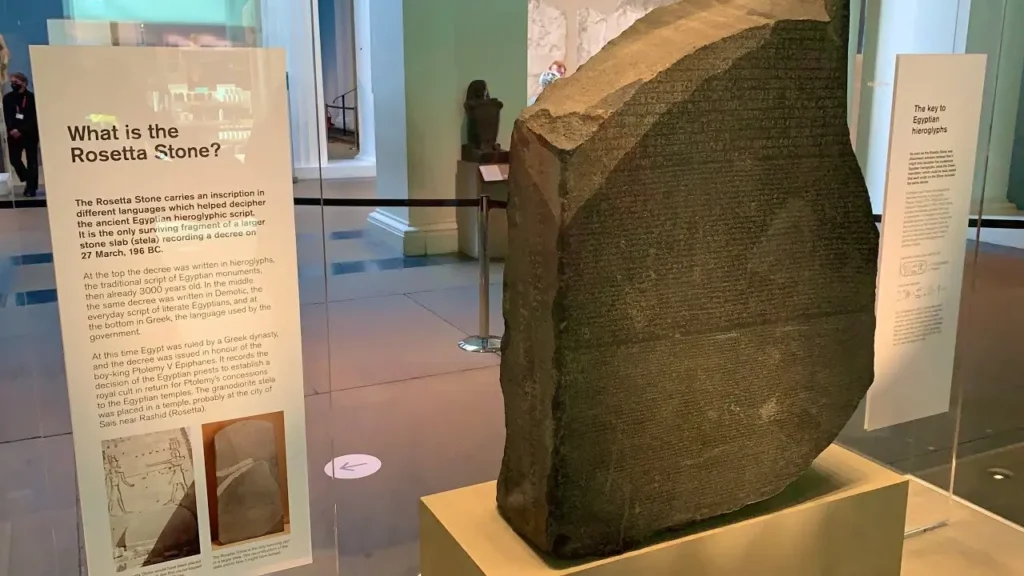
For centuries after hieroglyphics fell out of use, no one could read them. That changed with the discovery of the Rosetta Stone in 1799, a granite slab inscribed with the same decree in three scripts: hieroglyphics, Demotic, and ancient Greek.
Because scholars could already read Greek, the stone provided the key. French scholar Jean-François Champollion made the decisive breakthrough in 1822, proving that hieroglyphics combined phonetic and symbolic elements rather than being purely picture-based, as many earlier scholars had assumed.
That single insight, recognizing the mixed nature of the script, is the same feature that makes hieroglyphics so distinct from other writing systems today.
The Famine Stela: An Ancient Linguistic and Historical Puzzle
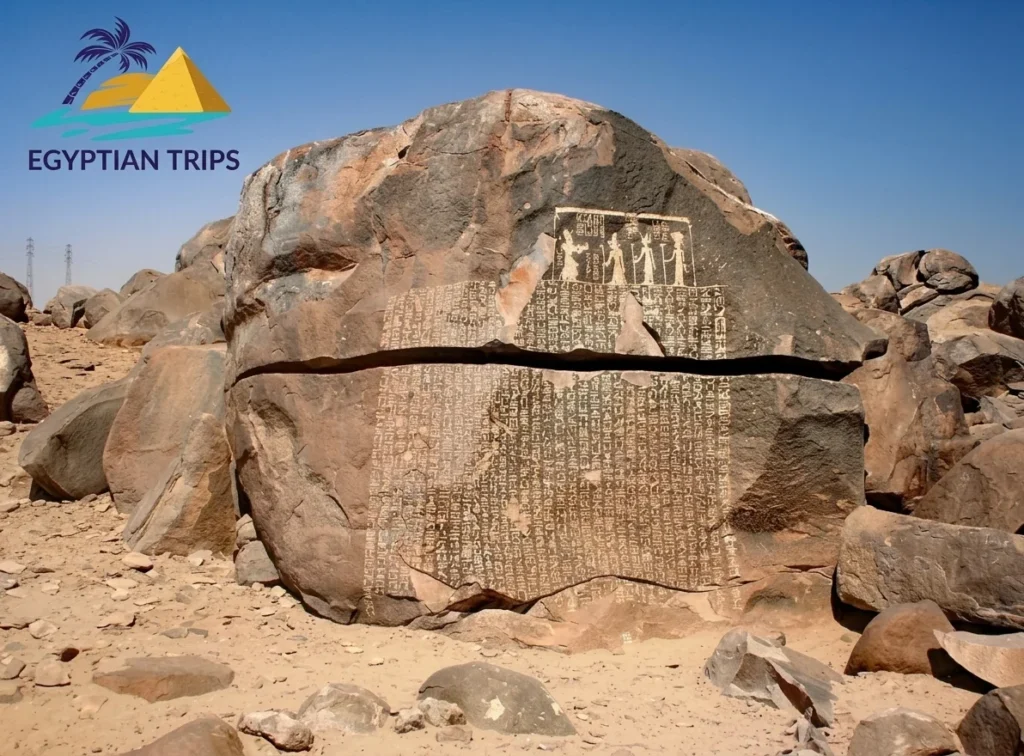
Carved into the granite rocks of Sehel Island near Aswan, the Famine Stela is a fascinating epigraphic artifact that blends myth, politics, and ancient linguistics.
- The Legend of the Seven-Year Famine: The inscription tells the story of an ancient crisis during the reign of Third Dynasty Pharaoh Djoser, when the Nile failed to flood for seven years, leading to widespread starvation.
- The Intervention of Imhotep: According to the text, Djoser consulted his brilliant vizier Imhotep, who tracked down temple archives and led the king to the god Khnum at Elephantine. After the pharaoh made sacred offerings, the Nile waters finally returned.
- An Example of Archaizing Language: Written in hieroglyphs during the much later Ptolemaic period (around 300 BCE), the stela is a masterclass in “archaizing.” Scribes intentionally mimicked the grammar and vocabulary of older eras to give the text an authentic, ancient feel.
- Political Propaganda: Beyond its linguistic value, the inscription was used by the priesthood of Khnum as a political tool to legitimize temple land grants and secure tax revenues during the Hellenistic era.
Common Hieroglyphic Phrases to use in real life
How to Say “I Love You” and “Hi”
- Writing “I Love You”: To express affection in ancient Egyptian hieroglyphics, you use the specific verb for “to love” followed by the corresponding pronoun, which shifts depending on whether you are addressing a male or female recipient.
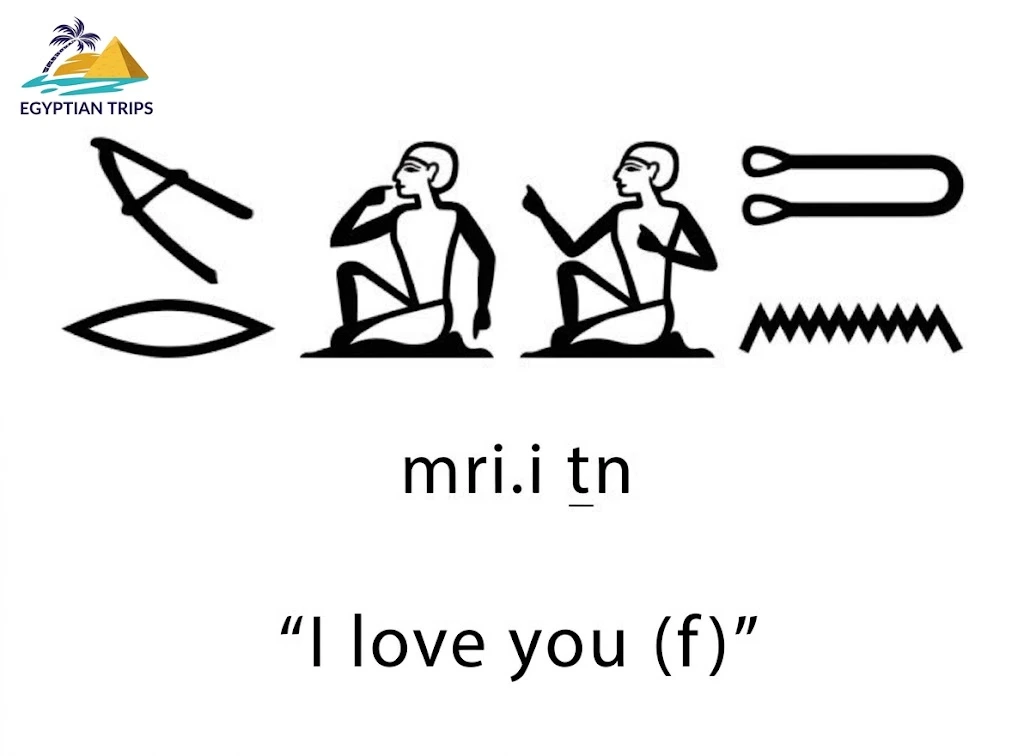
- Saying “Hi”: The greeting “hi” is spelled out by using the uniliteral—or single-sound—alphabetic sign designated for the phonetic sound “i.”
Seeing Hieroglyphics in Person
For travelers with a genuine interest in the script, Egypt remains the best place in the world to see hieroglyphics in their original context.
The Egyptian Museum in Cairo and the newer Grand Egyptian Museum near Giza both house extensive hieroglyphic collections, including the Rosetta Stone’s replica and countless funerary texts.
Check out our: Ancient Egypt Tours
Beyond Cairo, temple walls at Luxor, Karnak, and Abydos display hieroglyphic inscriptions still in remarkably legible condition thousands of years after they were carved, a detail worth building into any Egypt itinerary focused on ancient history rather than beach time.
What travelers say about EgyptianTrips
Perfect and highly recommended ⭐️⭐️⭐️⭐️⭐️
A very great travel company 👍🏻👍🏻👍🏻 Very competent, polite, nice and courteous. All our wishes were fulfilled perfectly. Just great, we can only recommend!! The tours are great, we have seen and gotten to know a lot and always had our super guide with us 👏🏻😃
Thanks again to Hassan.
Jenny H
Used them 2x & both trips were excellent!
We had a fantastic time. Mohamed, his drivers and his tour guides were knowledgeable and friendly. We felt safe our entire time in Cairo.
They did all of the work planning our tours and getting tickets ready. There was always an air conditioned car and cold water ready for us. They did such a great job that we went back a second time and Mohamed prepared everything for us again.
His prices were reasonable too.
Are you a fan of Ancient Egypt?
Travel into the past and check out our specialized hierology trips to see these incredible symbols and monuments in person.
Free ConsultationFree Cancellation · Expert guides · Best-prices
See More: Best Time to Visit Egypt
Frequently Asked Questions
Are hieroglyphics an alphabet?
Not exactly. Hieroglyphics contain an alphabet-like set of about 24 uniliteral (single-consonant) signs, but the full system also includes logograms representing whole words and determinatives that clarify meaning, features a true alphabet doesn’t have.
What’s the difference between hieroglyphics and hieratic?
Hieroglyphics are the formal, carved or painted script used for monuments and religious texts. Hieratic is a faster, cursive version of the same script, written with a brush on papyrus for everyday administrative and literary use.
Is cuneiform older than hieroglyphics?
The two systems emerged at roughly the same time, within a couple of centuries of each other, around 3200–3400 BCE. Most Egyptologists and Assyriologists consider cuneiform to have a very slight head start, though both remain among the oldest writing systems ever discovered.
Why don’t hieroglyphics show vowels?
Like many ancient scripts in the Afro-Asiatic language family, Egyptian writing primarily recorded consonant sounds. Modern reconstructions of vowel pronunciation are based on later Coptic, Greek transcriptions of Egyptian names, and comparative linguistics.
How many hieroglyphic symbols exist?
Commonly used sign lists document 750 to 1,000 symbols from the classical periods, though the full historical corpus includes several thousand variants across different eras and text types.