
Ask most people to name an Egyptian dish and you’ll likely get a blank stare, Egyptian food rarely gets the same international spotlight as Lebanese mezze or Moroccan tagines, and you’d be hard-pressed to find a dedicated Egyptian restaurant in most Western cities.
That’s a genuine loss, because Egyptian cuisine has its own distinct identity: hearty, carb-forward comfort food built around lentils, rice, and slow-cooked greens, alongside grilled meats, street-food staples like ful medames and falafel (known locally as ta’meya), and a dessert tradition that leans on rosewater, syrup, and semolina rather than chocolate.
The best way to actually understand Egyptian meals is to eat your way through them, and this guide is built to help you do exactly that.
With Egyptian Trips, you’ll find Egypt’s most popular lunch and dinner dishes, its signature desserts, and a practical breakdown of where to track down the best versions of each, whether that’s a bustling Cairo koshari shop or a family-run restaurant in Alexandria.
Authentic Egyptian Breakfast
If you want to experience the true flavors of Egypt, you don’t need a fancy restaurant—you need a big, spread-out breakfast. Egyptian breakfasts are defined by a variety of savory and sweet dishes, often featuring fava beans, eggs, fresh bread, and artisanal pickles.
1. Foul (Fava Beans) – Ful Medames
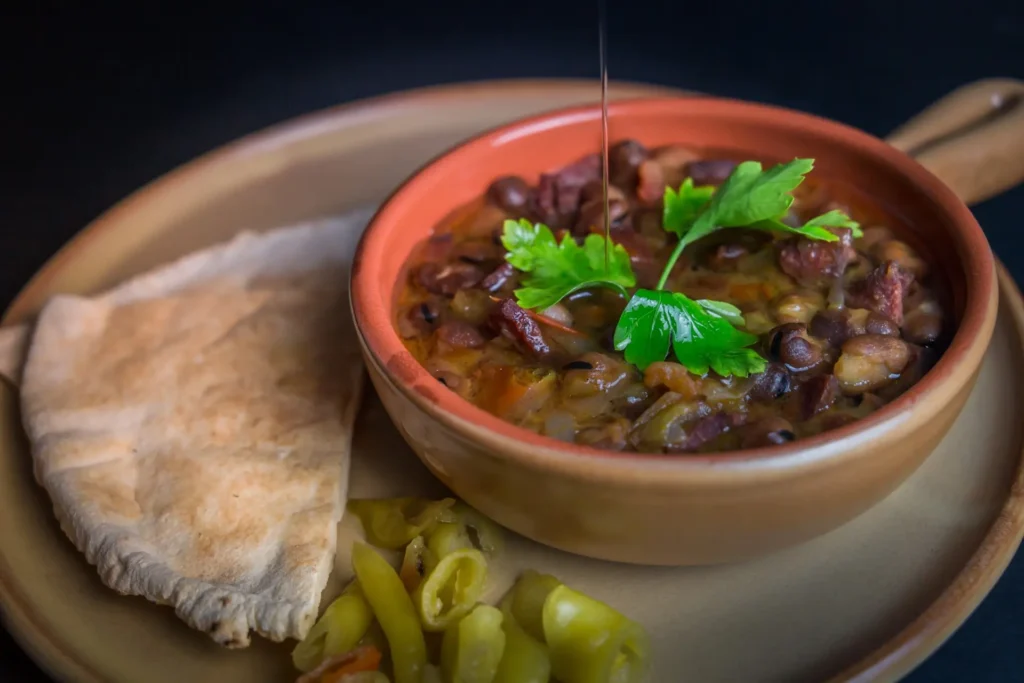
Foul is the backbone of the Egyptian breakfast. While there are many ways to prepare it, the most common method involves heating ready-to-eat fava beans in a pot with a splash of water to loosen them up.
Ingredients of Falafel:
- 1 can of ready-to-eat fava beans (foul), rinsed and drained
- A splash of water
- ¼ of an onion, finely diced
- ¼ of a green bell pepper, finely diced
- ½ of a tomato, finely diced
- 1–2 tablespoons of spicy chili sauce (or a pinch of chili flakes)
- Juice of ½ lemonA splash of white vinegar
- Salt to taste
- Extra virgin olive oil (for finishing)
How to Prepare
Warm the Beans: Transfer the drained fava beans into a small pot along with a splash of water. Heat over medium for about 2 minutes until the beans are very soft.
Add the Veggies & Spice: Stir in the diced onions, green peppers, tomatoes, and your chili sauce.
Season: Season with salt, lemon juice, and white vinegar. Taste and adjust the seasoning to your preference.
Plate & Serve: Transfer to a shallow bowl, drizzle generously with olive oil, and serve warm with fresh flatbread.
2. Egyptian Falafel (Ta’ameya)
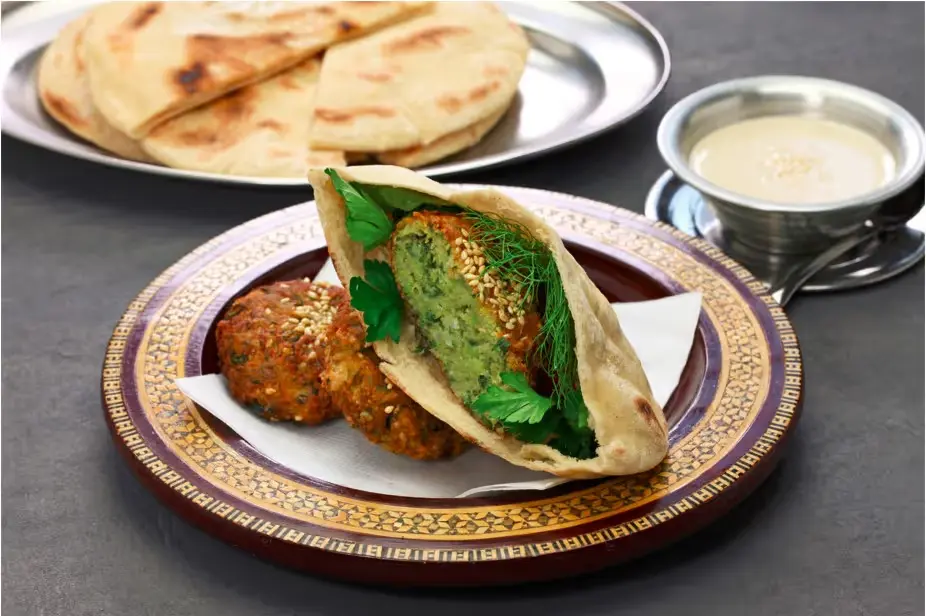
Unlike other versions of falafel made with chickpeas, Egyptian ta’ameya is made from soaked, skinless fava beans mixed with a generous amount of fresh herbs like leeks, spring onions, parsley, and coriander. This gives them their signature bright green interior and an incredibly crispy texture.
Ingredients of Egyptian Falafel
- 2 cups split, skinless fava beans (soaked overnight and drained)
- 1 bunch of fresh leeks (roughly chopped)
- 1 bunch of spring onions (roughly chopped)
- 1 bunch of fresh parsley (roughly chopped)
- 1 bunch of fresh coriander (roughly chopped)
- Spices: A pinch of cumin, coriander, salt, and pepper
- Toppings: Sesame seeds and fresh coriander leaves
- Vegetable oil (for frying)
How to Prepare
Blend the Base: Place the soaked fava beans and all the chopped greens into a food processor. Process for about 5 minutes until the mixture turns into a wet, fluffy, bright green batter.
Form Patties: Fluff the batter up, shape it into small round patties, and press a few sesame seeds and coriander leaves onto the top of each patty.
Fry: Heat oil in a deep pan over medium-high heat. Fry the patties for 8 to 10 minutes until they turn a deep golden brown and are crispy on the outside. Remove and drain on paper towels.
3. Spicy Pickled Aubergines
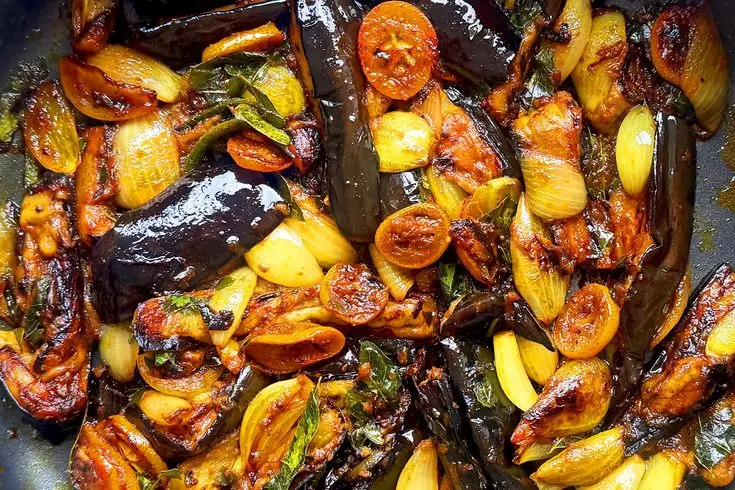
A staple at street stalls in Cairo, these pickles are the perfect accompaniment to falafel. Small baby aubergines are boiled with a bit of beetroot (to keep their color vibrant) and then stuffed with a spicy mixture of red and green chilies, garlic, paprika, cumin, and coriander, finished with lemon juice and vinegar. They are best when left to pickle for a day.
Ingredients
- 600g baby aubergines (eggplants)
- 1 sliced beetroot (to preserve the deep color)
For the Chili Filling:
- 2 spicy red chilies & 2 spicy green chilies (keep seeds for extra heat)
- 1 sweet red pepper & 1 bitter green pepper
- 8 cloves of garlic
- 1 tsp salt, 2 tsp paprika, ½ tsp black pepper, ½ tsp cumin, ½ tsp coriander
- ¼ cup white vinegar
- 2 tbsp lemon juice
- A handful of fresh coriander
For the Pickling Liquid:
- Reserved boiling water from the aubergines
- 1 massive heaped tablespoon of the chili paste mixture
- 2 tbsp lemon juice
- ¼ cup white vinegar
- 2 tbsp vegetable oil (for the top)
How to Prepare
Boil the Aubergines: Peel off the green stems of the baby aubergines. Drop them into a pot of boiling salted water along with the sliced beetroot (which keeps the aubergine color dark and rich).
Place a heatproof plate on top to keep them submerged. Boil for 15–20 minutes until tender.
Make the Chili Paste: Throw all the filling ingredients into a food processor and blend until you have a chunky, fiery chili sauce.
Make the Pickling Liquid: Take some of the warm water the aubergines boiled in, mix it with a large spoonful of the chili paste, lemon juice, and white vinegar.
Stuff and Pickle: Cut a lengthwise slit into each cooked aubergine (without cutting all the way through).
Stuff them generously with the chili paste. Place them in a container, pour over the pickling liquid until barely covered, and top with a layer of vegetable oil to seal it. Best eaten after a day of pickling.
4. E’ga (Egyptian Herb Omelette)
E’ga is essentially a cross between an omelette and a falafel. It is a fantastic way to use up leftover falafel batter: simply whisk the batter with eggs and fry it in a pan until it firms up.
It provides a unique, savory, omelette-like texture that is common in traditional home cooking.
Ingredients
- 1 cup leftover falafel batter
- 1 to 2 fresh eggs
- 1 tbsp oil or clarified butter (ghee)
- Salt and pepper to taste
How to Prepare
Whisk: Crack the eggs directly into the leftover falafel batter and whisk thoroughly with a fork until you have a loose, combined mixture.
Heat the Pan: Melt your oil or clarified butter in a frying pan over medium heat.
Cook: Pour the mixture into the pan, spreading it out slightly. Cover with a lid and let it cook until the top begins to firm up.
Flip: Flip the omelette over and fry for another 1 to 2 minutes until fully cooked through. Serve hot.
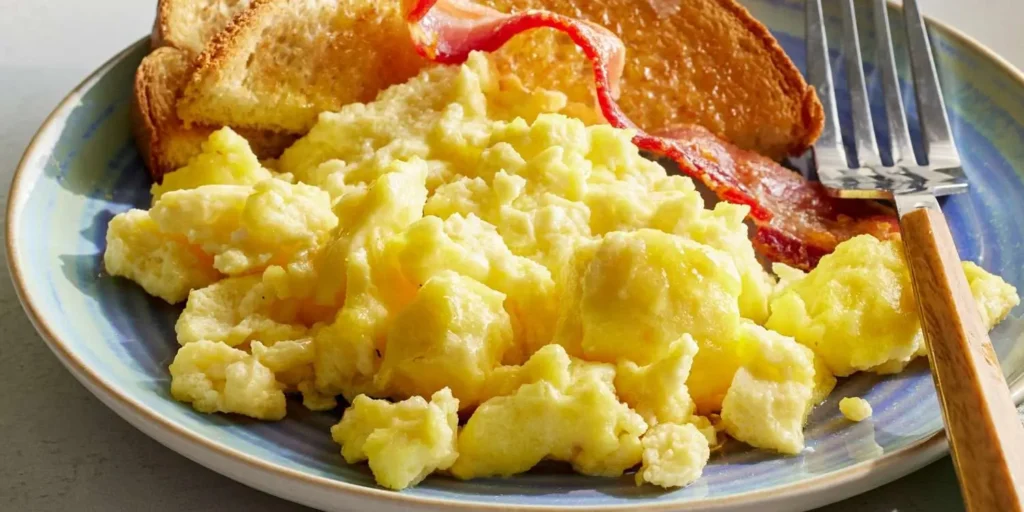
5. Scrambled Eggs with Basterma
Basterma is a dry-cured beef coated in a spice blend of paprika, cumin, and coriander—similar to Italian bresaola but with a much bolder, aromatic punch.
Fry the basterma in a little butter or oil until fragrant, then scramble in your eggs. It is a world-class breakfast dish that elevates standard eggs into something truly special.
Ingredients
- A few slices of basterma (dry-cured spiced beef), chopped into large squares
- 4 fresh eggs
- 50 ml (about 3 tbsp) milk
- 1 tbsp clarified butter or oil
- Salt and pepper to taste
How to Prepare
Crisp the Basterma: Melt the butter or oil in a pan over medium heat. Add the chopped basterma and fry for about 30 seconds until the spices become intensely fragrant.
Mix the Eggs: In a bowl, whisk the eggs, milk, salt, and pepper together.
Scramble: Pour the egg mixture into the pan over the basterma. Instead of making tiny curds, gently push the eggs around to form large, soft curds. Remove from heat just before they are fully set and serve immediately.
6. Whipped White Cheese (Gebna Beida)
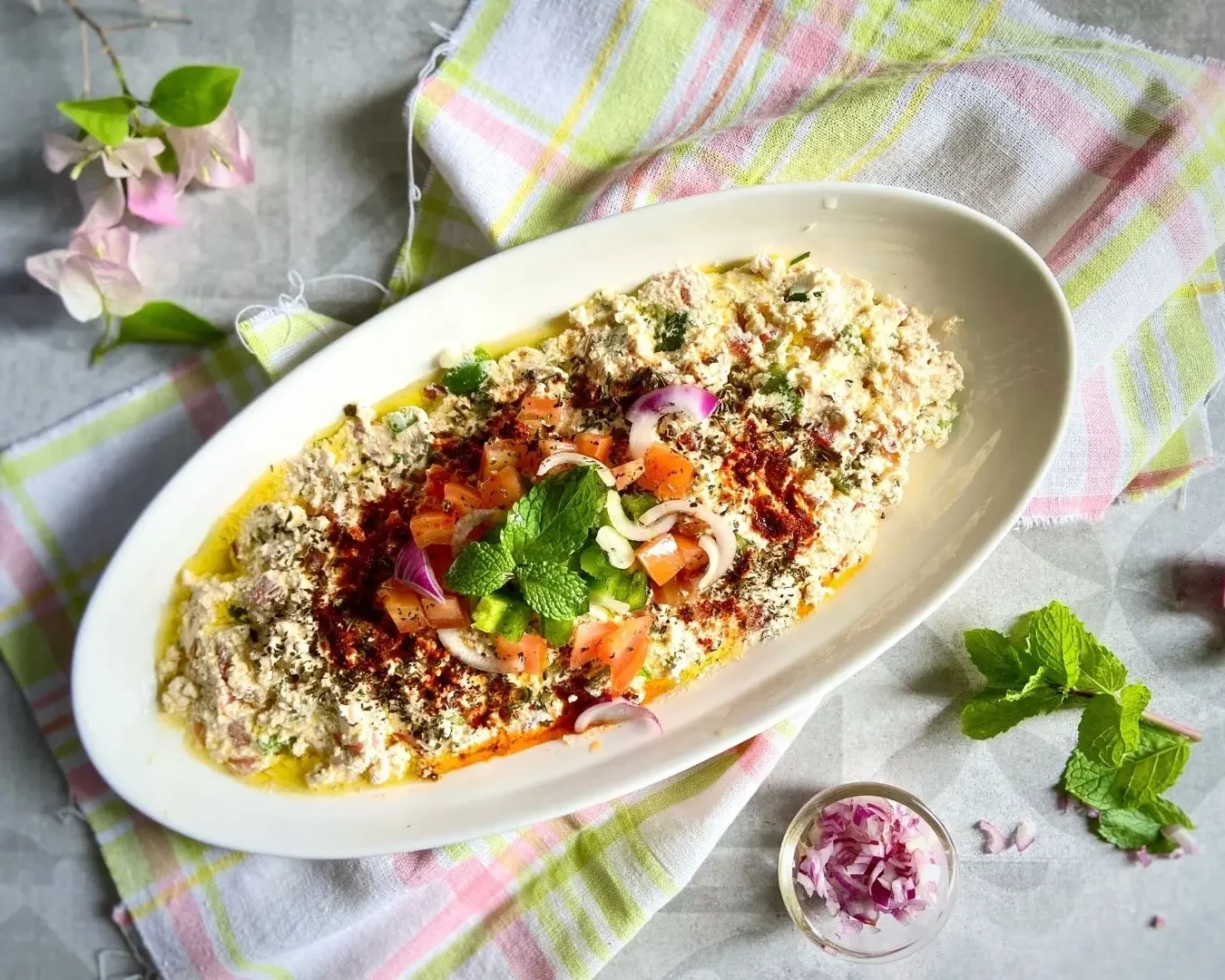
In Egypt, you’ll find white cheese sold in large barrels or tins. It is a softer, tangier version of feta.
To serve it the Egyptian way, break up the cheese and mash it with a bit of cream cheese, olive oil, dried mint, and nigella seeds until it becomes a light, fluffy spread. Top with fresh tomato pieces for a refreshing, salty bite.
Ingredients
- 100g Greek feta cheese (or soft barrel-aged Egyptian white cheese)
- 30g cream cheese
- 25 ml (about 1.5 tbsp) extra virgin olive oil
- ½ tsp dried mint
- ½ tsp nigella seeds (habbat al-baraka)
- ¾ of a tomato, finely chopped
- Extra olive oil and nigella seeds for garnish
How to Prepare
Mash: Roughly break up the white cheese in a bowl, add the cream cheese, and mash them together until combined.
Blend & Fluff: Pour in the olive oil and mix/blend until the mixture turns smooth, light, and fluffy.
Fold & Top: Fold in the dried mint, finely chopped tomatoes, and nigella seeds. Top with a final drizzle of olive oil, a sprinkle of tomatoes, and nigella seeds before serving with warm flatbread.
7. Decadent Sweets: Honey & Molasses
After the savory courses, a true Egyptian breakfast often concludes with something sweet:
- Honey with Clotted Cream: A rich, decadent combination spread over fresh bread.
- Molasses with Tahini: A classic Middle Eastern pairing that is simple, nutty, and sweet.
Know more about: Khan El Khalili Market in Egypt
Egyptian Lunch & Dinner
Egyptian lunch and dinner dishes tend to fall into a few recognisable categories: rice-and-legume staples eaten daily by almost everyone, grilled meats reserved for a slightly more special meal, and slow-cooked, herb-heavy dishes with genuine regional pedigree.
The following are the dishes locals and long-time visitors consistently point to as essential.
1. Mulukhiyah
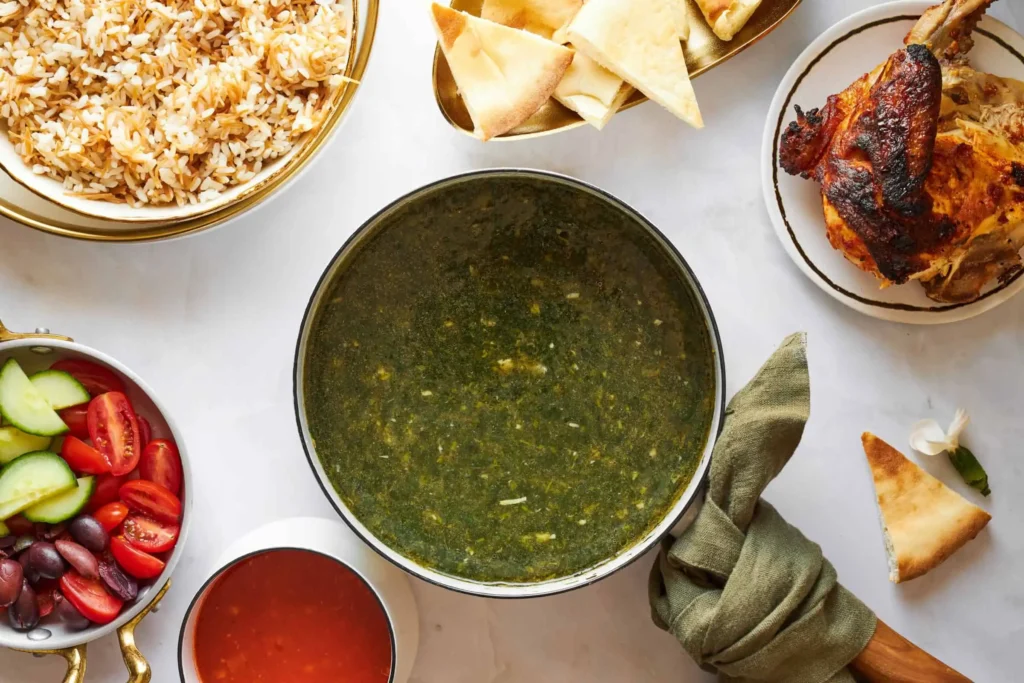
Mulukhiyah is one of Egypt’s most distinctive national dishes, a green, viscous soup made from finely chopped jute (mallow) leaves that’s beloved by Egyptians and, admittedly, an acquired taste for first-time visitors.
Its cultural roots run deep: the 11th-century Fatimid Sultan Al-Hakim reportedly found the dish so unappetising that he banned it outright, a ban that obviously didn’t stick.
Ingredients: Fresh mulukhiyah (jute) leaves, garlic, coriander, and a rich broth made from chicken, beef, or rabbit.
Preparation: The leaves are finely chopped and simmered in broth with sautéed garlic and coriander until the soup thickens into its signature silky texture. It’s typically ladled over rice and served alongside the meat used to make the broth.
Where to Find It: Mulukhiyah is best enjoyed home-style, at a family meal, but a number of traditional Cairo restaurants specialising in Egyptian home cooking serve a version that comes close to the real thing.
2. Koshari (Typical Egyptian Dish)
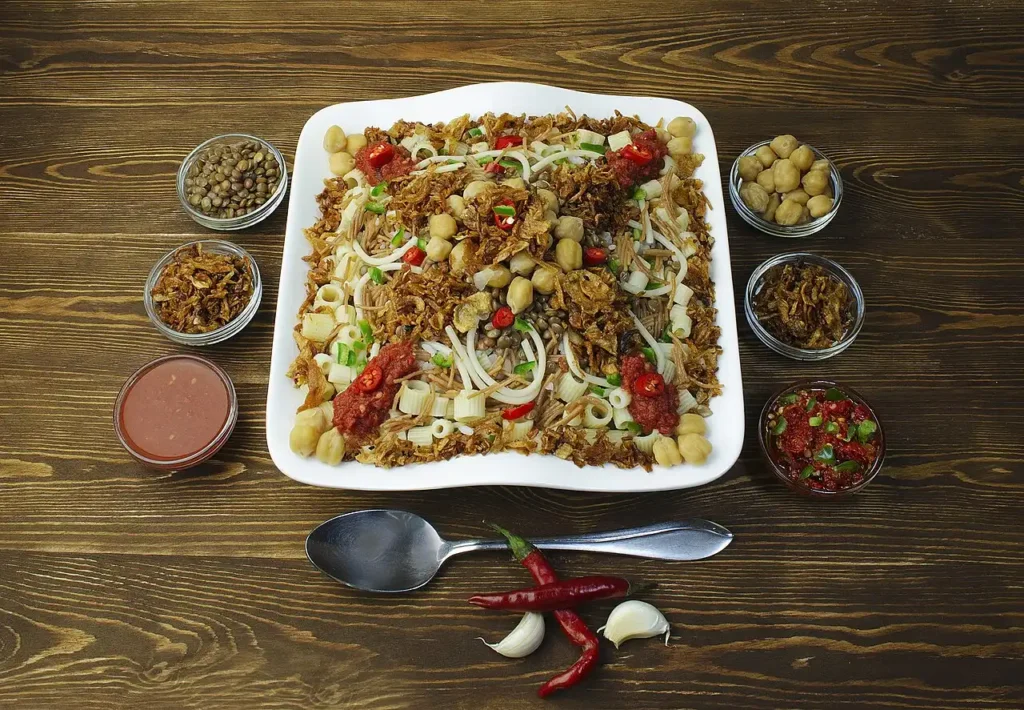
Widely considered Egypt’s national dish, koshari is the meal every visitor gets pointed toward first. It’s a fully vegetarian mix of rice, lentils, and pasta, and its popularity comes down to a simple formula: it’s cheap, filling, endlessly customisable with hot sauce, and available on nearly every street corner.
Ingredients: Rice, brown lentils, macaroni or short pasta, chickpeas, fried onions, and a spiced tomato sauce, usually finished with a garlic-vinegar dressing and chilli sauce on the side.
Preparation: Rice, lentils, and pasta are cooked separately, then layered in a bowl with chickpeas, topped generously with crispy fried onions and tomato sauce. Diners typically add their own hot sauce to taste.
Where to Find It: Cairo has dedicated koshari restaurants in almost every neighbourhood, many of which serve nothing else. Street carts selling koshari are also common throughout the city
3. Shawarma
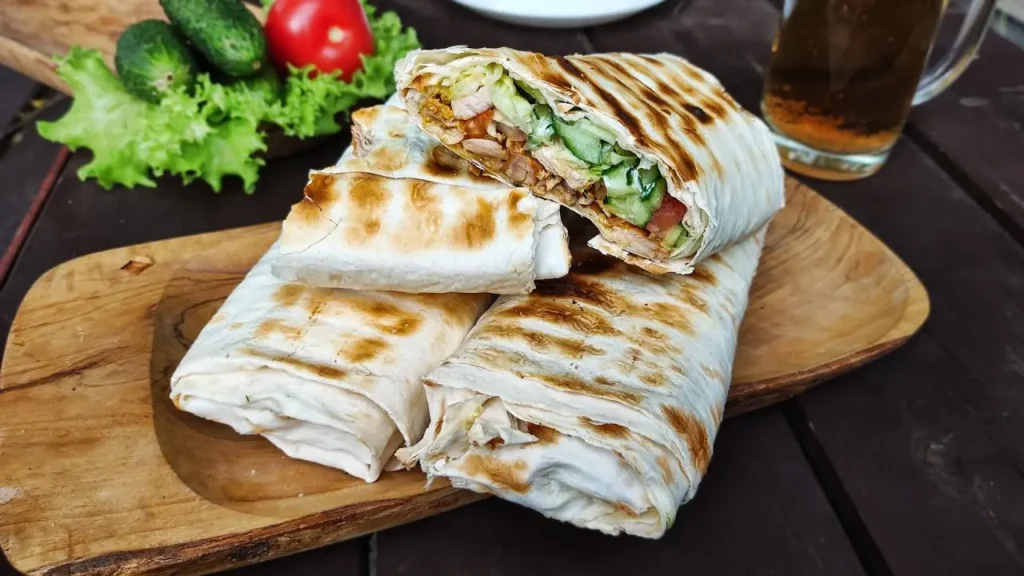
Egyptian shawarma reflects the dish’s Ottoman roots, adapted into a genuine staple of everyday Egyptian food culture. Thin layers of marinated meat are stacked on a vertical spit and slow-roasted, then shaved off to order.
Ingredients: Thinly sliced beef, lamb, or chicken, yogurt and vinegar marinade, and a spice blend typically including cumin, coriander, and paprika, served with flatbread, tomato, onion, parsley, and tahini or garlic sauce.
Preparation: The marinated meat is stacked on a rotating spit and grilled slowly, with the outer layer shaved off as it cooks. The shaved meat is mixed with chopped vegetables and wrapped in flatbread to order.
Where to Find It: Shawarma stands are everywhere in Egyptian cities, though some of the most consistently praised versions come from long-running, family-owned sandwich shops rather than large chains.
4. Kebab and Kofta
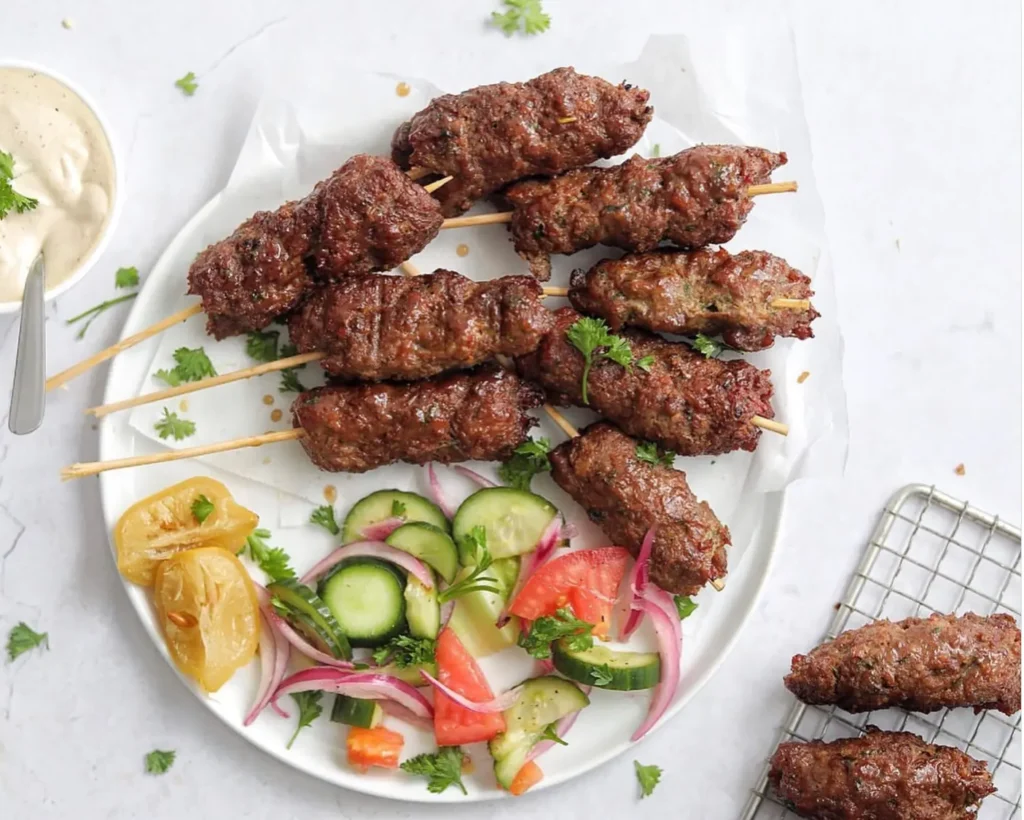
Kebab (grilled chunks of lamb) and kofta (spiced minced meat formed onto skewers) are a go-to choice whenever Egyptians want a more substantial, meat-forward meal. The two are almost always served together, straight off a charcoal grill.
Ingredients: Lamb or beef, grated onion, fresh parsley, and a simple spice blend of salt, pepper, and cumin.
Preparation: Kofta is mixed by hand with onion, herbs, and spices, then shaped onto skewers, while kebab is cut into chunks and skewered separately. Both are grilled over hot charcoal for a smoky finish.
Where to Find It: Grill restaurants serving kebab and kofta are common throughout Egypt, typically alongside flatbread, tahini, and a simple tomato-cucumber salad.
5. Roasted Stuffed Pigeons
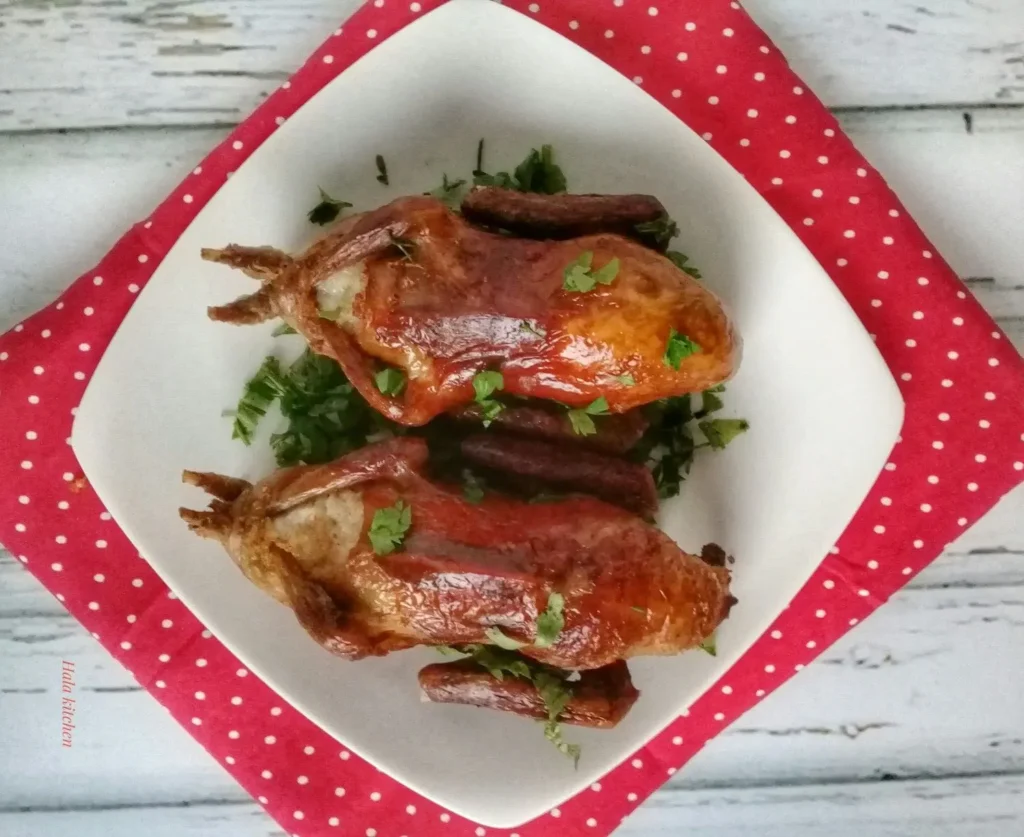
Known locally as hammam mahshi, stuffed pigeon is one of Egypt’s more distinctive delicacies and a dish many first-time visitors are surprised to see on a menu at all.
Pigeons are raised specifically for eating throughout Egypt, often in the distinctive conical pigeon towers visible across the countryside.
Ingredients: Whole pigeon, seasoned rice or freek (cracked wheat), and a spice blend often including cinnamon and cumin.
Preparation: The pigeon is cleaned and stuffed with a seasoned rice or freek mixture, then roasted or grilled until the skin turns crisp while the meat stays tender.
Where to Find It: Stuffed pigeon is considered something of a delicacy, often served at restaurants specialising in traditional Egyptian dishes rather than casual eateries, particularly in Cairo’s older neighbourhoods.
6. Hawawshi (Egyptian Meat Pie)
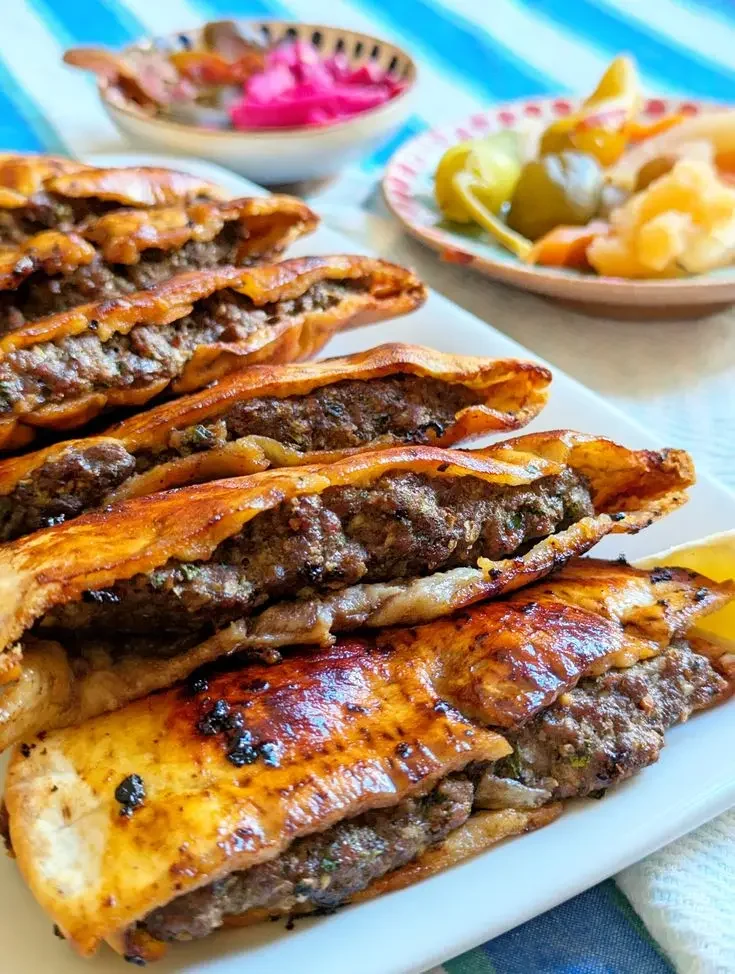
Hawawshi is Egyptian comfort food at its most direct: a savoury meat pie made by stuffing spiced minced beef into flatbread and pressing the whole thing onto a hot skillet or into an oven until the bread crisps up like the outside of a good grilled cheese sandwich.
Ingredients: Egyptian flatbread, ground beef, finely diced onion, and spices including cumin, chilli powder, salt, and pepper, sometimes with chopped peppers mixed in.
Preparation: Spiced ground beef and onion are packed into a round of flatbread, which is then baked or grilled under pressure so the bread crisps while the meat cooks through and stays juicy inside.
Where to Find It: Hawawshi specialists exist throughout Cairo and other major cities, often with a loyal local following, and many let you customise the spice level or add cheese.
7. Egyptian Fatteh
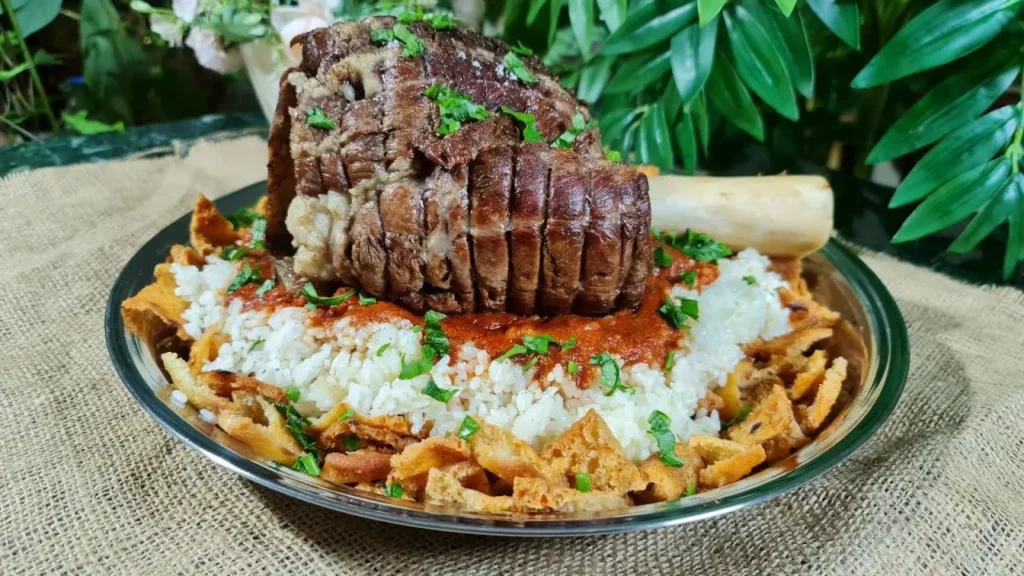
Fatta (or fatteh) is a celebratory dish traditionally served at big family occasions, weddings and births in particular, which gives it a slightly more festive reputation than most everyday Egyptian meals.
Ingredients: Rice, crispy fried or toasted pita bread, beef or lamb stock, garlic, vinegar, and large chunks of stewed beef or lamb, often finished with yogurt and toasted nuts.
Preparation: Bread and rice are layered in a serving dish, then soaked in a garlic-and-vinegar-infused meat broth. Large chunks of stewed meat are added on top, along with yogurt and a scattering of nuts.
Where to Find It: Because of its ties to celebrations, fatteh is often best experienced at a home gathering, though a number of traditional Egyptian restaurants keep it on the menu year-round.
8. Alexandrian Kebdah
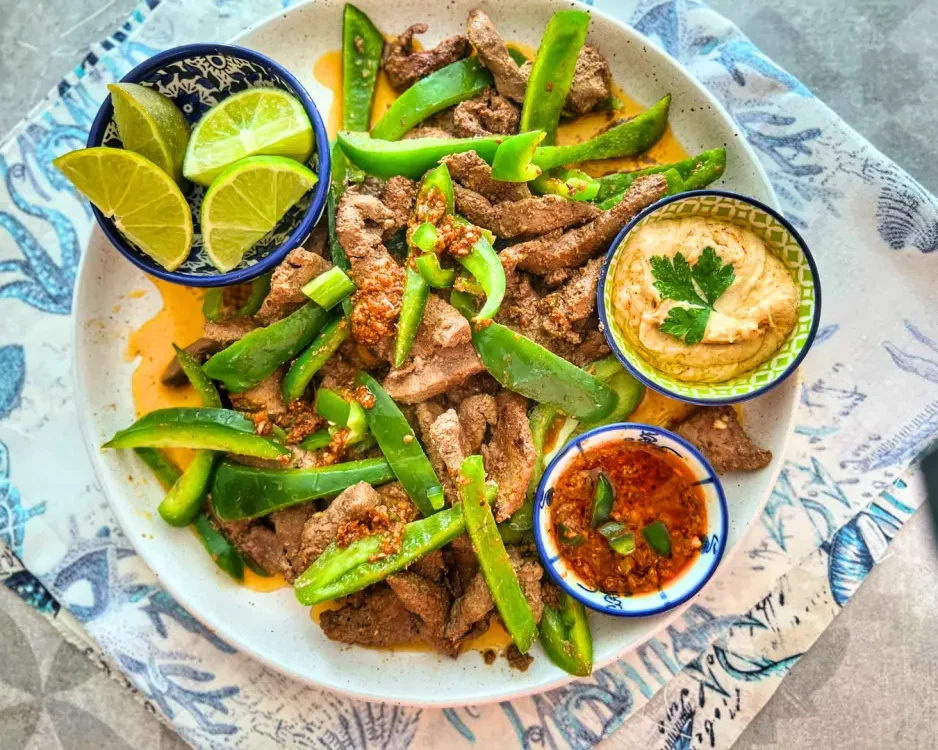
Kebdah (Arabic for liver) is a street-food classic strongly associated with Alexandria, where local cooks have refined it into something far more craveable than the name might suggest to newcomers.
Ingredients: Beef liver, hot pepper, garlic or onion, and, for the accompanying sausages, tomato sauce and chilli.
Preparation: Liver is sliced thin and quickly sautéed or fried with garlic, onion, and hot pepper for a punchy, spiced result. Egyptian sausages, often served alongside, are cooked in a similar spiced tomato sauce.
Where to Find It: Alexandria is considered the epicentre for this dish, with dedicated liver-and-sausage restaurants serving it in a fresh baguette alongside pickles, though it’s also cooked at home throughout Egypt.
9. Mahshi
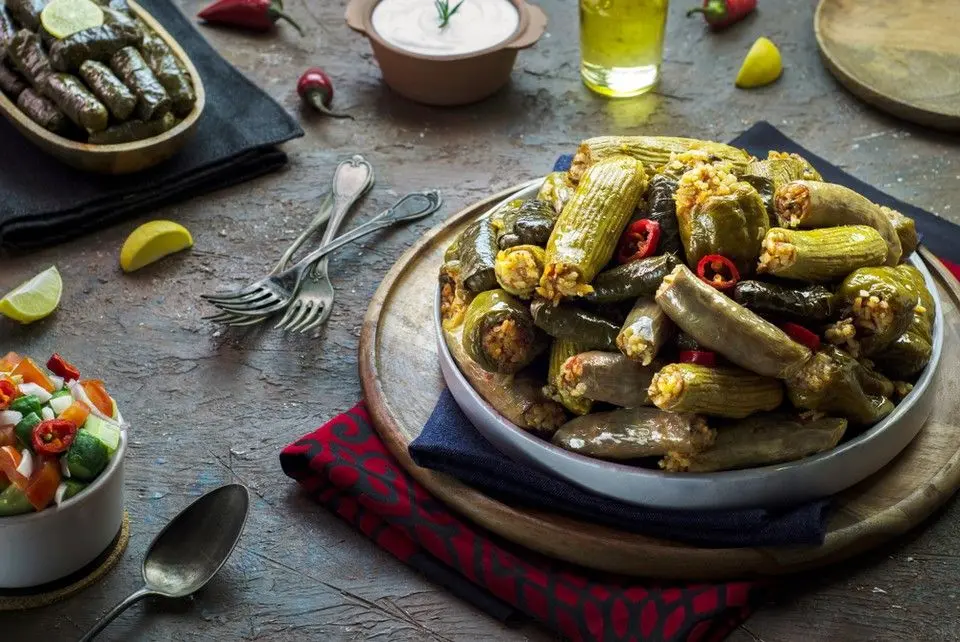
Mahshi, Arabic for “stuffed”, is one of the best options for vegetarian travellers navigating Egyptian cuisine, and it’s the dish most Egyptians associate with genuine home cooking rather than restaurant food.
Ingredients: Zucchini, eggplant, bell peppers, or cabbage and grape leaves, stuffed with rice mixed with fresh herbs like parsley and coriander.
Preparation: Vegetables are hollowed out and packed generously with the herbed rice mixture, then baked slowly until the filling is tender and the vegetable itself is soft enough to cut with a spoon.
Where to Find It: Like mulukhiyah, mahshi is at its best homemade, though an increasing number of traditional Egyptian restaurants now do a respectable version.
Want to try: Nile River Dinner Cruise in Cairo
Egyptian Desserts
Egyptian desserts lean lighter and less chocolate-heavy than many Western sweets, built instead around semolina, filo pastry, rosewater, and syrup.
Several of the dishes below are tied closely to specific occasions, Ramadan and Eid in particular, which makes timing your trip worth considering if a specific dessert is high on your list.
1. Basbousa
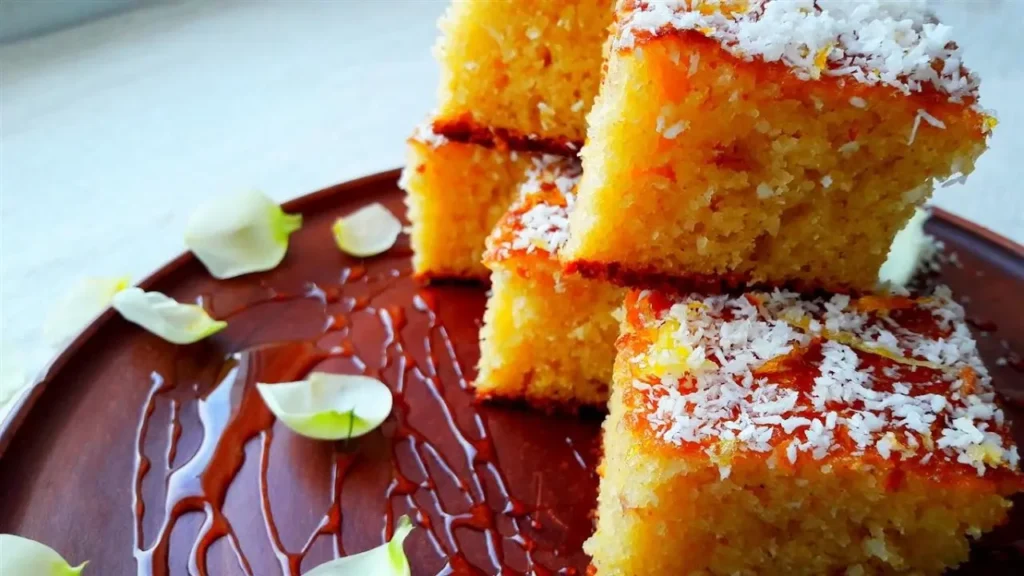
A semolina cake soaked in sweet syrup, basbousa has origins tracing back to Ottoman cuisine but has become a genuinely beloved Egyptian dessert in its own right.
The Egyptian version tends to be thin, soft inside, and finished with almonds or a layer of fresh cream.
2. Umm Ali
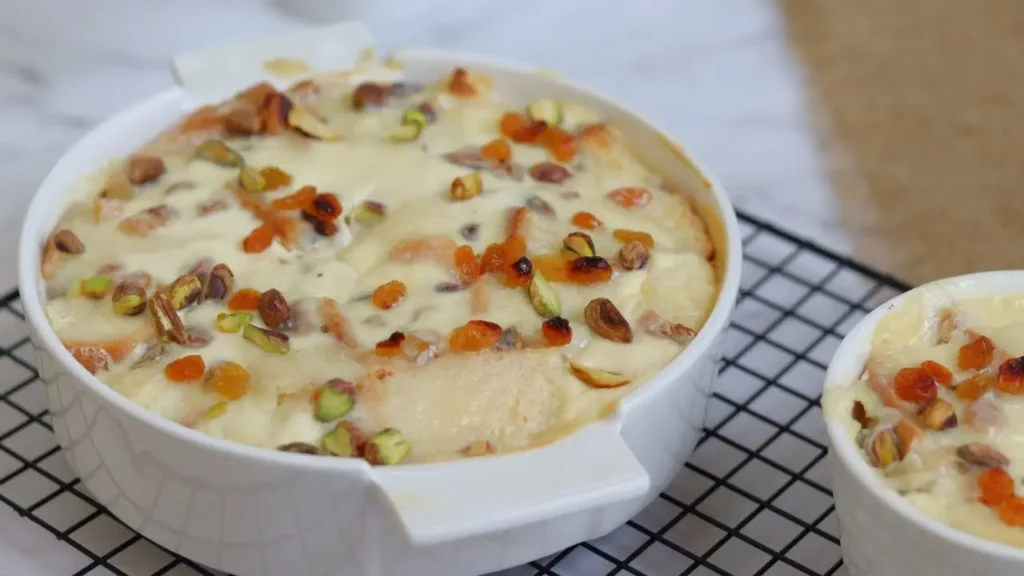
Umm Ali, meaning “Ali’s mother”, is Egypt’s answer to bread pudding, though richer and less spongy thanks to its use of puff pastry rather than plain bread.
Layers of pastry are soaked in hot milk, mixed with nuts, raisins, and coconut flakes, then baked until golden. It’s considered close to a mandatory dessert order for first-time visitors.
3. Kanafeh
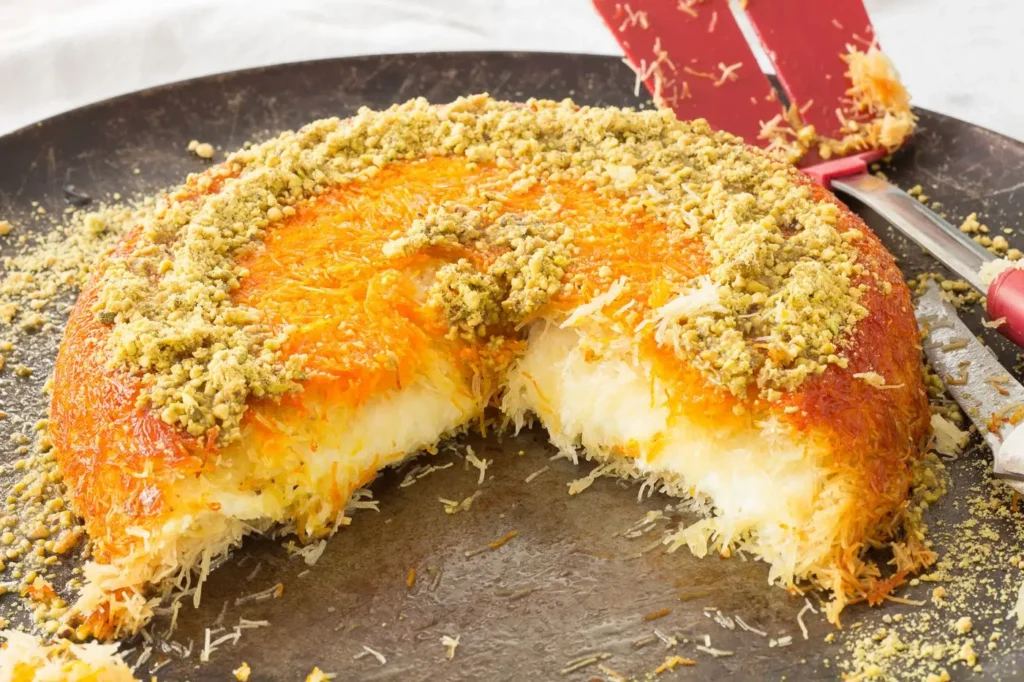
Kanafeh (also spelled konafa) is made from thin, angel-hair-like semolina noodles layered with a creamy cheese filling, cooked slowly in butter, then soaked in syrup once baked.
The contrast between the crisp, golden noodle exterior and the soft, warm filling is what makes it such a popular treat, especially during Ramadan.
4. Baklava
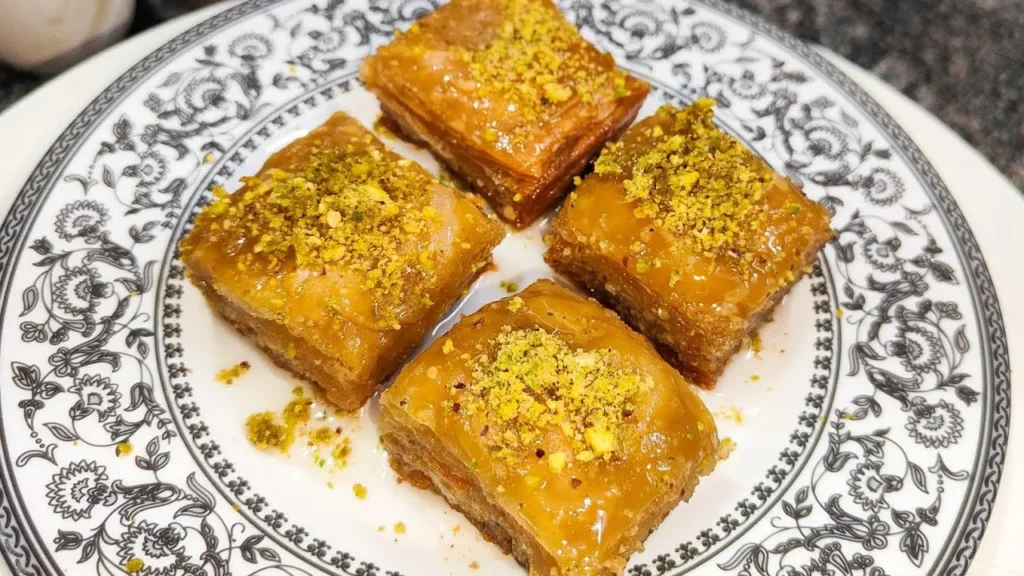
Baklava is a syrup-drenched, nut-filled filo pastry dessert with roots across the wider Middle East and Mediterranean, and Egypt has fully embraced it as a festive, celebratory sweet.
Thin layers of filo are packed with crushed nuts, baked until flaky, then finished with a generous drizzle of honey or sugar syrup.
5. Feteer Meshaltet
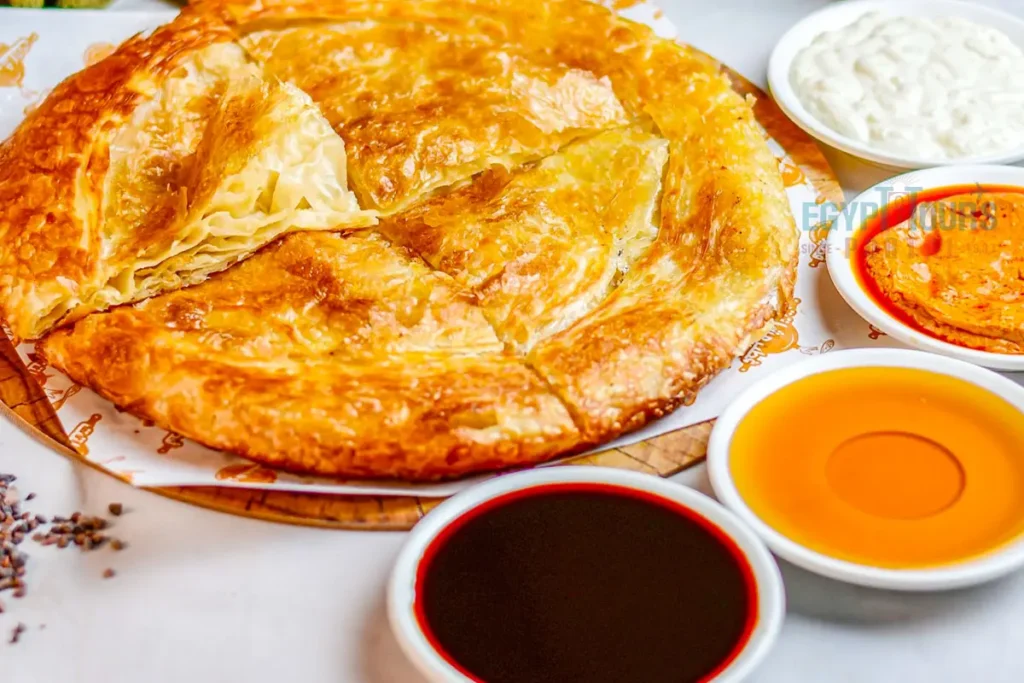
Feteer meshaltet is a flaky, multilayered Egyptian pastry made by stretching dough paper-thin and folding it repeatedly before baking, which produces a texture somewhere between a croissant and a pancake.
It’s genuinely versatile, served plain and brushed with ghee, dusted with sugar, or stuffed with minced meat or cheese, which means it can just as easily show up at dinner as at dessert.
6. Baba Ganoush
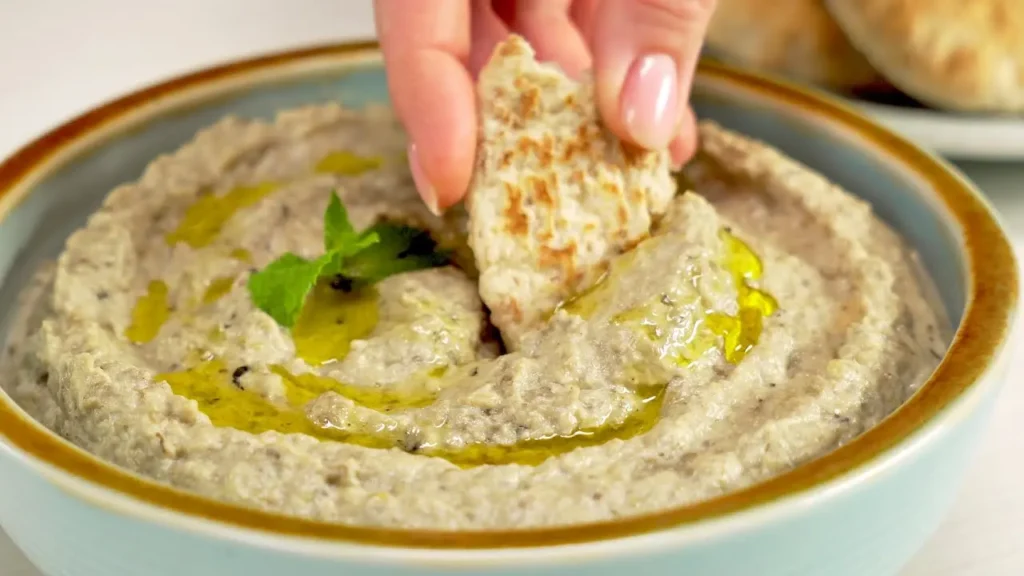
Worth a quick clarification here: baba ganoush isn’t actually a dessert, it’s a savoury roasted-eggplant dip, closer in texture and use to hummus, made with tahini, garlic, olive oil, and lemon juice.
Though it’s often credited to Lebanese cuisine, it’s firmly established on Egyptian restaurant menus and commonly served as an appetiser or side alongside grilled meats and flatbread, rather than at the end of a meal.
It’s included here because it consistently comes up in searches for Egyptian food, but if you’re looking for something sweet, this isn’t it.
Best Places in Egypt for Every Type of Food
Where you should eat largely depends on what you’re craving, and Egypt’s culinary strengths do vary a bit by region. The table below is a practical starting point for matching a dish category to the right city and venue type.
| Dish Type | Best Cities | Where to Look |
| Koshari | Cairo, Alexandria | Dedicated koshari restaurants in almost every neighbourhood |
| Grilled meats (kebab, kofta,..) | Cairo, Alexandria, Luxor | Street-side grills and casual sandwich shops |
| Mulukhiyah and Fatteh | Cairo, Aswan | Family-run restaurants serving home-style Egyptian meals |
| Seafood and coastal dishes | Alexandria, Port Said, Suez | Waterfront restaurants along the Mediterranean coast |
| Desserts (basbousa, kanafeh,..) | Cairo, Luxor, Aswan | Dedicated sweet shops and dessert counters, especially around Ramadan and Eid |
As a general rule, the most memorable Egyptian Food accourding to tasteatlas tend to come from small, unglamorous, family-run spots rather than large restaurants aimed squarely at tourists, a genuine local koshari shop or grill stand is almost always going to outperform a hotel buffet version of the same dish.
If you’re travelling with EgyptianTrips, our local guides are happy to point you toward the specific spots worth the detour in whichever city you’re exploring.
Taste Egyptian Food Where It Belongs — In Egypt
Reading about Egyptian dishes is one thing, but tasting them fresh in Egypt is a completely different experience. From a warm bowl of koshari in Cairo to traditional mulukhiyah, mahshi, kofta, and Egyptian desserts, food is an important part of experiencing the country’s culture.
With EgyptianTrips, you can go beyond the restaurants and explore the places, history, and traditions behind the food. Enjoy authentic Egyptian meals while visiting ancient temples, historic markets, pyramids, museums, and the beautiful cities along the Nile.
Explore Egypt With EgyptianTrips
Why limit your Egyptian experience to sightseeing when you can enjoy the country’s food, history, culture, and iconic sites all in one trip?
EgyptianTrips offers a wide range of fully guided tours in Cairo and destinations across Egypt, giving you the opportunity to explore the country with knowledgeable local guides and Egyptologists.
Whether you’re interested in the Pyramids of Giza and Egyptian Museum in Cairo, the temples of Luxor and Aswan, a Nile cruise, or the Red Sea, our tours are designed to make exploring Egypt easier and more enjoyable.
What travelers say about EgyptianTrips
Perfect and highly recommended ⭐️⭐️⭐️⭐️⭐️
A very great travel company 👍🏻👍🏻👍🏻 Very competent, polite, nice and courteous. All our wishes were fulfilled perfectly. Just great, we can only recommend!! The tours are great, we have seen and gotten to know a lot and always had our super guide with us 👏🏻😃
Thanks again to Hassan.
Jenny H
Used them 2x & both trips were excellent!
We had a fantastic time. Mohamed, his drivers and his tour guides were knowledgeable and friendly. We felt safe our entire time in Cairo.
They did all of the work planning our tours and getting tickets ready. There was always an air conditioned car and cold water ready for us. They did such a great job that we went back a second time and Mohamed prepared everything for us again.
His prices were reasonable too.
Check More TripAdvisor Reviews: EgyptianTrips Review
Ready to Taste and Explore Egypt?
Don’t just read about Egyptian food and ancient Egypt — come experience them for yourself.
Explore Our TripsFree Consultation · Expert guides · Best-prices
FAQ
What is Egypt’s national dish?
Koshari is widely considered Egypt’s national dish, a filling, fully vegetarian mix of rice, lentils, pasta, and chickpeas topped with fried onions and spiced tomato sauce.
What is the most popular Egyptian street food?
Ful medames (mashed fava beans) and ta’meya (Egyptian falafel, made from fava beans rather than chickpeas) are the most common Egyptian street food staples, typically eaten for breakfast.
Is Egyptian food spicy?
Not inherently, most Egyptian dishes are mild and rely more on herbs, garlic, and slow cooking than heat, though hot sauce is commonly offered on the side, especially with koshari.
What is mulukhiyah made of?
Mulukhiyah is a green soup made from finely chopped jute (mallow) leaves, cooked in a rich broth with garlic and coriander, typically served over rice with chicken, beef, or rabbit.
What are the best Egyptian desserts to try?
Umm Ali, basbousa, and kanafeh are the most commonly recommended Egyptian desserts, all built around semolina, filo pastry, or bread soaked in syrup or milk rather than chocolate.
Is Baba Ganoush an Egyptian dish?
Baba ganoush is generally credited to Lebanese cuisine, but it’s widely served on Egyptian restaurant menus as a savoury eggplant dip, not a dessert.