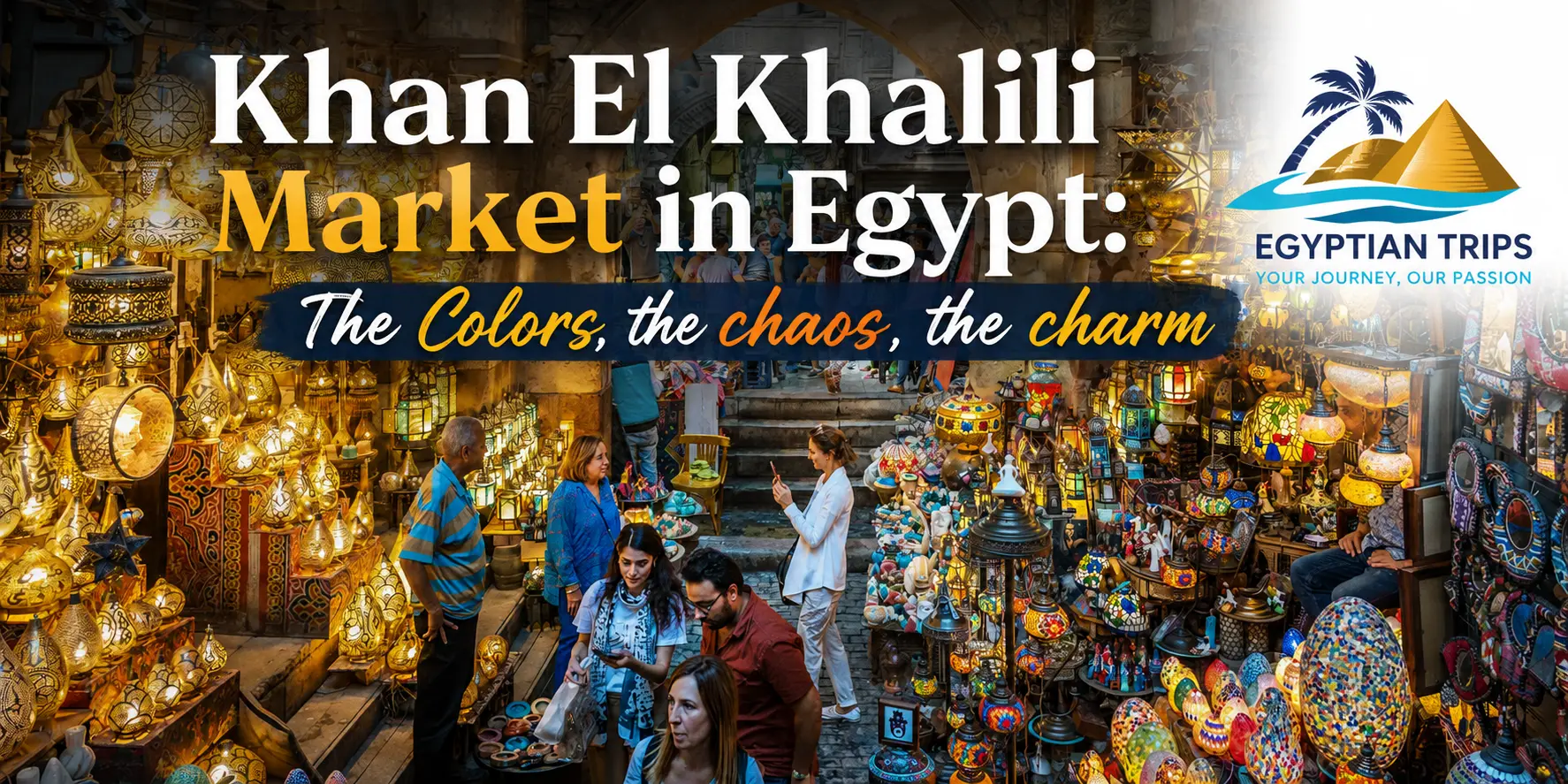
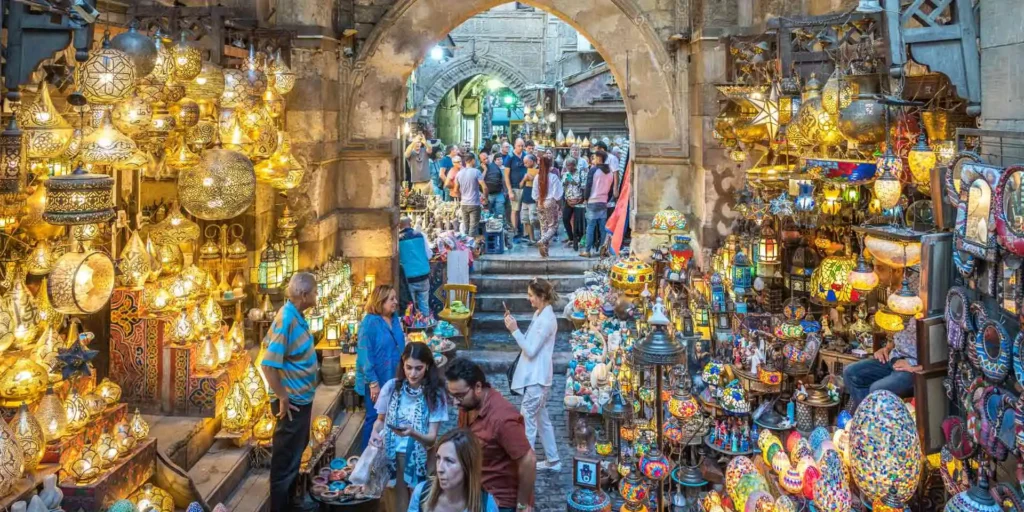
Few places capture the sensory overload of Cairo quite like Khan el-Khalili market. Copper pots hang from ceiling beams, perfume bottles catch the light in narrow alleyways, and the smell of grilling kebabs drifts between centuries-old stone archways.
Ask any local for the best bazaar in Cairo, and Khan el-Khalili is almost always the answer it’s not just a shopping destination, it’s one of the oldest continuously operating markets in the Middle East, and walking through it feels closer to stepping into a living museum than browsing a modern souk.
Whether you’re planning a first trip to Khan el-Khalili bazaar in Cairo, Egypt, or trying to figure out what to buy, when to go, and where to eat nearby, this guide covers everything you need the market’s history, its layout, its best-known specialties like jewelry and perfume, and practical tips for bargaining without getting overcharged with Egptian Trips.
What Is Khan el-Khalili Bazaar? A Brief History

Khan el-Khalili is a historic bazaar nestled in the heart of Islamic Cairo.
Originally built between 1382 and 1389 as a caravanserai (a trading inn where merchants rested, stored goods, and traded along ancient routes), its centuries-old commercial spirit remains alive today.
While the wares have evolved from spices and textiles to handmade souvenirs, jewelry, and local crafts, the vibrant energy hasn’t changed.
Surrounding the market is a rich historic district recognized as a UNESCO World Heritage Site in 1979 for its dense collection of medieval architecture. Key highlights nearby include:
- Bab el-Futuh: A grand, fortified city gate dating back to 1087.
- The Mosque of Al-Hakim: A stunning landmark that has served as a school, prison, and place of worship throughout its history.
- Literary Connections: The neighborhood served as the real-life setting for Nobel laureate Naguib Mahfouz’s famous Cairo Trilogy (including Palace Walk), adding a deep layer of cultural and literary heritage to your visit.
Know more about: Cool Things & Souvenirs to Buy in Egypt
khan el khalili photos
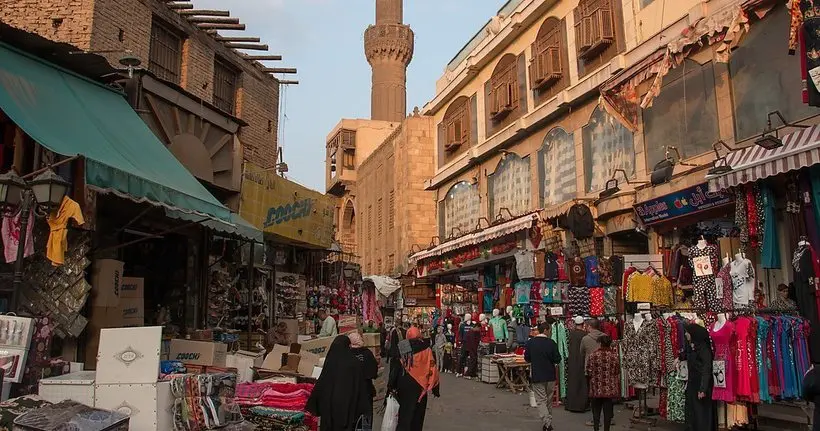
Khan el-Khalili Opening Hours
Technically, the bazaar itself never closes because its streets are public, open-air thoroughfares accessible around the clock. However, individual shops and stalls operate on their own schedules.
- General Shop Hours: Most stores open between 9:00 AM and 10:00 AM and stay open until late evening (often past 10:00 PM, especially on weekends).
- Cafes & Restaurants: Eateries and historic cafes keep much longer hours, capitalizing on the bustling local crowds that fill the market after sunset.
- The Friday Schedule: Keep in mind that Friday mornings are very quiet. Many shop owners close or delay opening until after the traditional Friday midday prayers (Jumu’ah).
A Quick Tip: While major retailers keep steady hours, smaller family-run stalls are more unpredictable and may take a midday break or close early. If there is a specific artisan shop you want to visit, it is always best to check ahead.
Explore our: Cairo Day Tours with EgyptianTrips
Best Time of Year to Visit Khan el-Khalili Bazaar
Best Time to Visit: Season & Weather
Cairo’s climate plays a huge role in how you experience the bazaar, as most of its narrow alleyways are completely uncovered:
- The Ideal Season (October to April): These cooler months offer the most comfortable weather for exploring.
Daytime temperatures typically hover between 20°C and 25°C (68°F to 77°F), making it pleasant to wander the market for hours without overheating.
- Summer Caution (June to August): Visiting during the peak summer months is entirely doable, but the combination of intense heat and crowded alleys can quickly become overwhelming.
If you are traveling during this window, plan for shorter, strategic visits by sticking strictly to the early mornings or late evenings when the sun goes down.
Best Time of Day to Visit
There’s no single “correct” time to visit it depends on what you’re after:
- Evening (after sunset): the most atmospheric time to visit, with glowing lanterns, live music, and a lively local crowd ideal if you want to soak in the culture and grab a coffee at a historic cafe.
- Early morning (around 9:00–11:00 AM): significantly quieter, better for photography, architecture, and relaxed shopping without heavy foot traffic.
Whichever time you choose, comfortable walking shoes make a real difference. The market’s side streets are uneven, and the best prices are often found by wandering away from the main tourist thoroughfare rather than sticking to it.
Day vs. Night in the Bazaar
The atmosphere of Khan el-Khalili shifts dramatically depending on the time of day:
- The Day Experience: By daylight, the bazaar operates primarily as a bustling trading district. Tour groups navigate the alleyways, merchants call out from their storefronts, and the pace—while lively—is entirely manageable for browsing and shopping.
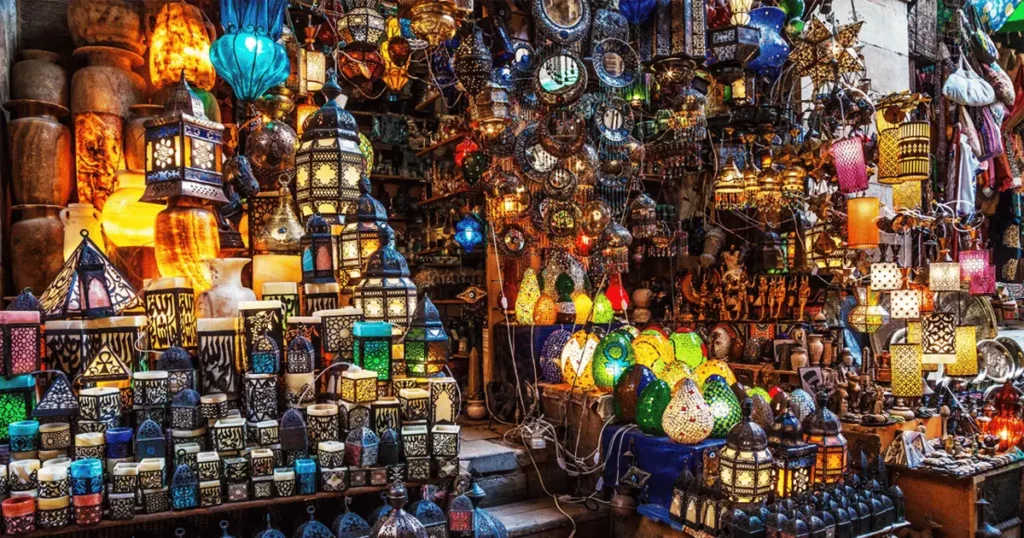
- The Night Experience: After sunset, the market truly comes alive and transforms. Hundreds of hanging metal lanterns cast intricate patterns along the walls, historic coffee shops fill with both locals and travelers, and the sounds of music and conversation spill into the streets.
Many visitors find that the evening atmosphere captures the magical, timeless feel of the classic “Arabian Nights” long before they step foot in Egypt.
Know more about: Egyptian Traditional Dishes
Safety and Authenticity
When navigating the bustling alleyways of Khan el-Khalili, keep these three key aspects in mind:
- Safety First: The bazaar is generally considered a safe environment for visitors. Unlike some major global tourist hubs, aggressive crime or widespread pickpocketing is not a major concern here, though standard travel awareness is always wise in crowded areas.
- Navigating Authenticity: Quality and origin can vary significantly from shop to shop. While some storefronts feature local artisans hand-crafting goods on-site, others sell mass-produced imports marketed as traditional souvenirs. Take your time browsing and comparing before making a purchase.
- The Art of the Bargain: Haggling is an expected, normal part of the shopping experience. Approach it as a friendly, lighthearted cultural exchange rather than a confrontation, and you will walk away with both a fair price and a great vacation memory.
Dress Code
Remind visitors—especially women—to dress modestly (shoulders and knees covered) out of respect for the historic and religious neighborhoods surrounding the market.
Know More About: Best Time to Visit Egypt
What to Buy at Khan el-Khalili Market in Egypt?
One of the most common questions about Khan el-Khalili bazaar is simply: what should you actually buy?
The honest answer is that you can find almost anything here, from a few dollars’ worth of souvenirs to serious investment-grade gold jewelry, but a handful of categories stand out as the market’s genuine specialties.
Metal Lamps & Lanterns: Ranging from small candleholders to large chandeliers and traditional Ramadan fanoos lanterns, these durable, intricately carved metal and colored glass items create magical light patterns (best found near Bab al-Ghuri).
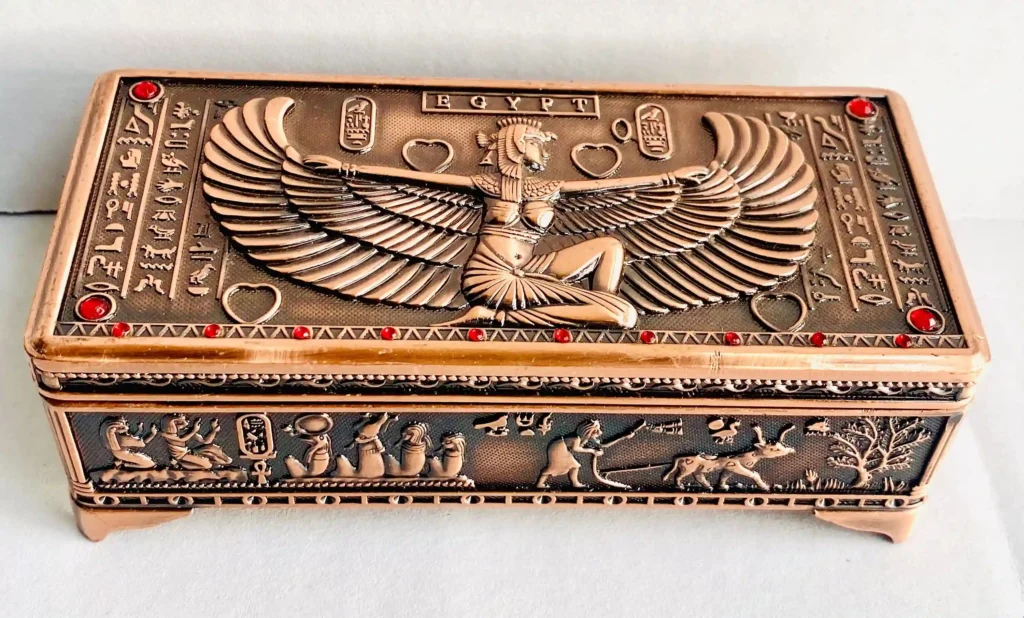
Wooden Boxes with Mother-of-Pearl: Handcrafted beechwood boxes inlaid with mother-of-pearl, resin, or seashells using ancient decorative techniques. They vary from pocket-sized to coffee-table large and are lined with velvet.
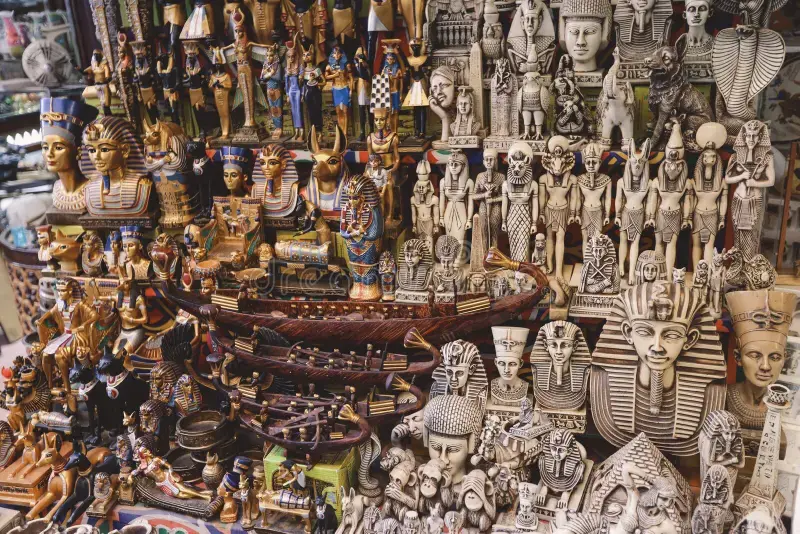
Ancient Egyptian Figurines: Stone, alabaster, or metal replicas of scarabs, pyramids, ankhs, and deities (like Bastet and Nefertiti). Quality varies widely, with Luxor offering some of the finest alabaster pieces.
Spices: While many everyday spices (like cumin, hibiscus, and saffron) are similar to those found back home, authentic Egyptian cumin (valued since ancient times) and dried hibiscus flowers (for making a refreshing, blood-pressure-friendly tea) are standout culinary purchases.
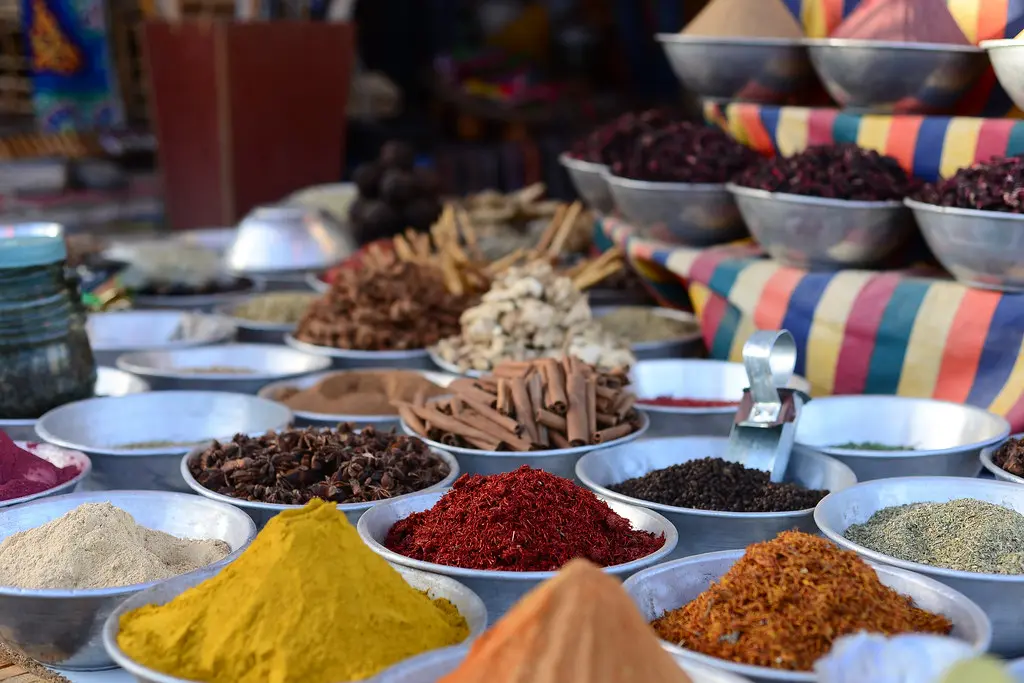
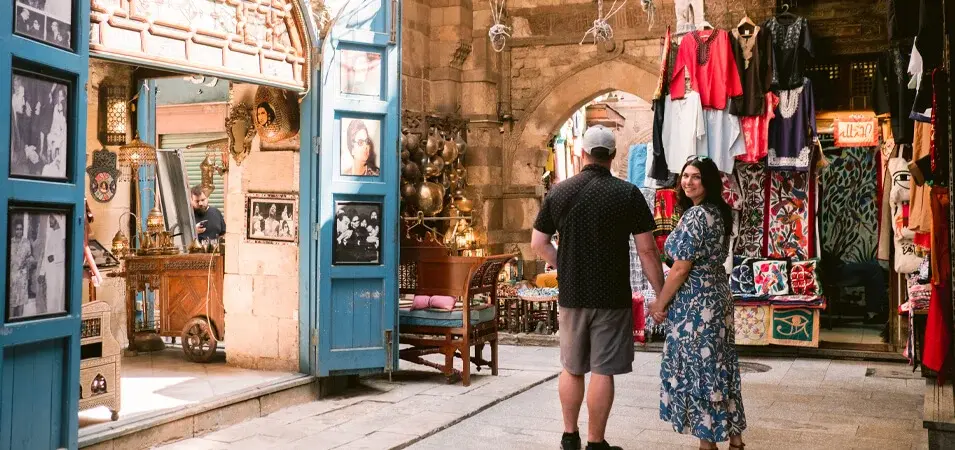
Khayamiya Cushions: Vibrant, hand-stitched cushion covers and wall hangings featuring nature motifs, geometric patterns, and folk art. Head to the historic Tentmakers Market on Moez Street for the best handmade selection.
Personalized Notebooks: Found at the 80-year-old Abd El-Zaher Bookstore near Al Azhar Mosque, these leather-bound journals, sketchbooks, and photo albums can be custom-stamped with your name in Arabic or English on the spot.
Incense & Oud Burners: Ornate burners (made of alabaster or metal) used with charcoal and frankincense or oud chips to fill your home with a rich, long-lasting woody fragrance.
Alabaster Vases: Unique, naturally veined stone vases carved from alabaster sourced mainly from Luxor and Aswan, available in various shapes and sizes near Hussein Mosque.
Best Souvenirs to Buy at Khan el Khalili & Cairo Markets
- Scarves, lanterns, and brass or copper lamps some of the most recognizable Khan el-Khalili souvenirs, ranging from inexpensive tourist versions to higher-quality handcrafted pieces.
- Spices and loose teas sold by weight in small shops throughout the market, often at noticeably better prices than tourist-focused stalls closer to the main entrance.
- Papyrus art and cartouche nameplates a popular keepsake, though quality varies significantly, so it’s worth checking whether a piece is genuine papyrus or banana-leaf imitation.
- Galabiyas and embroidered textiles, traditional Egyptian garments and fabric goods, alongside more contemporary Egyptian clothing aimed at tourists.
- Handicrafts and bric-a-brac everything from small statues and mother-of-pearl inlaid boxes to t-shirts, magnets, and novelty items.
Know more about: How Much Is a Trip to Egypt?
Khan el-Khalili Jewelry
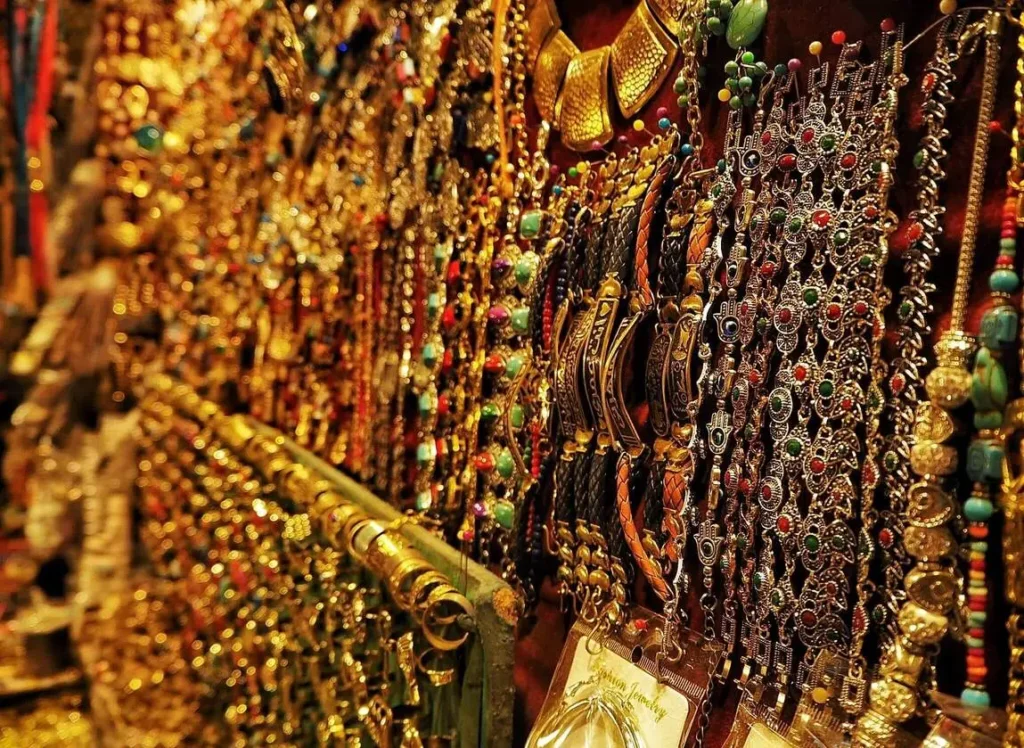
Jewelry is one of Khan el-Khalili’s biggest draws, and for good reason: Egypt has a long tradition of gold and silver craftsmanship, and the bazaar’s jewelry district reflects it.
Popular designs lean heavily on ancient Egyptian symbolism, gold cartouches, scarab beetles, broad collar necklaces, and pieces inlaid with turquoise or lapis-colored stones alongside traditional Arabic calligraphy.
Prices vary enormously depending on the metal, craftsmanship, and how much bargaining you’re willing to do.
Women’s jewelry typically ranges from around $5 for costume pieces to $200 or more for detailed silver or gold work, while men’s jewelry often heavier silver pieces or gold rings generally runs from about $35 to $250 for silver, climbing into the thousands for gold or gemstone-set pieces.
It’s worth knowing that gold in Egypt isn’t necessarily cheaper than what you’d find at home, since it’s priced largely on global gold markets; the real value here is in the craftsmanship and design rather than a bargain on raw metal.
Khan el-Khalili Perfume
Perfume is another Khan el-Khalili specialty worth seeking out, particularly the custom perfume oil shops scattered through the market.
Rather than buying a bottled, mass-produced scent, you can sit with a perfumer, sample a range of oud, floral, and musk-based oils, and blend a custom fragrance in a decorated glass bottle to take home.
It’s a popular activity for couples, friends traveling together, or solo travelers looking for a more hands-on souvenir than a simple trinket.
Best Khan el-Khalili Restaurants and Cafes
Shopping aside, the food scene around Khan el-Khalili is worth building time into your visit for. The area blends historic cafes with newer restaurants, all within a short walk of the market’s main alleys.
- Naguib Mahfouz Cafe: upscale Egyptian and Middle Eastern restaurant operating since 1989, named for the novelist whose work immortalized the surrounding neighborhood.
- El Fishawy: one of Cairo’s oldest continuously operating coffeehouses, open since the 1700s and famous for mirrored walls, strong tea, and shisha; a favorite historic stop for both locals and visitors.
- Tekia Khan Khatun: known for hawawshi, a spiced meat-stuffed flatbread, best enjoyed during quieter hours when service tends to be faster and more attentive.
- Smaller local restaurants throughout the market serving Egyptian staples like koshary, falafel, hummus, and grilled meats, generally at lower prices than the sit-down restaurants closer to the main square.
As with shopping, prices at restaurants directly on the main tourist path tend to run higher than those a block or two off; it ‘s worth keeping in mind if you’re budgeting for a full day of exploring.
Finding Your Way Around Khan el-Khalili
Khan el-Khalili is centrally located near Al-Hussein Square and the historic Al-Azhar Mosque, making it seamless to combine your market stroll with a deeper exploration of Islamic Cairo.
- The Labyrinth Layout: On a first visit, the layout can easily feel like a maze with narrow alleyways branching off in every direction, making it very easy to lose your bearings.
- Embrace the Journey: Rather than stressing over navigation, many travelers treat getting a little lost as part of the adventure. The market is compact enough that you are never far from a major landmark or a friendly shopkeeper willing to point you back toward the main square.
- The Guided Advantage: If you have a strict agenda—such as hunting for genuine gold or finding a specific hidden restaurant—navigating independently can eat up precious time. Touring with a private local guide who knows the alleyways backward and forward removes the guesswork, saving you time and stress.
Tips for Bargaining and Shopping Like a Local
Bargaining at Khan el-Khalili isn’t optional if you want a fair price it’s built into how the market operates. A few practical habits go a long way:
- Never accept the first price offered; it’s typically set well above what a shop expects to receive.
- If you’re not interested in an item, a polite but firm “la” (no) is usually enough to end the sales pitch without tension.
- Prices on the main tourist thoroughfare tend to run noticeably higher than identical items sold on quieter side streets.
- Treat bargaining as a friendly back-and-forth rather than a confrontation most shop owners respond well to good humor.
- For gold or higher-value jewelry purchases, having a knowledgeable guide who can help with translation and steer you toward reputable shops is genuinely useful, since pricing and authenticity are harder to judge on your own.
How EgyptianTrips Guides You Differently
- Zero-Pressure Shopping Guarantee: Unlike typical tours that drag you into endless commission shops, our guides act strictly as cultural liaisons, meaning you only visit the artisan workshops or stores you actually want to see.
- Expert Anti-Scam & Fair-Price Shield: We protect you from inflated tourist prices and over-insistent vendors, teaching you local bargaining etiquette so you can shop with total confidence and zero stress.
- Breathe-Easy pacing: No rushed, military-style marching through a 600-year-old maze. We balance lively alley exploration with relaxing breathers at historic spots like El Fishawy Cafe.
- Safe, Seamless Navigation: Avoid the sensory overload of getting lost or dealing with aggressive transit hassles. Our private, door-to-door air-conditioned transfers and vetted local guides keep you secure from pickup to drop-off.
What travelers say about EgyptianTrips
Perfect and highly recommended ⭐️⭐️⭐️⭐️⭐️
A very great travel company 👍🏻👍🏻👍🏻 Very competent, polite, nice and courteous. All our wishes were fulfilled perfectly. Just great, we can only recommend!! The tours are great, we have seen and gotten to know a lot and always had our super guide with us 👏🏻😃
Thanks again to Hassan.
Jenny H
Used them 2x & both trips were excellent!
We had a fantastic time. Mohamed, his drivers and his tour guides were knowledgeable and friendly. We felt safe our entire time in Cairo.
They did all of the work planning our tours and getting tickets ready. There was always an air conditioned car and cold water ready for us. They did such a great job that we went back a second time and Mohamed prepared everything for us again.
His prices were reasonable too.
Check More TripAdvisor Reviews: EgyptianTrips Review
Benefits for You, the Visitor
- See Cairo Through Local Eyes: Move past generic guidebooks with passionate, knowledgeable local experts who share fascinating history, storytelling, and hidden architectural gems along Al-Moez Street.
- Authentic Cultural Immersion: Taste genuine local treats (like fresh sugar cane juice or authentic Koshari), watch master craftsmen carve mother-of-pearl or hand-stitch Khayamiya live, and soak in the magical evening lantern glow.
- Tailored Just for You: Whether you want a deep dive into photography, a hunt for genuine Egyptian antiques, or a relaxed family-friendly stroll, our private itineraries are completely customizable to your pace.
- Unforgettable Hospitality: Experience genuine Egyptian warmth and a welcoming environment that treats you like a visiting friend rather than just another ticket number.
Book your Trip with us!
Day Trip to Islamic Cairo – Mosques, Citadel & Khan El Khalili from $75 to Adult
FAQs About Khan El-Khalili Market
What is Khan el-Khalili market known for?
Khan el-Khalili is best known as one of the oldest and most famous bazaars in the Middle East, particularly for gold and silver jewelry, custom perfume oils, spices, and handicrafts, set within a historic district dating back to the 14th century.
What are Khan el-Khalili’s opening hours?
The bazaar’s streets are open around the clock, but individual shops typically operate from about 9:00 or 10:00 AM until late evening, with many staying open past 10:00 PM, especially on weekends.
What should I buy at Khan el-Khalili bazaar?
Popular purchases include gold and silver jewelry with ancient Egyptian motifs, custom-blended perfume oils, spices sold by weight, papyrus art, and traditional textiles like galabiyas.
Is Khan El Khalili Safe for Tourists?
Yes, Khan el-Khalili is generally considered safe for visitors, with pickpocketing not being a widespread concern. As with any busy market, it’s still wise to stay aware of your belongings. Key security details include:
Official Security Presence: There is a permanent tourist police presence stationed right at the main entrances of the bazaar, alongside a 24-hour security camera network installed across the district.
Comfort for Solo Travelers: Solo female travelers frequently report that Khan El Khalili is among the more comfortable and welcoming areas of Cairo to walk through independently.
Standard Street Smarts: As with any bustling global market, normal travel awareness applies. Keep an eye on your bag in tightly packed alleys and avoid carrying large amounts of loose cash.
What is the best time to visit Khan el-Khalili bazaar?
Cooler months from October to April are the most comfortable for visiting, and within a single day, early morning offers a quieter experience while evening delivers the market’s liveliest, most atmospheric side.
Can you bargain at Khan el-Khalili?
Yes, bargaining is expected throughout the market. Shoppers should avoid accepting the first price offered and can politely decline unwanted offers with a firm “la” (no).
How do I get to Khan el-Khalili in Cairo?
Khan el-Khalili is located in Islamic Cairo, near Al-Hussein Square and Al-Azhar Mosque, and is easily reached by taxi, ride-hailing app, or as part of a guided Cairo tour.